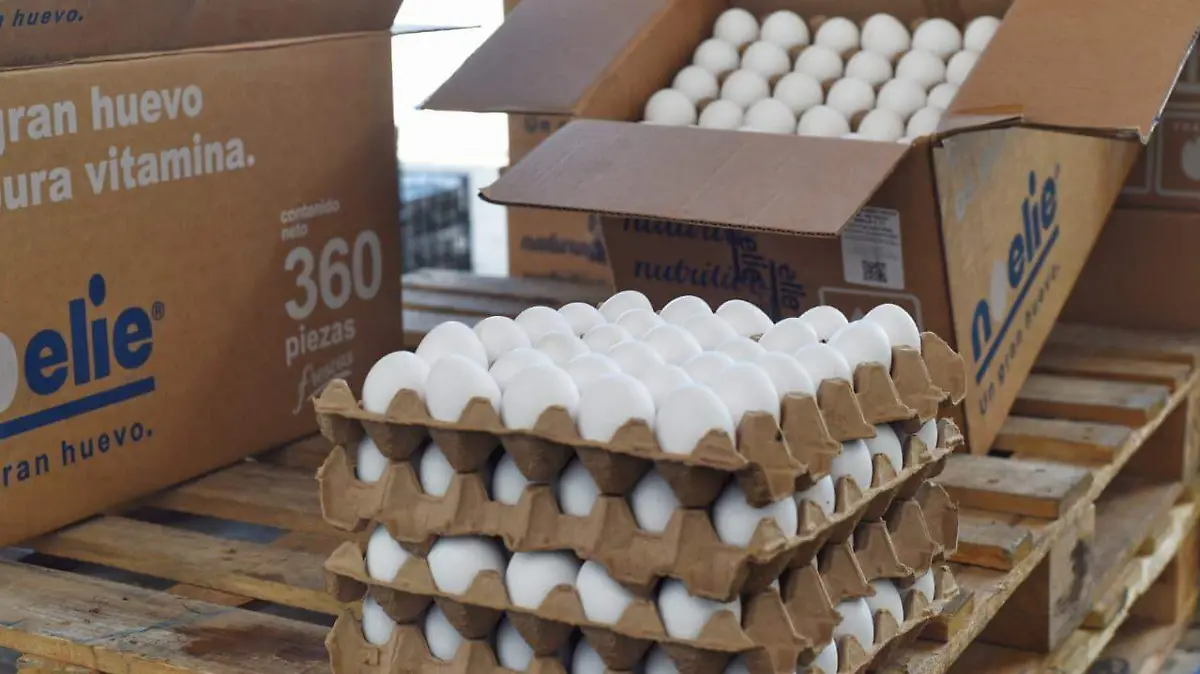

Health authorities in Durango seized and destroyed more than 14,000 eggs after detecting irregularities in a shipment at the El Refugio Wholesale Market in the city of Durango.
The operation was carried out by the Commission for Protection Against Health Risks of the State of Durango (Coprised). According to its director, Saúl Fernández Saracho, the eggs did not comply with the sanitary requirements concerning the way their expiration date was displayed on the packaging.
Authorities determined that the product had to be removed from circulation and destroyed because the labeling did not meet the requirements established by sanitary regulations. Fernández Saracho explained that the eggs themselves appeared to be in good physical condition and that documentation indicating their farm of origin was available. However, the irregular labeling prevented them from being legally marketed under the required sanitary conditions.
The case has generated concern because of the recent detection of what has been described as “fake” or “pirate” eggs in different parts of Durango. However, authorities have emphasized that the term does not necessarily mean that every irregular egg is counterfeit. What is important from a sanitary perspective is being able to verify its origin, traceability, labeling and proper handling.
Previous Detection in Gómez Palacio
The latest operation in Durango City follows an earlier seizure in Gómez Palacio, where Coprised detected irregular eggs that allegedly used a falsified San Juan identification seal.
In August, authorities reported the seizure of hundreds of eggs whose origin or expiration information could not be adequately verified. Another report indicated that a lot of 360 irregular eggs without an expiration date had been secured at the Gómez Palacio Wholesale Market.
The discovery raised concerns that products of uncertain origin could be entering the food supply chain while appearing to consumers to belong to an established brand.
Why Authorities Are Concerned
One of the main concerns is traceability. Health authorities need to be able to determine where an egg came from, when it was produced, how it was transported and under what conditions it was stored.
This information is important because improperly handled food products can increase the risk of contamination and foodborne illnesses, including infections caused by bacteria such as Salmonella.
Fernández Saracho said that no Salmonella outbreaks have been recorded in Durango as a result of this situation, but sanitary inspections will continue throughout the state.
How Consumers Can Check Their Eggs
The recent cases have also led to recommendations for consumers to pay closer attention to the identification marks on eggs, particularly when purchasing products that appear to belong to a recognized brand.
In the case of Huevo San Juan, the company has promoted a tool known as the “Frescómetro,” which allows consumers to enter the five-character code printed on the eggshell. The system can provide information such as the farm of origin, laying date and recommended consumption date.
Consumers are also advised to be cautious when purchasing eggs from unofficial sources or through websites that cannot be verified. Previous reports have identified websites that allegedly impersonate recognized brands and offer supposed promotions or sales of eggs.
Canaco Calls for Greater Caution
The discovery in the capital prompted the National Chamber of Commerce (Canaco) in Durango to call on wholesalers and retailers to verify the origin of the products they purchase before putting them on sale.
Canaco Durango president Sergio Sánchez López warned that, following the seizure, it cannot be ruled out that irregular products could already be reaching the capital’s commercial market. He urged both businesses and consumers to verify the products they purchase and to avoid selling or consuming products whose origin and sanitary status cannot be confirmed.
The business representative stressed that formal merchants have a responsibility to ensure that the products they offer meet the required quality and safety standards.
Sanitary Inspections to Continue
Coprised has indicated that inspections will continue at different points in Durango as authorities attempt to identify products whose origin, labeling or traceability cannot be verified.
The agency also plans to inspect hospital food-service facilities in Durango, reviewing how food is received, stored, prepared and distributed. These inspections come after a separate foodborne illness outbreak reported at a hospital in Mexico City.
The case in Durango therefore represents not only a concern about allegedly “fake” eggs, but also a broader effort by health authorities to ensure that food sold to consumers can be properly traced and complies with sanitary regulations.
Source: oem