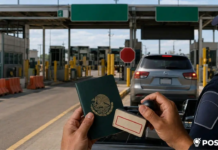

The Tourist Pass for out-of-state vehicles that Nuevo León will implement will create more difficulties than benefits for business owners and citizens of Coahuila, according to Juan Gerardo Oyervides Rodríguez, a businessman and industrialist from Monclova.
The businessman said the measure could primarily affect those who need to travel unexpectedly to Monterrey, including the airport, for work meetings, business matters, or trips that cannot be scheduled in advance.
Oyervides Rodríguez questioned why motorists must access a platform to obtain a free permit and then carry the document or QR code during their travels through Nuevo León.
He explained that a potential overload of the website could prevent people from obtaining the document immediately, especially when someone needs to travel in an emergency and has little time to complete the process.
Tourist Pass raises concerns among business owners
The Monclova businessman said the measure could turn motorists with out-of-state license plates into a group subject to additional inspections, resulting in lost time during their journeys.
“Those of us who do not have license plates from that state are going to be held captive,” he said, warning that drivers could be exposed to stops during their journeys, particularly at entrances and on highways in Nuevo León.
Oyervides Rodríguez also expressed concern about the handling of the personal data that will be provided when applying for the Tourist Pass, since the system will require information about the vehicle and its owner.
The Nuevo León Vehicle Control Institute published the guidelines for implementing the Tourist Permit on September 4. The permit will be free and will be intended for out-of-state vehicles traveling temporarily through the state.
The businessman argued that the provision contradicts the principle of freedom of movement because although the process does not have a cost, it represents an additional condition for motorists from other states to travel through Nuevo León.
He recalled that business owners and citizens from the Central Region of Coahuila frequently use Nuevo León’s highways to travel to Monterrey, particularly when they need to reach the international airport for personal or work-related reasons.
Business owners are already changing routes to Monterrey
Given the security conditions and inspections that, according to him, some motorists already face in areas of Nuevo León, Oyervides Rodríguez said that several users have chosen to change their routes to Monterrey.
He explained that one alternative is to use Highway 57 and then the toll road, although this route can add between 30 and 40 minutes compared with the traditional route through Mina and Hidalgo.
The businessman considered that the additional travel time is acceptable for those seeking greater safety and peace of mind during their journey, particularly given recent incidents of insecurity recorded in different parts of Nuevo León.
He said that even before the Tourist Pass takes effect, some drivers were already reporting stops that resulted in losses of between 10 and 15 minutes while traveling through Mina and Hidalgo.
Added to this, he said, are the conditions of some sections of the highways and the perception of insecurity, factors that have led business owners and citizens to seek alternative routes to reach Monterrey.
Measure could affect tourism between both states
Oyervides Rodríguez also warned that the measure could affect tourism between the two states, since residents of Nuevo León represent a significant portion of visitors who travel to Cuatro Ciénegas on weekends.
He considered that requiring a QR code to enter Coahuila would be unthinkable under current conditions because the state allows visitors to travel without similar requirements and maintains a favorable perception of safety among those using its highways.
The businessman said visitors from Nuevo León could reconsider some trips if they perceive that they must complete additional procedures to travel through Coahuila, which could affect tourism and business mobility between the two states.
Finally, Oyervides Rodríguez maintained that the new requirement could create uncertainty among those traveling unexpectedly and leave them subject to the conditions of an electronic platform, in addition to increasing inspections of vehicles with out-of-state license plates.
“It is something contradictory,” the businessman said, insisting that mobility between Coahuila and Nuevo León should be facilitated in order to maintain the economic, labor, and tourism activities that connect the two states every day.
Source: elsiglodetorreon