
She has great power, but faces great challenges
:quality(85)/cloudfront-us-east-1.images.arcpublishing.com/infobae/FCWEZI7LNRAZZJ3HXL2WYWM6MM.jpg)
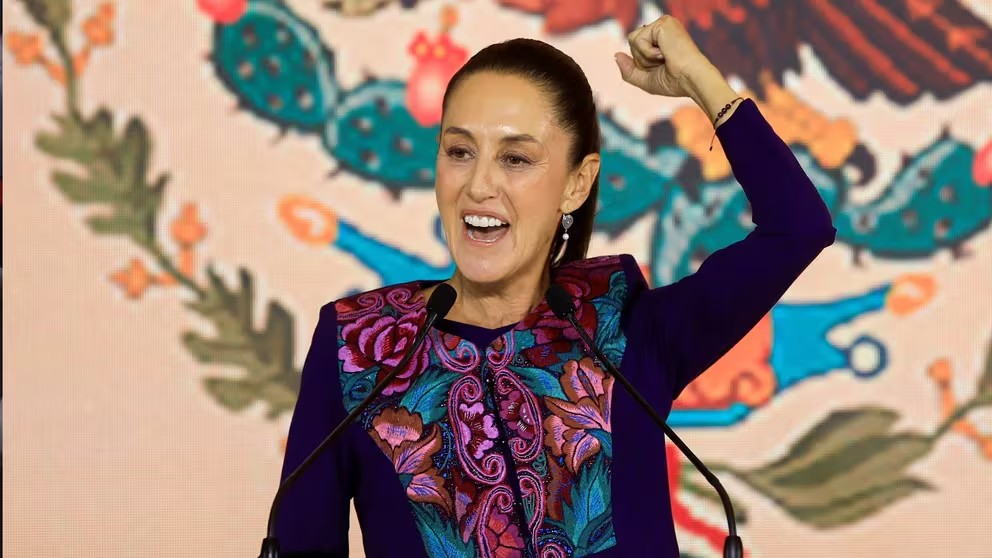
Few doubted that Claudia Sheinbaum would win Mexico’s June 2 election and become the country’s first female president. But the landslide victory for her and Morena, the ruling party, exceeded expectations. She won at least 58% of the vote, a higher share than her predecessor, Andrés Manuel López Obrador, won in 2018. The Morena coalition is almost certain to win a supermajority in Congress. This spells danger: Even before she takes office on October 1, her ruling party will be able to shape Mexico, including by altering the Constitution.
The landslide victory is due in part to Morena’s redistributive policies, a combination of cash transfers and constant increases in the minimum wage. Sheinbaum’s share of the vote was highest in the country’s poorest areas, though she won in all but one of Mexico’s 32 states. “I don’t receive anything, but I’m glad that students, the elderly and the poor have help,” says Miriam Salazar, a 42-year-old architect in Mexico City.
The fiscal deficit already exceeds 5% of GDP. Containing it while paying these transfers, which Sheinbaum plans to expand, is only one of the challenges. She will have to please her supporters and her party (without López Obrador’s populist charisma) and reassure the financial markets. There is also an urgent need to address Mexico’s growing insecurity and mediocre economy.
Sheinbaum, who was a technocrat as mayor of Mexico City, was conciliatory in her victory speech. She promised to govern for all Mexicans, preserve democracy, work with the United States and encourage investment and private business. But the Mexican stock market fell 6% and the peso hit its lowest level against the dollar in six months. The sales were driven by concerns about Morena’s supermajority and the possibility that it would support López Obrador’s efforts to rewrite the constitution in ways that undermine democracy and hurt Mexican businesses.
Congress will take its seats a month before the new president does, giving López Obrador the chance to push through a package of 20 constitutional changes himself. He wants to enshrine animal welfare and a minimum wage tied to inflation. Supreme Court justices and electoral body presidents would be appointed by popular vote. A number of autonomous bodies would be abolished. Control of the federal police would be handed over to the Defense Ministry, which the Supreme Court had declared unconstitutional.
Sheinbaum has openly supported these initiatives. In theory, her strong personal mandate could allow her to chart her own path. But Morena’s supermajority increases López Obrador’s influence after the presidency, since he controls the party, and can curb any divergent instincts she harbors. López Obrador has some red lines, such as continuing to prop up Pemex, the world’s most indebted state oil company.
Sheinbaum is shrewd. She may find a way to make her own mark and keep her mentor happy, perhaps by echoing his nationalist, “Mexico First” rhetoric but by acting with less fanfare and being friendly to businesses in private. She will have more room to promote her own policies in public services such as health care.
Sheinbaum’s pledge to push Mexico’s transition to green energy — a rare policy on which she differed with López Obrador during the campaign — will be a test. Abundant clean energy is needed to spur economic growth. Mexico’s dirty and expensive electricity has discouraged foreign investors, meaning the country has failed to fulfill its potential as a place where companies diversifying outside China can expand.
The lack of serious opposition to the government is worrying. The strongest opposition coalition, led by Xóchitl Gálvez, “has been a total failure and is dead,” says Antonio Ocaranza, an analyst. This offers Morena the opportunity to tighten its grip, leaving dangerously few checks and balances.
Source: infobae