

The European Monitoring Centre for Drugs reported this week that Europe is literally flooded with cocaine from South America, so much so that seizures of this drug in the EU are greater than those in the US.
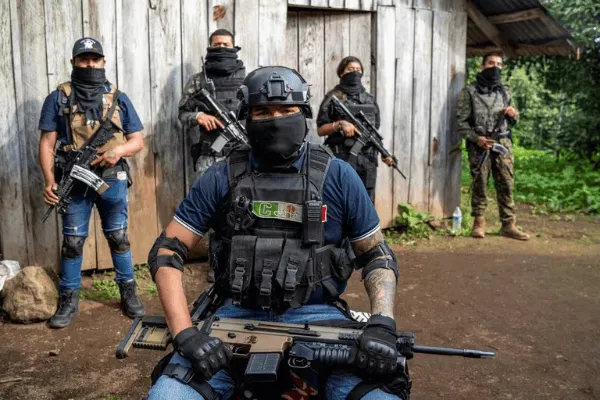
Busy as we are with the election and the post-election process, organized crime has shown in the days following the elections that insecurity and violence will not be stopped by votes alone. On the contrary, they feel empowered and are trying, in this transition period, to strengthen their positions in the face of the extensive change of authorities that will begin at the federal, state and municipal levels in the coming weeks.
But there are much broader phenomena. The European Monitoring Centre for Drugs reported this week that Europe is literally flooded with cocaine from South America, so much so that seizures of this drug in the European Union are greater than those achieved in the United States. Yesterday, a large operation was reported to have seized tons of cocaine and the dismantling of a network of the so-called Albanian mafia, with strong ties, by the way, in the southeast of our country.
Colombian National Police sources were talking about coca plantations that Mexican cartels were trying to establish in Michoacán, Chiapas and Oaxaca. This may be the case, but coca grows in ideal conditions in the Andean region of Colombia, Ecuador, Peru and Bolivia. Tests to see if coca grows in Mexico have been going on since at least 1994, and they have never been really successful, among other reasons because the conditions are not ideal, but also because in the Andean countries there is all the infrastructure to grow it, transform the coca paste into cocaine and produce it in millions of dollars.
Nor do the Mexican cartels need to develop it in Mexico because for years they have been widely involved in Colombia, Ecuador and Peru, they have partners, they own entire sectors of the process and they are central actors in a traffic that, in many cases, no longer necessarily needs to go through Mexico (although it continues to do so and in industrial quantities). In Colombia, President Gustavo Petro, for almost two years, did not combat the cultivation and production of cocaine, which gave criminal groups the opportunity to acquire a huge stock that they are now placing in much of the world. In Ecuador, the conflict that the government of Daniel Noboa is experiencing is largely due to the decision he made to try to close the door to these groups, while they enjoy a lot of space to operate both in Bolivia and Venezuela, with strong complicity from the authorities.
The presence of Mexican groups, with their local partners, extends across several nations in Central and South America. They have a strong presence in Brazil and Argentina, and are growing in Chile and Paraguay. From these nations, cocaine is sent to Europe, often passing through African nations, where they have also settled with local partners and thanks to the widespread corruption of the authorities.
And it reaches Europe in ever-increasing quantities through Spain, through the Netherlands, through various ports of entry: there are Galician, Muslim, Dutch, Russian, Serbian mafias, the traditional Italian mafias and those from other countries, although European authorities insist that the most powerful and diversified is the Albanian one, and it is the one that seems to have the greatest ties with Latin American criminal groups, including Mexican ones.
There are also structural reasons for this diversification and opening of new markets with cocaine. The same amount of cocaine continues to enter the United States from our country as always, but the big business of organized crime in Mexico is no longer in cocaine (which continues to be a highly profitable business), but in synthetic drugs and, above all, in fentanyl, which leaves geometric profits compared to its very low production costs. That is why, increasingly, synthetic drugs and cocaine that arrive in the United States are mixed with fentanyl. Cocaine, which is produced in huge quantities, especially in Colombia, is then directed towards Europe and Asia (in addition to Latin American countries, where consumption is already very high, especially in Argentina and Brazil).
This whole scenario serves to show the extremely complex plot that exists behind Mexican organized crime, the way in which they have used these years of empowerment to expand not only in the country, but also globally, and the enormous challenge that awaits the next administration if it wants to restore security.
THE JUDICIAL TRUCE
Yesterday, Claudia Sheinbaum reiterated that the election of judges will be done by popular vote. This Monday the results of the “impartial” survey that Morena will do will be announced, while at some point the announced consultation will be done. All amid accusations and blows. Let us insist on what we said yesterday: shouldn’t we have a judicial truce while it is defined what will happen? Who can guarantee, in the midst of so much pressure, that judges, magistrates and ministers will not bend in one direction or another in key cases in the midst of so much pressure, when their future is at stake?
EDOMEX AND SECURITY
There will be fundamental changes in public security in the State of Mexico. Andrés Andrade, a man very close to General Audomaro Martínez and who had strong differences with the Secretary of Government, Horacio Duarte, leaves office and is replaced by an experienced specialist who was Secretary of Security in Sinaloa for several years, Lieutenant Colonel Cristóbal Castañeda, who does so with the full support of Governor Delfina Gómez and her military commanders.
Source: excelsior