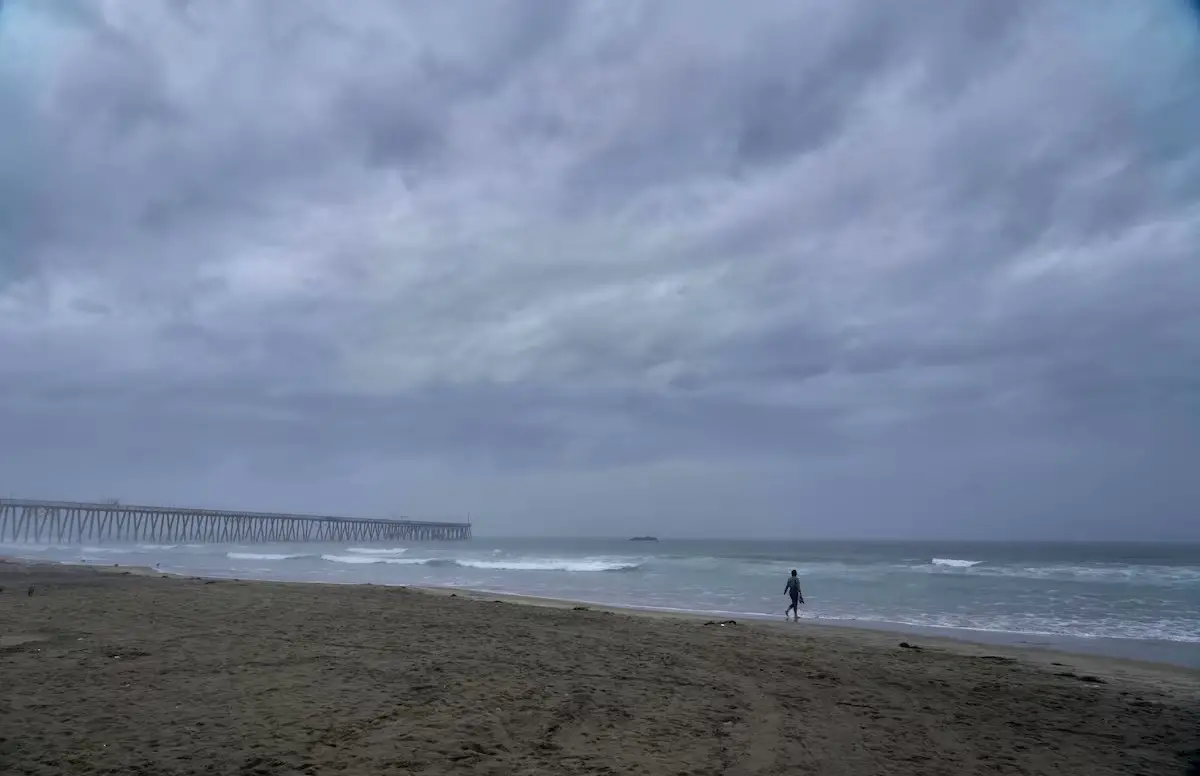

The rains will intensify in most of the country in the coming days, with the exception of the northern states, which will reach their highest temperatures
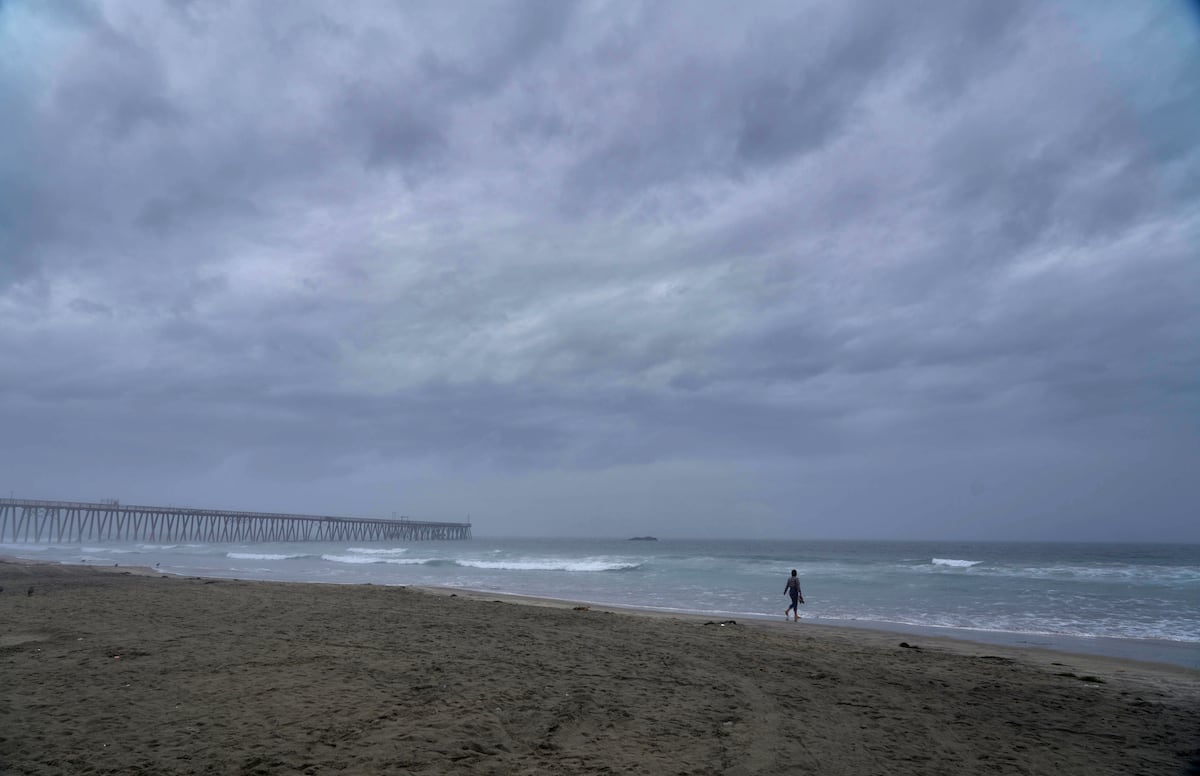
After three heat waves in Mexico, the rainy season has begun to hit a large part of the country. The National Meteorological Service (SMN) has raised the alerts due to the possibility that the first tropical cyclone of the season may develop in three areas near the Mexican coast. The SMN is monitoring a low pressure zone that could generate tropical cyclones in seven days over the Gulf of Mexico and the Atlantic Ocean. This is a low pressure zone over the Florida peninsula, which has a 10% chance of becoming a cyclone in 48 hours and a 20% chance in seven days.
This is located approximately 950 kilometers northeast of Cabo Catoche, Quintana Roo, moving northeast. The formation of a low pressure zone is also expected in the southwest of the Gulf of Mexico. In this area, the probability of cyclonic development has already increased to 30% in the next seven days. Finally, a low pressure zone is expected to form in the Pacific Ocean south of the coasts of Guerrero, Oaxaca and Chiapas with a 20% chance of developing a tropical cyclone in seven days.
These conditions are the result of the combined influence of several areas of instability and the Central American Gyre, a key atmospheric pattern in the region. José Martín Cortés, a graduate in Atmospheric Sciences and operational meteorologist, says that of the three monitoring systems, only the one in the Gulf of Mexico and the Pacific are of interest. “Starting this weekend and especially next week, the southeast, east, south, center, northeast and part of the west of the country could be experiencing heavy and torrential rains, as well as days of more cloudiness depending on the direction of the wind in the coming days,” he stressed. According to Cortés, the low pressure zone over the Florida peninsula does not pose a threat to Mexico due to the direction it is taking towards the northeast.
The Central American Gyre
The drastic change in the Mexican climate is caused by the Central American Gyre, a large counter-clockwise wind circulation that forms in countries such as Honduras, Nicaragua, Belize, Costa Rica and Guatemala, and that depending on its direction, can combine with tropical waves, giving way to storms, cyclones or hurricanes.
“It is a fairly unstable system, it is common for it to appear at the beginning and end of the rainy season,” says José Martín Cortés, who says that it can start at the end of June, weaken and return in October or during the beginning of November, causing abundant rainfall. He explains that the models have been persistent in July, August and much of September, so they will be very rainy months. This does not mean that it will rain every day, but the accumulated rainfall can be much higher than normal, even despite the droughts that have also occurred.
With the rains will come a slight drop in temperature in much of the country over the next few days, but the northern and northeastern states such as Baja California, Baja California Sur, Sonora, Nuevo León and Chihuahua will remain with extreme heat, which Cortés says is normal for the season. The SMN estimates that in certain areas of these states temperatures will reach between 45 and 50 degrees.
Impact on agriculture and infrastructure
The regions of the Gulf of Mexico and southeastern Mexico are expected to be the most affected, with rainfall accumulations that could exceed 500 millimeters in mountainous areas, which represents a risk for the population and a threat to agriculture and infrastructure.
Although the rains will be beneficial for bodies of water, they also pose a danger to the vulnerable population that lives near rivers, streams, ravines, on mountain slopes or simply in neighborhoods prone to flooding. Rural areas, in particular, may suffer damage to crops, affecting food security and the local economy. In addition, roads and other infrastructure may be affected, hampering transport and communications.
Recommendations for possible emergencies
Given this scenario, it is crucial that the population take preventive measures to mitigate the impacts of adverse weather conditions. Recommendations include preparing an emergency plan that includes collecting important documents in a safe, waterproof place, a first aid kit, a reserve of non-perishable food, and drinking water. It is advisable to prepare the home by keeping drains clean and preparing the infrastructure to deal with heavy rains and possible flooding. It is important to ensure that roofs and windows are in good condition and that flood-prone areas are protected. José Martín emphasizes paying attention to daily weather updates, both from expert meteorologists and from official accounts such as the SMN, state and federal Civil Protection.
Source: elpais