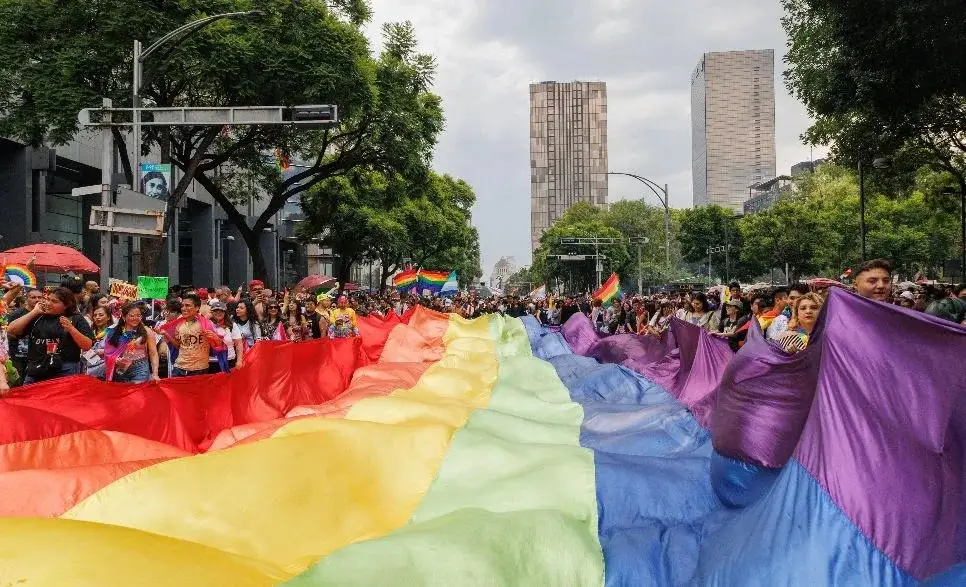


The Mexico City Government, through the Secretariats of Government (SECGOB) and Citizen Security (SSC), reported that 260 thousand people, including members of committees, collectives, activists and the general population participated in the XLVI LGBTTTIQ+ Pride March.
The deployment, which had the collaboration of 2 thousand public servants from 23 local agencies, who provided support in terms of civil protection.
They specified that more than 2 thousand police officers from Mexico City were deployed to provide support during the mobilization.
The Medical Rescue and Emergency Squad (ERUM) treated three people for possible fractures in the knee and ankle, who were transferred to hospitals to receive medical attention.
The streets of Mexico City were filled with colors, glitter and music from all the people of the LGBTTTIQ+ movement and allies who went out to protest the injustices that continue to be experienced in Mexico due to their rights not being respected for being part of the community. “Neither sick nor criminals,” shouted some of those present.
LGBT Pride March 2024
The attendees gathered from 10:00 hrs. at the Angel of Independence to begin the tour along Paseo de la Reforma until reaching Avenida Juárez to continue the journey along Eje Central and 5 de Mayo to finally reach the Zócalo of Mexico City where an event was held on the Plancha de la Constitución.
Some of the invited artists were: Mariana Seoane, Kimberly La Más Preciosa, Lucía Méndez, Raymikx, Ale Zaid, Sergio Mayer, Pistolas de Oro, among others.
This year, compared to previous years, there was no concert in celebration of the LGBT+ pride march in Zócalo Capitalino, but that did not stop the great celebration of the attendees in this place of the city.
First LGBT+ march in Mexico
The LGBT+ march is an event that has been taking place annually for years and is part of an important moment in the year for Mexico City and several states in the country, but the celebration we know today is the result of years of struggle.
The first march in Mexico arose as a movement made up of several people who wanted a change in the country in terms of sexual and gender diversity, starting by demanding their rights as individuals with their respective ideologies.
In this way, in June 1979, a small group of approximately one thousand people took to the streets of Mexico City from the Angel of Independence to protest the hate crimes that occurred with impunity at that time.
This first march did not have floats, colors, and music, rather there was only the community’s weariness in the face of violent events and the courage to express them before Mexican society and the Government of Mexico.
Source: es-us.noticias.yahoo