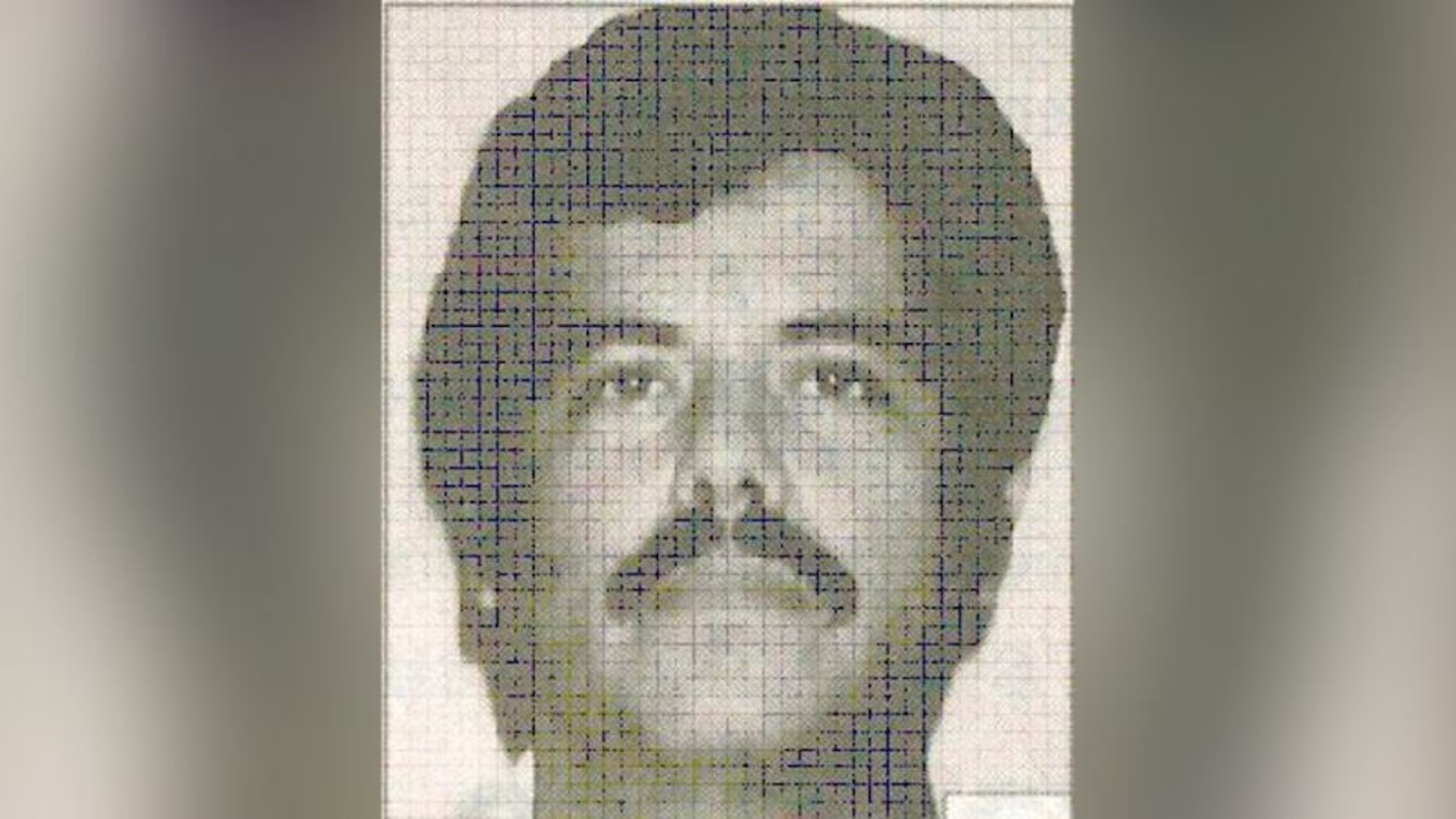


In a quiet operation, the United States arrested two top leaders of the Sinaloa Cartel in El Paso, Texas, on Thursday: Ismael Zambada Garcia, known as “El Mayo,” a long-wanted Mexican drug trafficker, and Joaquin Guzman Lopez, son of convicted drug trafficker Joaquin “El Chapo” Guzman.
“It was a direct blow to the heart of the cartel,” said the head of the Drug Enforcement Administration (DEA), Anne Milgram, in a statement, adding that the Sinaloa Cartel is responsible for most of the drugs, including fentanyl and methamphetamine, “that kill Americans from coast to coast.”
“El Mayo” was one of the most wanted fugitives by the DEA. On Friday he pleaded not guilty to drug charges in the United States, and waived his right to be present at the arraignment next Wednesday.
The arrests raised suspicions in Mexico, where the government was not notified in advance of the operation, but by the US embassy when they already had the cartel members in custody.
“In an operation like this, they would never have notified us,” Samuel González, former director of the Specialized Unit on Organized Crime of the then Attorney General’s Office, told CNN.
“The cooperation came later when it was an operation of ours, because we collaborated online with them, let’s say in real time, but an operation like this would never have notified us,” he said.
According to González, the protocols do not allow this to happen because such operations require “misinformation” to protect the people involved and avoid risks.
The Secretary of Security and Citizen Protection of Mexico, Rosa Icela Rodríguez, said in a press conference from Mexico City that the Government did not participate in that arrest or delivery and that they will continue to collaborate with the United States “as we have done until this occasion.”
Regarding whether the lack of participation of the Mexican State in this operation would once again call into question the security strategy of the current government, González assures that in any way the capture of the bosses was, Mexico indirectly participated in the search for “El Mayo.”
“If it is agreed upon, it means that he did not withstand the pressure of the Mexican government and the Army that was surrounding him, and if it is the other way around and he was taken under false pretenses, it is also the result of Ovidio Guzmán being sent to the United States and possibly the result of a negotiation between Ovidio and his brother,” said González.
Ovidio Guzmán López, another son of Chapo Guzmán, was extradited from Mexico to the United States on September 15, 2023, as confirmed by the Department of Justice. He faces charges in the United States of conspiracy to import and distribute drugs in that country, along with his brother Joaquín Guzmán López.
“I think that the security strategy needs to change a lot, there needs to be greater coordination, better results, a strategy of applying the law – hugs yes, but bullets when necessary – that is the strategy,” said González.
“El Mayo” was an important but inactive figure
The Sinaloa Cartel and its members have become a priority in recent years for the United States in the fight against drug trafficking. However, experts say that the recent arrests may be mostly symbolic.
“‘El Mayo’ Zambada is no longer such an important leader within the Sinaloa Cartel,” said Juan Carlos Montero, a professor at the Monterrey Institute of Technology, to CNN.
“He is mostly a figure of respect, but he was no longer such an active actor. If this coup had been carried out 10, 20 years ago, it would have been significant, but it is no longer,” he added.
The most important factions of the Sinaloa Cartel are, according to the DEA, that of “Los Chapitos” led by the sons of Chapo Guzmán, of whom only two remain fugitives, Ivan Archivaldo and Jesus Alfredo, and that of “El Mayo”, whose figure, according to Professor Montero, has been gradually replaced.
“Yes, a leader has been arrested, an important leader, a historical leader, a person who could never be arrested, until now. But until now, he represented the inability of the Mexican State and the cooperation with the United States to have arrested him,” said Montero.
The future of the cartel
The arrest of the leaders of the Sinaloa Cartel has left many questions on both sides of the border.
Whether it was a voluntary surrender or a trap to capture them, the restructuring of the cartel’s factions is imminent, according to security analysts consulted.
“We have a generational change, the Sinaloa Cartel has had over decades an extraordinary capacity to mutate, to condition and adapt to new times and it seems that this is the case again,” said security analyst David Saucedo.
Saucedo says that the only beneficiary of the internal war of the Sinaloa Cartel has been the Jalisco Nueva Generación Cartel, of Nemesio Oseguera Cervantes, known as “El Mencho”, who for years took advantage of the contraction and fracture of the Sinaloa Cartel to expand his own drug empire.
Although Oseguera’s health status is uncertain, the Jalisco Nueva Generación Cartel is one of the most powerful and ruthless criminal organizations in Mexico, according to a 2024 DEA National Drug Threat Assessment report, and another key factor in fatal drug poisoning in the United States.
“El Mayo” is a very intelligent man and therefore probably foresaw scenarios such as his retirement, capture or extradition, according to Saucedo. In any case, it was inevitable that at some point he would have to hand over command to his sons, which would lead to a new increase in violence between the Sinaloa Cartel factions.
“So effectively the Sinaloa Cartel again reached a reconfiguration and collaboration scheme to jointly confront the Jalisco Nueva Generación Cartel,” according to Saucedo.
Source: cnnespanol