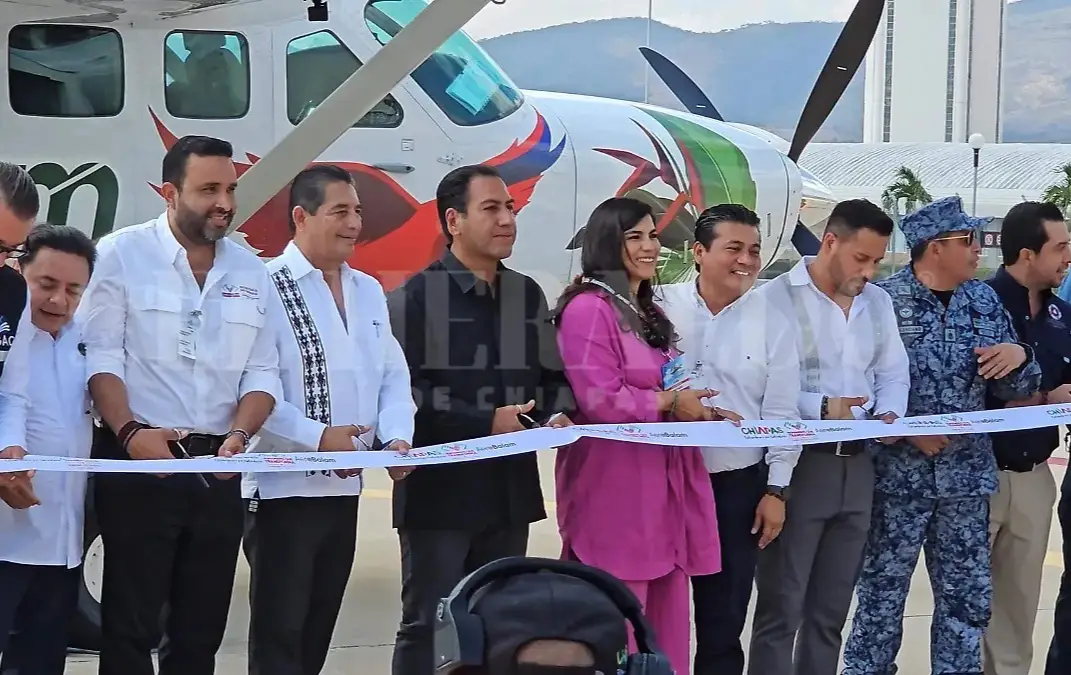

Governor Eduardo Ramírez Aguilar presented this Thursday the first aircraft intended for regional tourism connections in Chiapas, with routes that include Tapachula and Palenque in its initial phase, at an affordable cost of only 950 pesos per trip, although flights to Huatulco will be included in the future.
The aircraft will operate initially with the following schedules:
Tapachula-Tuxtla Gutiérrez: Mondays, Tuesdays, and Thursdays, departing at 8:00 a.m. and returning the same day at 9:00 a.m.
Palenque-Tuxtla Gutiérrez: departing on Fridays at 1:00 p.m. and returning on Sundays at 1:00 p.m.
The measure is part of a tourism and economic strengthening project that seeks to replicate air connectivity models like that of Costa Rica, a country that Ramírez Aguilar recently visited to learn about its air infrastructure. According to the governor, there are more than 200 similar aircraft operating as tourist transport in that country.
“Dear fellow countrymen and women, it is a pleasure for me to present this aircraft, which primarily serves tourism within our state, and we learned this there in Costa Rica,” the governor explained. “When we arrived, we realized that we are stronger than that big brother country, because here we have beaches, archaeological sites, jungle, natural resources, and we have much to offer,” he added.
Currently, Chiapas has international airports in Tuxtla Gutiérrez, Tapachula, and Palenque, as well as an airstrip operated by the Air Force in Comitán. Future operations on dirt airstrips in places like Bonampak and Yaxchilán are also planned, once the area has been cleared of criminal groups, the governor indicated.
The ticket will cost 950 pesos, including taxes like the TUA, and according to Ramírez Aguilar, it aims to be an affordable alternative to ground transportation. “How much does the ticket from Tapachula to Tuxtla cost? 800 pesos. It’s going to take six or seven hours by bus. Here, it’s going to take 40 minutes for 950 pesos,” he noted. “So it’s not for those who have only financial resources,” the governor clarified.
He also explained that flights can be booked as charters (private flights), with a capacity of up to 12 passengers, for private trips to any part of the state or even to destinations like Huatulco, Oaxaca.
“The governor of Oaxaca has already told us he’s interested. He told me: ‘I want to rent it.’ I replied: ‘How am I going to rent it to you if what I want is connectivity in my state?’” he recounted.
Ramírez announced that, if the project proves viable, more aircraft will be acquired to strengthen the state’s air network, with the goal of providing Chiapas with connectivity similar to that of other Central American countries.
“Imagine if this year we finish with more aircraft and by the end of my term we have air connectivity similar to that of other countries,” he said.
The governor also highlighted the economic and tourism impact expected with these measures, especially in areas like Palenque, where a hotel with more than 600 rooms will soon open and the Mayan Train will arrive.
“Once we build peace, what comes next is economic development. Yesterday, President Claudia announced that we must strengthen the domestic market. And among the 16 proposals we have is to strengthen the local economy. That’s why this type of tourism initiative will bring significant benefits to Chiapas,” he said.
Finally, he called on tourism service providers to join the campaign to promote Chiapas nationally and internationally, emphasizing that this project is not only a promotional measure, but also “the property and heritage of the people of Chiapas.”
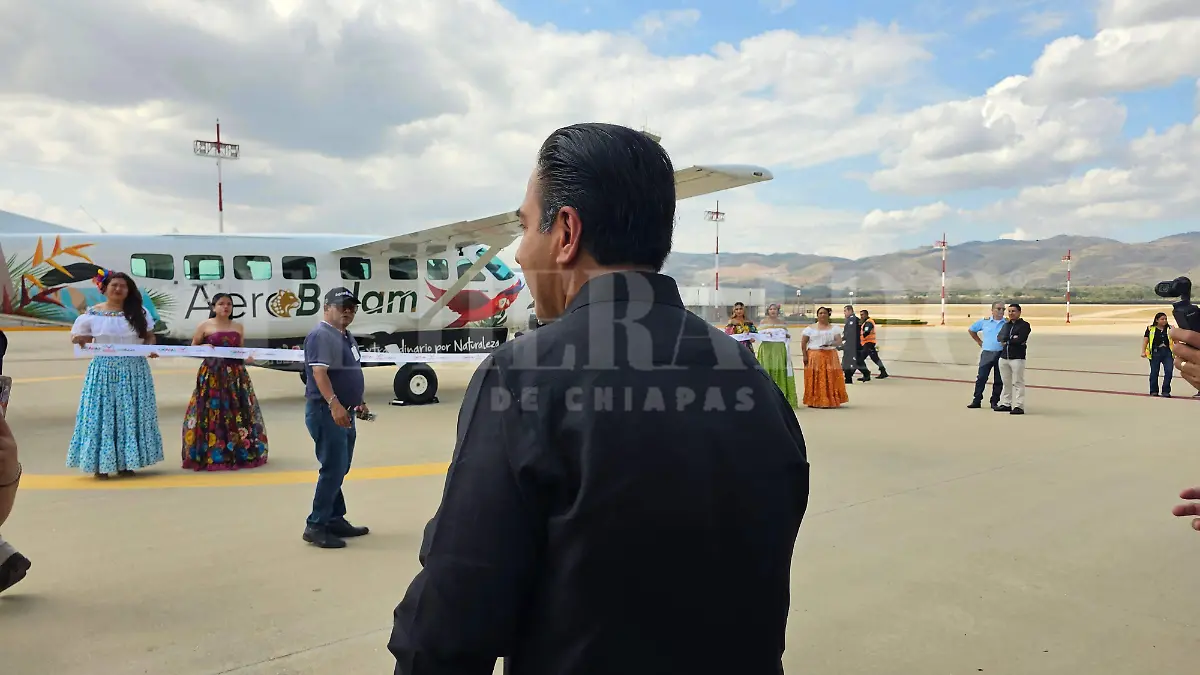
“Spreading the word, how much does it cost? This isn’t just about promotion. This belongs to the people of Chiapas. There isn’t a moment, not a second when I don’t think about how to improve Chiapas. Because Chiapas shouldn’t be sold, Chiapas should be shown… and we’re going to show it,” he asserted.
The ribbon-cutting took place later, where the governor flew to Tapachula, commenting that he is very pleased with these projects, where he plans to have five Cessna planes. “Look, I’m very motivated; it’s going to work, we’re going to have a lot of demand, we’re going to end up with about five planes of this nature,” he said.
Regarding the results of the economy in Chiapas, the governor said they are still working on those issues; for now, they plan to launch a strategic infrastructure plan, where all public works will be contracted to local companies in the southern state.
Such as the Palenque-Ocosingo highway, which will begin construction on May 15 and will benefit the material supply chain, the investments that will be made, in addition to the industrial center already announced by President Claudia Sheinbaum. “In my second year of government, I will begin to showcase Chiapas. I’m being invited to various tourism and economic events, and I’m going to do it,” he concluded.

Source: oem