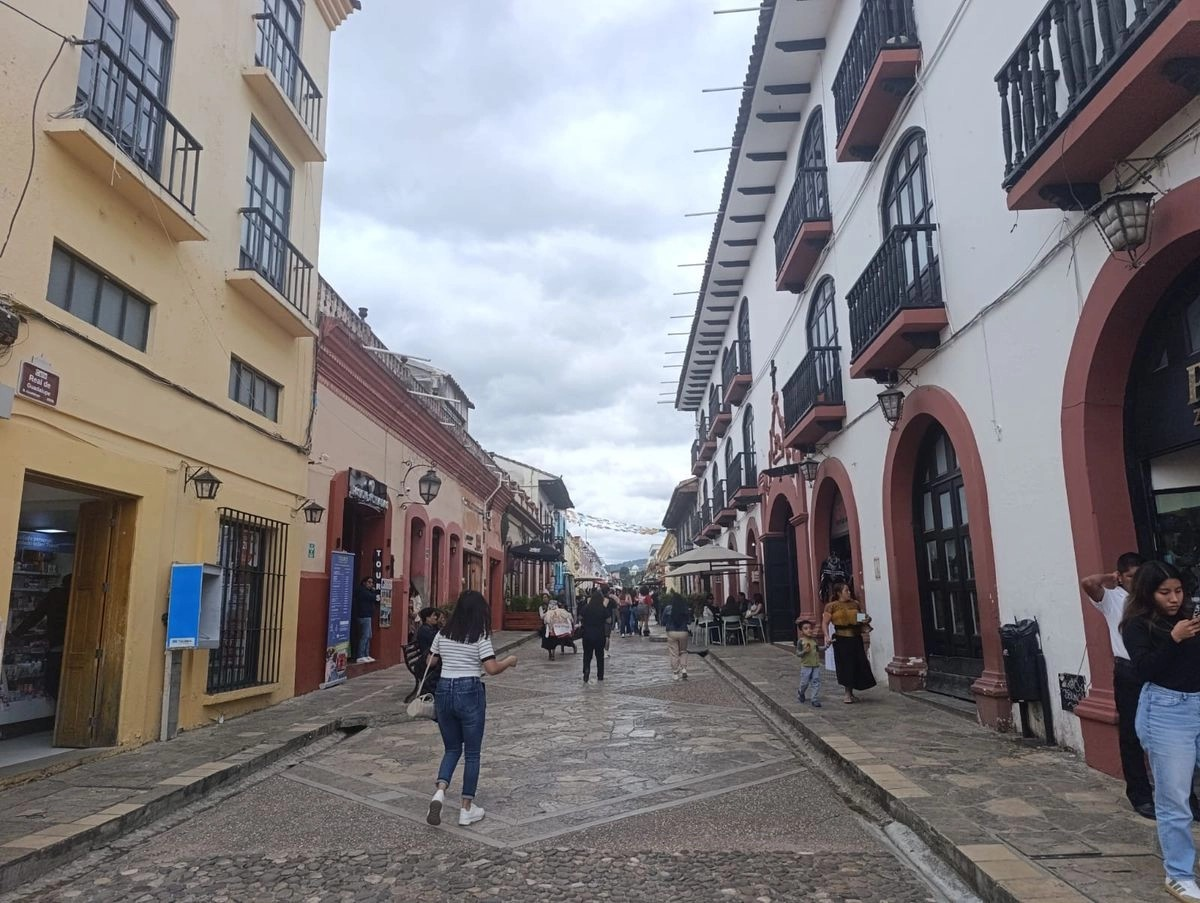

Gentrification caused by the increase in tourists has intensified in San Cristóbal de Las Casas, causing the gradual, almost silent displacement of residents from the historic center and the “uncontrolled” rise in the price of houses and land, warned architecture and urban planning specialists.
They warned that authorities need to recognize the problem, study it, and address it with public policies, in addition to halting the city’s uncontrolled growth.
“In San Cristóbal, the phenomenon is already visible, and we can say that one community that was displaced is the one of the inhabitants who once formed the city’s first neighborhood, known as Colonia Centro. This phenomenon has not yet had as much impact on other neighborhoods such as La Merced, El Cerrillo, or Cuxtitali, but that does not mean they are not at risk,” said architect Rodolfo Fabián Ozuna Espinosa, a member of the municipal council for territorial planning and urban development. “When there began to be greater interest in promoting tourism as an economic sector, land use in the historic center began to reverse. Residential homes began to be divided or given different uses to build hotels, restaurants, etc. The land use in the first blocks of the center is for commerce and services, and very few remain for residential use. In the best of cases, housing is located inside or above, but few residents live in the center, which means that this population was displaced, and customs and cultural characteristics were lost.”
He acknowledged that the problem was partly triggered by the construction of the Eclesiásticos (from Santo Domingo to El Carmen) and Guadalupano (from the Guadalupe neighborhood to Central Park) pedestrian walkways, approximately 25 and 15 years ago, respectively.
Separately, Ana María Pérez Álvarez, an architect and master’s degree holder in urban planning and mobility, stated that “gentrification is related to uncontrolled urban growth. This has led to an increase in land values and resale value in the historic center, which has displaced residents and property owners to some extent. They prefer to rent a property in that area, which has a higher value because it is mixed, and they can build a hotel or commercial space that generates income, even if they move to the outskirts. This increases population growth and generates many irregular neighborhoods.”
She noted that “gentrification unbalances the economic development that exists in the historic center, which seeks to preserve the cultural identity and quality of life of its residents, because many historic houses have already been subdivided, without respecting the regulations and laws” of the National Institute of Anthropology and History (INAH).
He reiterated that “the impact of gentrification is the displacement of residents from the historic center with the arrival of tourists who come with greater economic power to stay downtown and have to pay high rent when local residents cannot.”
He said that “traditional homes have been converted into hotels, restaurants, or residences for foreigners, raising the cost of land and forcing families to migrate to areas with lower real estate values. Some sell or rent properties because it suits them, which causes a loss of cultural identity in traditional neighborhoods, which are affected in terms of identity because there is no longer the same respect for traditions.”
He stated that San Cristóbal (which will celebrate its 500th anniversary in 32 months), Chiapas’ main tourist destination and home to “more than 120 irregular neighborhoods and subdivisions, has experienced a 51.7 percent growth from 2000 to 2020, going from 142,364 inhabitants in 2000 to 215,874 in 2020, according to the most recent census by the National Institute of Statistics and Geography (INEGI).”
Ozuna Espinosa commented that “when real estate investments begin to emerge, properties are acquired from neighbors who probably weren’t planning on selling, but an economic offer attracted them, and they sell their properties. It’s probably seen as a benefit at the time, but in the long run, that economic benefit is minimal because they had to relocate elsewhere and buy a home, possibly in a more distant area that will require alternative transportation options to get to the center, which has a better location and closer services.”
Pérez Álvarez mentioned that “another impact of gentrification is the increase in tourism in the historic center, which demands services and goods, just like the creative city and magical town that it is. All of this is also due to the change in land use, which has gone from housing to commercial premises; the lack of urban planning generates these types of problems. We have disorderly growth with urban sprawl and irregular settlements.”
He stated that “disorderly growth will generate more gentrification among people who lack sufficient resources to sustain themselves in spaces like the downtown area, which is already in the hands of foreigners or those with greater economic power, whether indigenous or from other parts of the country. It’s already too expensive to live downtown,” where many commercial premises pay rents exceeding 40,000 or 50,000 pesos.
He insisted that “tourism displaces indigenous residents. It’s more convenient for homeowners to rent out their homes and move to more affordable locations, but the people of San Cristóbal who need to open a business can no longer afford the rents,” whose prices are unregulated.
The issue of gentrification is complex, continued Ozuna Espinosa, “but something key is first recognizing that it’s a problem that is already occurring in San Cristóbal. To solve it, we must first recognize that it’s a problem and begin to define public policies, because if there are no authorities to recognize and address it, it will continue to grow.”
Ana María raised the need to implement urban planning policies and strategies that promote sustainable and equitable development.
In the opinion of architect Jorge Alberto Ruiz Cacho, former INAH delegate in San Cristóbal, the term gentrification “focuses on the transformation of a deteriorated or modest urban space into areas of privilege and greater purchasing power. It’s a high-sounding term, but it’s a modification, urban renewal, or the recovery of an urban context. Gentrification goes beyond that.”
From his perspective, gentrification “is a phenomenon that doesn’t apply to San Cristóbal due to its urban layout and the situation of the population. It doesn’t apply because of the foundation, the urban layout, and because there’s no vertical growth with high-rise buildings. Gentrification isn’t applicable, if we analyze the term etymologically. Given the nature of our city, it doesn’t apply.”

Source: jornada