
Mayor Clara Brugada Molina reported that the intense rains recorded on Saturday, July 19, left a cumulative total of more than 23 million cubic meters of water in Mexico City, with a critical point in the Magdalena Contreras borough, where the San Francisco rain gauge recorded 60.7 millimeters of precipitation in less than an hour.
“The average rainfall for the entire month of July is 150 millimeters. Yesterday, in just one hour, more than a third of that amount fell,” explained José Mario Esparza, Secretary of Integrated Water Management. He added that such intense rainfall in such a short period of time even caused the gullies that feed the Magdalena River to collapse, although the river itself did not overflow.
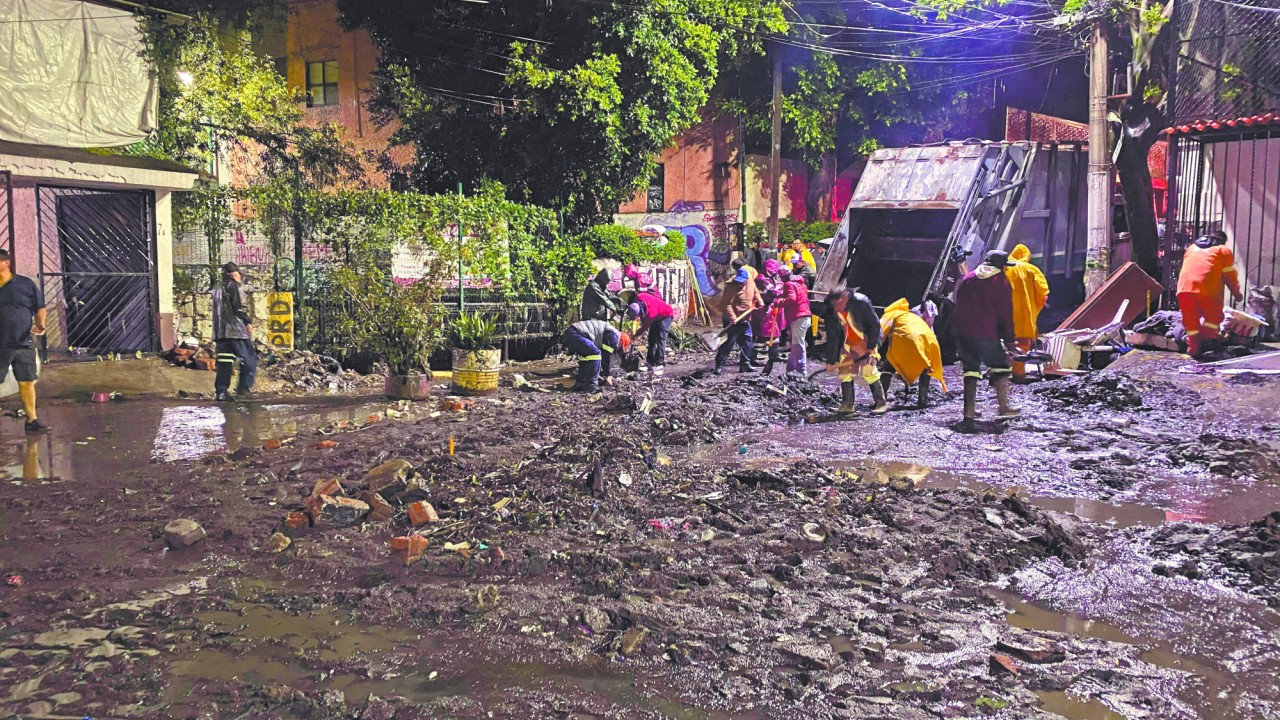
During a press conference in the affected area, it was reported that in Magdalena Contreras, neighborhoods such as Lomas Quebradas, San Jerónimo Lídice, La Malinche, and Lomas de San Bernabé reported 87 affected properties, of which 59 suffered partial loss of belongings, 16 were completely lost, and 12 suffered structural damage, including flooding up to 1.2 meters high in some homes.
To address the emergency, the city government activated Operation Tlaloque, deploying more than 1,200 officials from various agencies. The Secretariat of Integrated Water Management mobilized 290 workers and more than 40 specialized vehicles, including Hercules units, hydropneumatics, and motor pumps.
At the same time, the Ministry of Public Works deployed 70 personnel and 20 submersible extraction equipment, while the Ministry of the Environment began the urgent cleanup of the “La Coyotera” ravine in Lomas Quebradas, one of the most affected by the debris flow.
Other support
In addition, it was explained that temporary shelters and community kitchens were set up to assist affected families. Government insurance adjusters also began visiting affected homes on the morning of July 20 to conduct damage assessments.
The Mayor emphasized that these events can no longer be considered “atypical rainfall,” but rather are increasingly frequent and intense events due to climate change.
For this reason, she announced the expansion of the Water Acupuncture program, which includes the creation of more than 100 rainwater absorption wells in strategic areas to mitigate future flooding.
Source: eleconomista