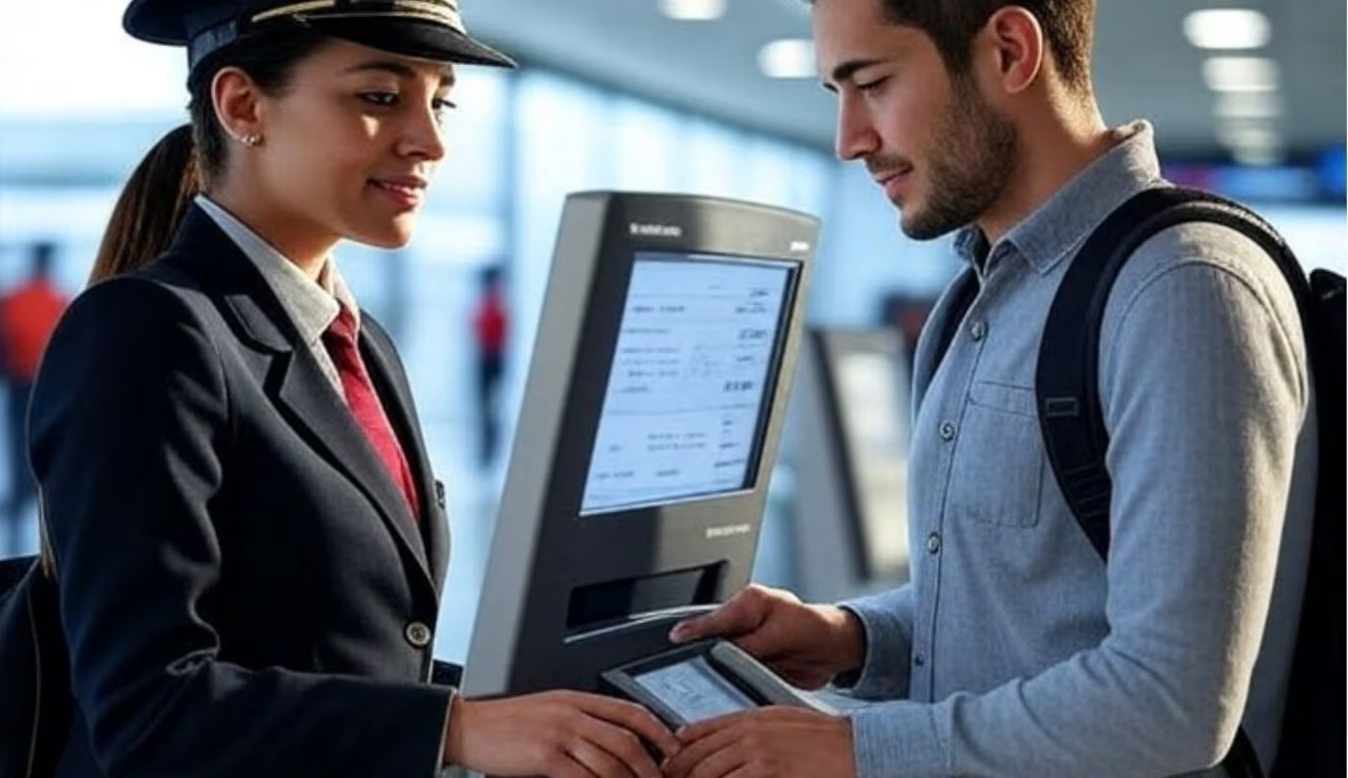

The Mexican government officially announced the creation of an Electronic Travel Authorization (ETA) system for foreign citizens wishing to enter the country by air. The agreement was published on July 25, 2025, in the Official Gazette of the Federation (DOF) and marks the beginning of a phase of digitalized immigration control, in line with models applied in countries such as Canada, Australia, and the United States.
What is the ETA?
The Electronic Travel Authorization will be a digital document that citizens of countries that require a Mexican visa must obtain in advance to board a flight to Mexico. The process will be completed online, through a system managed by the National Migration Institute (INM), and will be mandatory before boarding.
Although the new system facilitates the process by eliminating in-person visits to consulates, it does not replace immigration screening at points of entry. Electronically authorized individuals must still go through INM filters upon arrival in the country.
To whom will this apply?
So far, the official publication does not specify the countries that will be eligible to process this electronic authorization. The Ministry of the Interior, through future resolutions, will determine which nationalities will be eligible for this new mechanism.
However, this measure could represent a formal expansion of the system known as SAE (Electronic Authorization System), which has been in operation for citizens of countries such as Russia, Ukraine, and Turkey for some years.
What does this change entail?
The official announcement lays the groundwork for Mexico to modernize its immigration policy, streamlining the entry of visitors for tourism or business purposes, but also allowing for greater pre-arrival screening. The digital implementation reduces consular contact, but centralizes the decision-making process in automated systems and the INM (National Institute of Migration).
Furthermore, by limiting the authorization to air entry only, the government maintains more precise control over entry routes.
Regional Context
Several countries have adopted similar systems in the last decade, such as Canada’s ETA, the United States’ ESTA, and Australia’s eVisitor. Mexico’s decision follows a similar path, except that it has not yet been implemented globally.
Source: publimetro