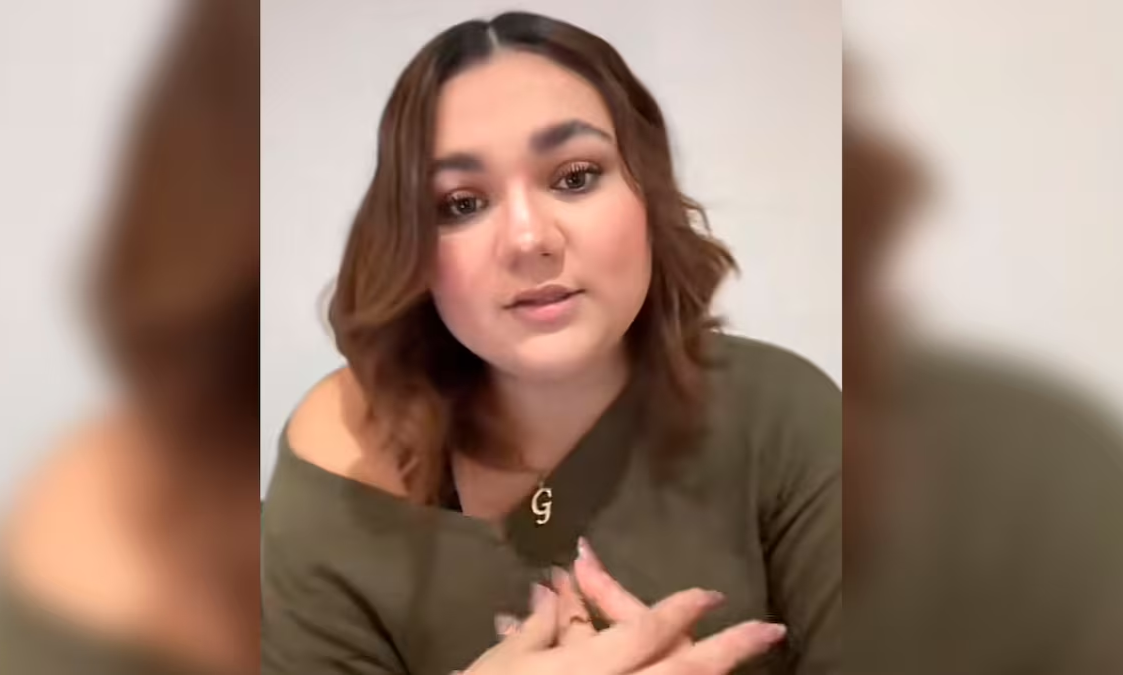

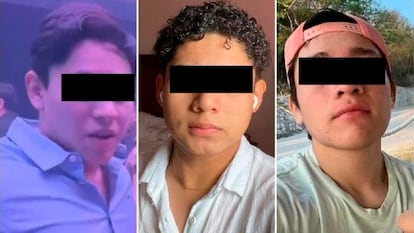
This Tuesday afternoon, Susan Saravia, a 22-year-old law student at the Autonomous University of Campeche, decided to go on camera and abandon the anonymity she and her mother, Liz Rodríguez, had agreed to maintain regarding her real name when the gang rape of which she was the victim became public. The complaint she filed, just hours after the March 31st attack—in which Saravia names three young men, one of them her friend, linked to the Morena party—has led to the arrest of one of them, while the whereabouts of the other two are still unknown. Ángel, Yeshua, and Jorge sexually abused her and, according to testimony gathered by Susan and her mother, did the same to at least seven other women.
Institutional silence surrounds the case, which is already beginning to be referred to as the Campeche Gang Rape (La Manada de Campeche)—a reference to the gang rape of a young woman in Navarra, Spain, in July 2016, by five men. The State Attorney General’s Office, the FGECAM, published a statement on Tuesday, hours after Susan uploaded her video, in which it “reaffirms its commitment” to victims of crime. “As a result of the investigations conducted by the Justice Center for Women, it was learned that on March 31, at approximately 3:53 a.m., a group of men sexually assaulted a woman inside a property located in this capital city,” the statement reads.
Campeche Attorney General Jakson Villacis Rosado said in an interview this Tuesday that they are continuing to work toward the arrest of Yeshua and Jorge, the other two alleged attackers, following the capture of the third, Ángel N, on July 10. “We know we’ve been searching for some time, but we won’t make any decisions until we have those arrested. We already have one person, Ángel, who has been charged and has been placed under an official preventive detention order, but our objective is to search for, locate, and arrest these two individuals who remain at large,” he said.
Furthermore, the prosecutor noted that they had no further complaints linking the three men to other crimes and invited potential victims to report them if they recognize them. He also said that there are no privileges in Campeche: “There are no influences here; we don’t allow any privileges or influence peddling. It’s an order from the governor to work on behalf of the victims.”
However, neither the Morena governor of the state, Layda Sansores, nor the Secretary of Government, Elisa María Hernández Romero, have mentioned Susan’s complaint, which accuses the Morena party of possibly covering up for the three young men. According to statements by Susan and her mother, the three alleged attackers worked on the Campeche gubernatorial campaign, and all three families include state officials. “We alone won’t be able to fight all of this. Neither the Prosecutor’s Office, nor the Women’s Justice Center, nor the governor, nor the Secretary of Government gave us a response. They only asked us for a vote of confidence and to let them work,” Liz Ramírez said in a video call.
But four months have passed, and the desperation over the lack of results since the arrest warrant was issued for the three men on April 14 led these two women to go public with something they had initially refused to do: “Susy told me: do it yourself on your Facebook page. I don’t want to be in the middle of all this. And that’s what we tried to do, until yesterday,” Liz recalls.
Susan also recalls her resistance to the possibility of making her personal information public, until May arrived and there was no progress: “[At first] we preferred not to make it public, because we decided to trust that justice would be done. I felt it was unfair that, in addition to what I was experiencing, I would have to expose myself, give my name, be in the public eye, and receive all those negative comments,” she recalls.
Yeshua, one of the three alleged rapists, was her friend. He was a Political Science student at her university. She met him at a party, and they became very close. Susan claims she’d never felt in danger with him before: “There was a lot of trust up until the events; I never saw any malicious intent on his part. It was always a good friendship,” she notes.
Other Possible Victims
Susan recalls that, after her case became public, a young stranger approached her and, in tears, told her that she had also been a victim of the three men she had reported. Both women, Susan and her mother, say that, so far, seven women have reached out to tell them they suffered the same thing, both through social media and in person.
“Now that I see the comments and focus on the positive, I think that if I hadn’t spoken out, how many more would have been attacked by these men? These people would have continued because they already did it; they were used to it. I’m not looking for anyone’s pity; I don’t want my case to be dismissed like all the others. I’m proud to have the mother I have because all the girls, myself, and the other victims will have justice for my mother,” she concludes.
Susan has defended her right not to be revictimized, to appear without crying or breaking down on camera and in her statements to the media. She also defends her desire that her attackers and the people who protect them not see her collapse or give up.
Source: elpais