
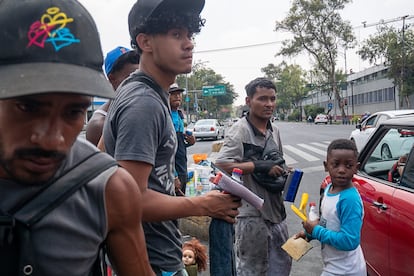
With mid-morning traffic increasing, Yudelis Ferreira leaves the migrant shelter with her three young children, heading for another day selling popsicles in the harsh heart of the Mexican capital. This has been Ferreira’s life for months, after her family’s plans for a future in the United States fell apart with the arrival of the Donald Trump administration.
Like thousands of other migrants—mostly Latin Americans, but also from Asia and Africa—Ferreira and her children find themselves stranded on the migration route, permanently separated from their goal. “We’re trapped,” said Ferreira, 29, summing up two years of migration since leaving Maracaibo, the sweltering city that sits on the Venezuelan oil lake of the same name. “We have to find a way to generate some income.”
About 5,000 migrants, mostly from Latin America, are currently housed in 16 shelters in Mexico City, or in apartments and private homes in some of the capital’s poorest neighborhoods, according to Emanuel Herrera, director of the Vasco de Quiroga shelter, one of four operated by the city government. Herrera cautioned that the numbers are fluid. The decision to house them in the city is part of a government strategy to discourage migrants from approaching the border and attract them inland, especially to the capital, according to Mexican officials in Ciudad Juárez.
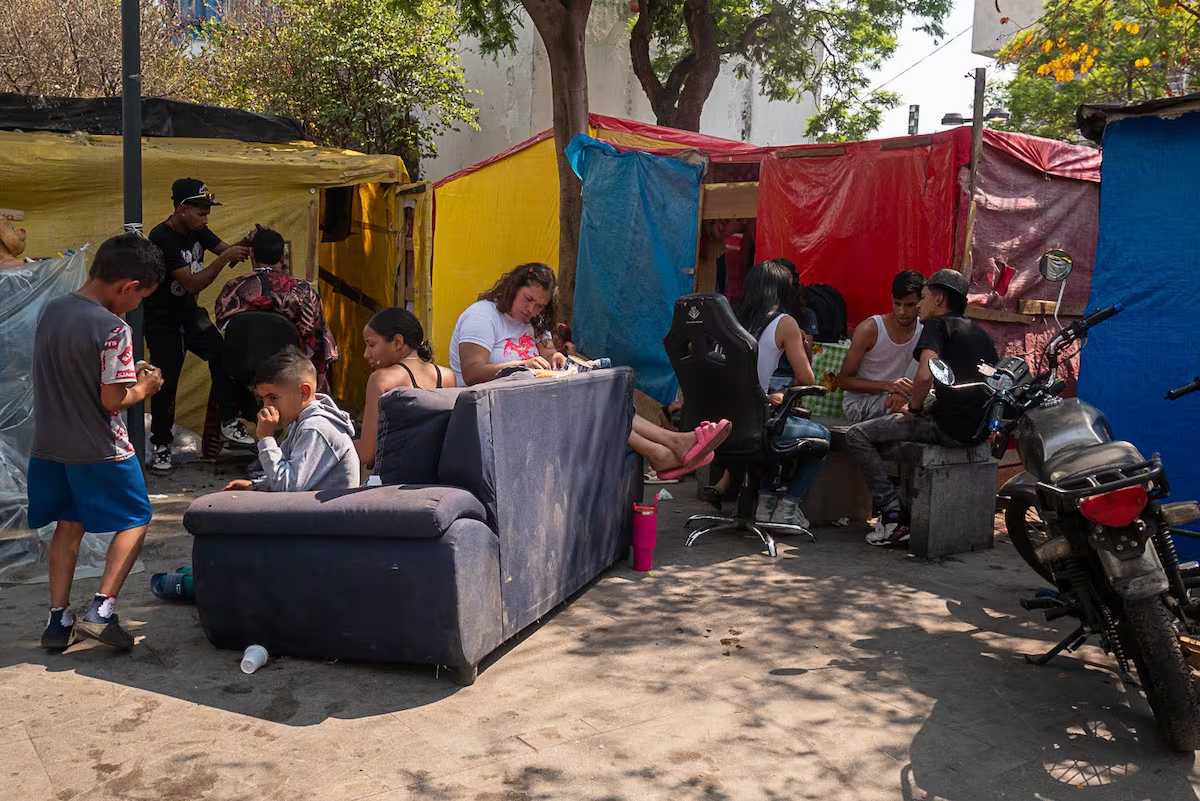
Nayleth, from Caracas, and her children sleep in a migrant camp in Mexico City. Keith Dannemiller (Puente News Collaborative)
The northward migration flow has virtually dried up since then-President Joe Biden tightened regulations in the spring of 2024, and even more so since Donald Trump took office in January.
Crossings through the Darien Gap—the inhospitable jungle separating Panama from Colombia—have almost completely stopped. Data from Panama’s immigration service shows a 98% drop in migrant crossings this year compared to the already low numbers for 2024. Encounters with migrants at the U.S.-Mexico border have also plummeted: 9,300 were recorded in June, down from about 96,000 in December, the last full month of Biden’s term, according to U.S. government statistics.
Like tidal pools, thousands of migrants remain stranded along routes in Central America and Mexico. With young children to feed and clothe, many devise various plans to survive as the weeks pass. They face long delays in finding an affordable way back home or across an increasingly fortified U.S. border. They also struggle to settle in the places where they’ve ended up stranded.
“Trapped” in Mexico City
The Vasco de Quiroga center, where Ferreira’s family is staying, currently houses about 330 people. Most are Venezuelans, but the residents also include Colombians, West Africans, and a handful of men from India, lost along the way. All have been on the migration route for months, even years, many of them stopping to work to continue. Bonds have formed among the migrants. Some mothers have given birth along the way. Some have died. But faith in a new—and perhaps better—American future has kept them going.
Now, those dreams have crumbled. This shelter—and whatever may come next—is proof of that.
“Since Trump returned, there are many people trapped in the city,” said Herrera, the shelter director. “They had a light at the end of the tunnel,” he said of the migrants’ hope of reaching the United States. “But now that light has gone out.”
Source: elpais