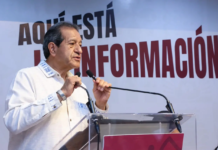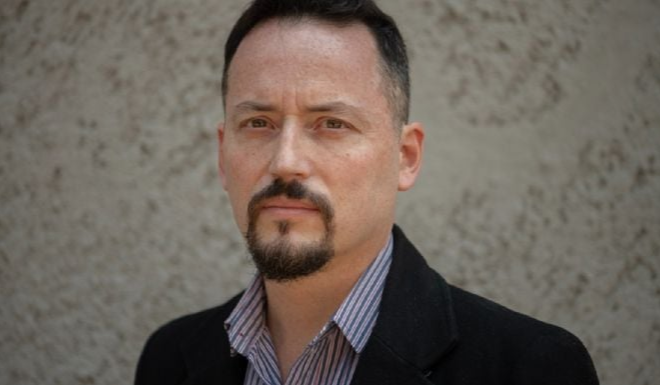

With the intention of promoting an agenda of conservative values in decision-making in Mexico, Raúl Tortolero, a member of the National Action Party (PAN) and leader of the New Hispanic Right, formed the National Council of the New Right in Mexico. Although it is not a partisan project, it flirts with the possibility of promoting right-wing alliances to compete in the 2030 electoral process.
This National Council of the New Right presents itself as a strategic node to unify and strengthen conservatism in Mexico in the face of the rise of an alleged “narco-socialism” and the fragmentation of the traditional right. Beyond its non-partisan nature, it seeks to build broad alliances—from housewives to political figures from different parties—that defend an agenda based on seven key pillars: defense of life, faith, the “natural” family, private property, national sovereignty, freedoms, and human rights. Their ambition is clear: to influence the political arena to reposition the right in the country, confront what they consider an offensive of progressive ideologies, and reconfigure the role of the secular state, with a vision inspired by international conservative movements such as MAGA in the United States.
With a career in the PAN since his adolescence, Raúl Tortolero has witnessed the fragmentation of the Mexican right. Now, faced with the hegemony of Morena after the recent elections, his goal is clear: to unify the various conservative actors under a single ideological umbrella, without falling into partisan divisions.
However, in an interview with Proceso, he acknowledged that if political forces aligned with his movement consolidate during this six-year term, the council would serve as a vehicle to foster a conservative alliance that seeks to reposition the right in the country.
So far, the council includes supporters of the PAN (National Action Party), the Viva México movement, led by former independent presidential candidate Eduardo Verástegui, and the México Republicano organization, chaired by Juan Iván Peña Neder.
It even includes two members of Movimiento Ciudadano (Citizen Movement) who were allowed to “maintain their conservative agenda.” They are Andrea Hernández, secretary of Social Movements for the orange party in Chiapas, and Mario Fernández Márquez, former candidate for federal deputy for District 02, headquartered in Ixmiquilpan, in the heart of the Mezquital Valley.
Furthermore, Tortolero himself acknowledges maintaining good relations with members of El Yunque, an ultra-conservative organization with a presence in Mexico and Spain: “Well, I have many friends from El Yunque. I think it’s an important organization. But if you ask me if I’m from El Yunque, if I were from El Yunque, I wouldn’t be able to say… I haven’t talked to my friends of that ideological persuasion lately, but I believe that if we defend God, if we defend Christian values, then I don’t think they’ll take it the wrong way, because it’s the same thing they do.”
Regarding his alliances or relationships with international right-wing movements, Tortolero also boasts friendships with “people” from other conservative governments. Although he doesn’t name names, he mentions Hungary, Spain, Argentina, El Salvador, and the United States.
The Mexican conservative shows particular admiration for US President Donald Trump’s Make America Great Again (MAGA) movement: “That’s the basic difference between the old right and the new right. The old right, let’s say, is that of the Bush administration, with that whole profile; they were liberals; we are conservatives, and that can be seen very clearly, especially in the MAGA movement in the United States, where they talk about God and mention Christ without any hang-ups.”
In the United States, despite identifying as a secular government, there is “ceremonial theism,” which is the practice of making references to God in public contexts, such as in the Pledge of Allegiance or in the national motto “In God We Trust.” For Raúl Tortolero, in Mexico, on the other hand, there’s a misunderstanding of what a secular state means: “It means there’s no official religion, that’s all. It has nothing to do with us not being able to cross ourselves, or with those of us who are politicians or dedicated to politics not being able to live our religion, whatever it may be. But hey, we defend Christian values; we feel it’s a human right, religious freedom, to be able to live our values freely. Just because you’re a congressman or senator or mayor or president doesn’t mean you have to hide.”

Supposed Modern Supremacies
The conservative thinking promoted by the founder of the New Right categorically opposes modernity, the French Revolution, the Enlightenment, and postmodern Marxism.
In the aforementioned currents, Tortolero identifies the ideological promotion of causes that have become the “new face of the progressive left,” which spread a transversal agenda of antinatalism: “They have to do with LGBT supremacy, feminist supremacy, Black supremacy—especially in the United States—indigenous supremacy, and eco-animalist or environmentalist and animalist supremacy.”
In this sense, in the short and medium term, the council aims to influence legislative discussions that affect the aforementioned causes and groups, such as the discussion on the decriminalization of abortion in the Mexico City Congress, or reforms that seek to defend sexual transition processes for minors.
For the moment, the National Council of the New Right is focusing on a specific agenda that includes gatherings in which they invite various politicians to pray, such as the mayor of Cuauhtémoc, Alessandra Rojo de la Vega.
In addition, Raúl Tortolero advances that they will send a letter to President Claudia Sheinbaum to demand that she offer a public apology to the Catholic people for the 250,000 deaths caused by the Cristero War between 1926 and 1929, a result of the tension between the government of Plutarco Elías Calles and the Church: “So, just as López Obrador wanted the King of Spain and the Pope to apologize for the arrival of the Spanish and their evangelization in Mexico, we also, in that same logic of national conciliation, of smoothing out differences on all sides, believe that it would be important for her, as head of state, and also because they invited the Pope to come.”

Source: proceso