
The city of Mexicali, known for being one of the hottest areas in Mexico, has recorded temperatures throughout its history that defy human limits, establishing itself as an epicenter of extreme heat in the country.
Located in the north of the country, the capital of Baja California has exceeded temperatures above 50 degrees Celsius on multiple occasions, marking milestones that reflect the region’s harsh climatic conditions.
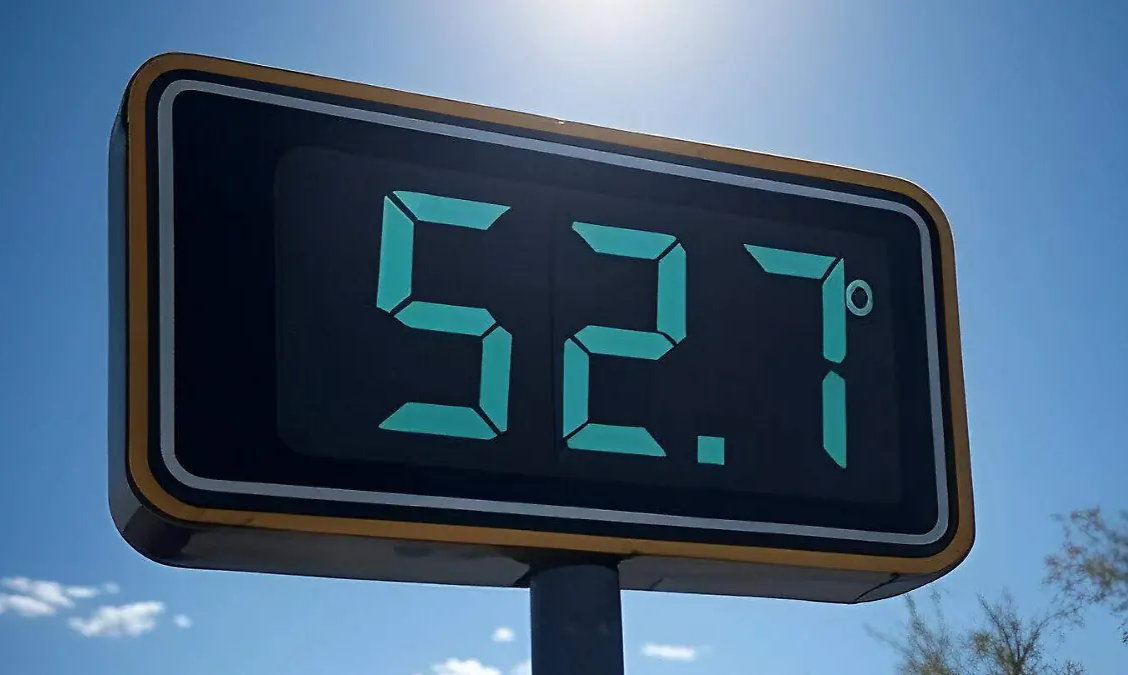
Mexicali once again broke a record for maximum temperatures, after the National Water Commission (Conagua) documented that yesterday was the highest temperature ever recorded, with 52.7 degrees Celsius, since records began in 1948.
This morning, the agency revealed that yesterday, August 7, 2025, the maximum temperature was 52.7 degrees Celsius, surpassing the highest ever recorded for an August day.
Historical Records
The first absolute historical temperature record in Mexicali dates back to July 28, 1995, when thermometers reached 52 degrees Celsius, a mark that has been surpassed on recent occasions due to increasingly intense heat waves.
In July 2024, the city recorded 52.4 degrees Celsius, making it the hottest July in 75 years, according to data from the National Water Commission (Conagua).
With yesterday’s data, August 7, 2025, will become the date with the highest temperature recorded so far.
During 2025, there are a total of eleven occasions so far this year that the historical highs on various dates during the summer have been exceeded.
Geographical Conditions
Mexicali’s geographical conditions, with 90% of its potential annual sunlight hours and barely 75 mm of precipitation, contribute to these extreme temperatures, according to UNAM studies.
The low humidity and the desert location exacerbate the heat, making summer days practically unbearable. This phenomenon has had tragic consequences, with dozens of deaths from heat stroke reported in recent years, with four deaths in 2025.
Local authorities have implemented measures such as hydration stations, shelters, and prevention campaigns to mitigate the effects of the heat. However, experts warn that climate change could lead to new records in the future, putting the region’s population and ecosystem at risk.
Meanwhile, as Mexicali faces this climate challenge, the community is adapting with precautions such as wearing light clothing, hydrating regularly, and limiting outdoor activities during peak hours.
The city, with its history of heat resistance, remains a living reminder of the extremes that the climate can reach in northwestern Mexico.

Source: oem