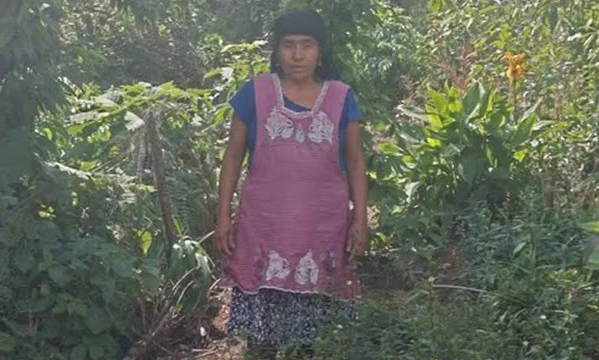

Reynalda Martínez Porfirio, an Indigenous Mixe woman originally from Santiago Atitlán, Oaxaca, is facing a case of dispossession and violence following the death of her husband. Without speaking Spanish or having completed primary school, she was expelled from her home and stripped of her lands under the pretext of not having children, in accordance with local “customs and practices.”
Her battle for justice exposes the serious barriers Indigenous women face in accessing the Mexican legal system. Experts and activists denounce the invisibility and structural discrimination they suffer. In her struggle, Reynalda receives legal support and demands an investigation into this emblematic case of human rights violations.
Reynalda Martínez Porfirio, an Indigenous Mixe woman from the Sierra Norte of Oaxaca, is going through a painful experience following the death of her husband. Originally from Santiago Atitlán Mixes, she was a victim of dispossession by her in-laws, who evicted her from her home and took her house, as well as a coffee plantation she had bought herself, along with all her belongings.
According to José Pablo Antonio, Reynalda’s lawyer, “the motive is that because she couldn’t have children, if she had, she could have kept the house and the plot.” This situation is supported by local traditions that deny rights to women without children.
Invisibility and denial of rights for Indigenous women
Activist and president of the Eufrosina Foundation, Eufrosina Cruz Mendoza, denounces that “this violence is supported by the custom of saying: because you didn’t have children, you have no one to inherit from, you are no owner, you are made invisible, they erase you. And because she didn’t have children, so she’s not a woman?”
Reynalda, who doesn’t speak Spanish and didn’t finish primary school, faces a justice system constructed alien to her circumstances and culture. Economic costs and language barriers also make it difficult for her to access legal defense. “One thousand pesos one way, one thousand pesos back, and if you don’t speak Spanish, they’re begging for justice from their country,” explains Eufrosina Cruz.
Legal Obstacles and Lack of Support in Oaxaca
Upon arriving in the Oaxacan capital, Reynalda encountered an indifferent authority that imposed multiple conditions on her case to accept it: “You need a lawyer, you need a translator, I can’t receive you like this,” her lawyer explains.
Today, thanks to the support of lawyers from a human rights association, Reynalda continues her fight to have her case investigated and to break down the structural barriers that Indigenous women face in Mexico. As Eufrosina Cruz says: “That’s the justice system Indigenous women face; there’s still a long way to go.”
Reynalda calls for justice, representation, and recognition of her fundamental rights, reflecting the struggle of many Indigenous women who remain invisible and unprotected.
Source: tvazteca