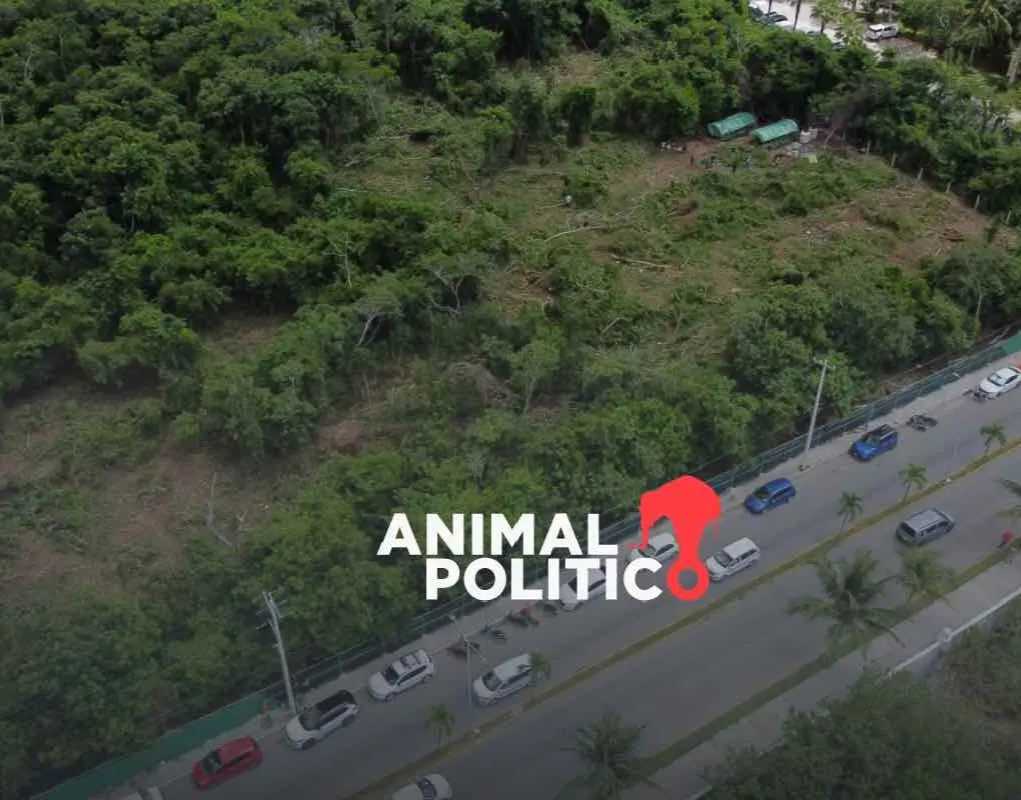

While the Ministry of Environment and Natural Resources (SEMARNAT) analyzes the environmental impact of the Cuarto Muelle project on the island of Cozumel, Quintana Roo, Muelles del Caribe S.A. de C.V. moved quickly to validate the clearing permit granted by the administration of former Mayor Juanita Obdulia Alonso Marrufo to cut down 1.1 hectares of trees and repel local wildlife species, such as mammals and migratory birds.
Muelles del Caribe S.A. de C.V. obtained a permit corresponding to an “authorization for change of land use in forest lands” to deforest virgin forest and use that space for urban development under the category of “Medium-Density Tourist Zone.”
The permit was granted during the administration of Morena candidate Juanita Obdulia Alonso Marrufo, for the period from 2021 to 2024. The land uses permitted on the property will now be: residential tourist development; tourist zone; small and medium-sized businesses (with a maximum sales area of 4,500 m2); hotels; medium-density residential development; parking; and recreational, cultural, and administrative uses.
As this is a commercial activity, the permit specifies that a parking area for cargo vehicles and an area for loading and unloading products must be provided within the same lot. The use of public roads or user parking for this purpose is prohibited.
The land use change authorization bears the stamps of the Representative Office of the Secretariat of Ecology and Environment of the State of Quintana Roo, letter No. 03/ARRN/1298/2022, and the stamp of receipt from the Federal Attorney General’s Office for Environmental Protection (Profepa) dated September 21, 2022.
According to the authorization, a copy of which is available to Animal Político, the concessionaire Muelles del Caribe S.A. de C.V. has a one-year period from receipt to complete the removal of forest vegetation. This period could be extended if requested in accordance with Articles 146, 147, and 148 of the Regulations of the General Law on Sustainable Forest Development.
A shopping mall for the Fourth Pier
The land use change authorized corresponds to the “California” property located on the island of Cozumel, Quintana Roo, on the extension of the Costera Sur Highway, also known as Chankanaab Highway, currently without an official number. Its cadastral code is 4011800151.
Members of the Cozumel Conservation, Research, and Environmental Management (CIMAC) civil association filed an appeal with Semarnat (Semarnat) regarding the permits granted to the company Muelles del Caribe S.A. de C.V. for the construction of the Fourth Pier on June 12.
The request for an appeal was approved on June 18, and on June 19, Semarnat announced it in a statement indicating that the agency will be reviewing the project’s environmental impact, following the resolution issued on December 7, 2021.
Muelles del Caribe S.A. de C.V. announced that it would temporarily suspend construction of the Fourth Pier. However, days after the announcement, it began clearing the forest on the property where it plans to create a commercial plaza, similar to the one it has with the Punta Langosta pier in Cozumel.
Noemí Guadalupe Martín, a graduate in Natural Resources Management and president of the CIMAC civil association in Cozumel, reported that Muelles del Caribe S.A. de C.V. had begun deforestation activities on a property.
“The property is across from the coastal area, located opposite the Fourth Pier, where they plan to build a bridge to cross from the coast to the property. It’s the same structure they already have, and it’s a plaza on the island. The third pier is theirs, the Punta Langosta Pier, where they have a bridge on the ocean side,” explained the president of the CIMAC association in an interview with Animal Político.
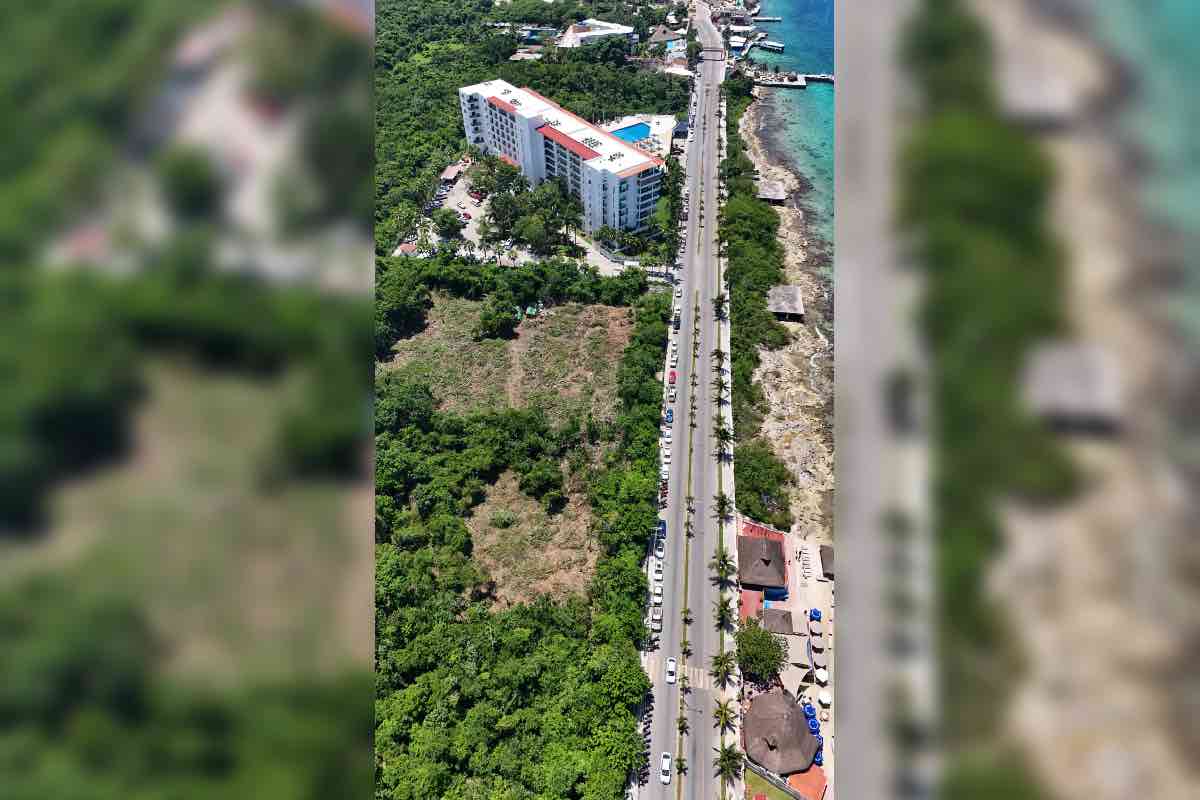
Using aerial video and photographs, CIMAC members have documented the deforestation of the jungle since September 1st on the property where Muelles del Caribe S.A. de C.V. obtained authorization for a land-use change for commercial purposes.
“What they did was almost completely deforest, although we managed to intervene. They have a permit from Juanita Alonso’s government. They obtained a land-use change permit for deforestation in the area. That permit expires at the end of September, and what they did was execute it,” Guadalupe Martín explained.
Despite denouncing what was happening on social media, even though Semarnat has been reviewing the permits granted to Muelles del Caribe S.A. de C.V. for two months, the company continued with a project supporting the construction of the Fourth Pier.
“No matter how much we made it clear, nothing was happening. They continued logging every day. So, I decided to contact the state government. Óscar Rébora [Secretary of Ecology and Environment of Quintana Roo], from the state government, came to Cozumel and closed the site because [the company] didn’t have a permit for waste management,” Guadalupe said.
According to the resolution, the municipality of Cozumel authorized the change of land use on 1.1 hectares of forest land for the development of the project called “Muelle Cozumel, Cruise Terminal,” which will be located on the island of Cozumel, Quintana Roo, and was promoted by Daniel Fidelio Peraza Marfil, the company’s legal representative.
Forest vegetation located outside the area where the change of land use on forest land is authorized may not be affected by the related works and construction.
The permit for deforestation of the jungle states that it had to be done by mechanical and manual means, without chemicals or fire. Furthermore, the removal of vegetation had to be done gradually to avoid long periods of bare soil, which could lead to erosion.
Although the chit palm (Thrinax radiata) was identified on the property as a plant species classified as Endangered by the Mexican Official Standard NOM-059-SEMARNAT-2010, the Cozumel City Council granted permission for the removal and relocation of this plant species.
However, to remove the wildlife that inhabited the property, the scaring away of individuals was authorized, despite also indicating a possible rescue or relocation, a situation that did not occur, according to the activities documented by members of the CIMAC association.
The resolution states that all necessary actions must be implemented to prevent the hunting, capture, sale, and trafficking of wildlife species, as well as the collection, sale, and trafficking of wild flora species found in the project area and adjacent areas.
The document states that the company must implement a Wildlife Rescue and Relocation Program. It must consider all species found on the property, with special emphasis on the boa (Boa constrictor) and the white pigeon (Patagioenas leucocephala), both endangered and non-endemic species.
In addition, special attention is requested for the cozumelae spiny lizard (Sceloporus cozumelae), which is classified as protected and endemic; and the least tern (Sterna antillrum), which is classified as protected and non-endemic.
Guadalupe Martín, president of CIMAC, points out that closing the property, as an action taken by Secretary Óscar Rébora, provides “a breathing space” to stop the logging that the company began “solely because they can, because they have the construction permit for the Cuarto Muelle.”
“Why cut down virgin trees and plants that are so important for oxygen, the environment, and the reef? If they don’t have a permit for the Cuarto Muelle construction, why do they clear cut the area where they want to build their shopping mall, even though the construction is suspended? They used their economic power and it cost them the lives of Cozumel’s flora and fauna,” said Martín.

Source: animalpolitico