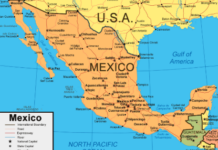

Annual inflation in Mexico stood at 3.74% during the first half of September 2025, a figure lower than that observed in the same period in 2024, when it reached 4.66%. However, price behavior showed strong regional contrasts: Tabasco, Nuevo León, and Mexico City recorded the largest fortnightly increases, while Chiapas stood out for having the smallest variation in the country, with a decrease of -0.32%.
Bi-weekly variation of the INPC (National Consumer Price Index)
According to the National Institute of Statistics and Geography (INEGI), the National Consumer Price Index (INPC) rose 0.18% compared to the previous two weeks, bringing its level to 141,181 points. This figure confirms a moderation in the inflationary rate, although at the same time it reveals significant disparities between states and cities in the country.
The national data provides an average view of the change in the prices of goods and services consumed by households, but the disaggregated figures show that the pressures were not evenly distributed across the country.
States with the Largest Increases
The NCPI by state indicated that Tabasco reported the largest increase, at 0.42%, followed by Nuevo León (0.34%) and Mexico City (0.33%). Other states also exceeded the national average, such as Zacatecas (0.33%) and Guanajuato (0.29%).
Broken down by city, the most notable increases were observed in Huatabampo, Sonora (0.50%), Fresnillo, Zacatecas (0.48%), and Villahermosa, Tabasco (0.42%). In the case of the Metropolitan Area of the Valley of Mexico, the variation reached 0.33%.
In contrast, some states registered negative variations. Chiapas reported a decrease of -0.32%, while Aguascalientes (-0.11%) and the State of Mexico (-0.05%) also fell below the national average.
At the local level, the decline was most marked in Tuxtla Gutiérrez (-0.35%) and Tapachula (-0.24%), both in Chiapas. INEGI clarified that the figures broken down by city and state are for informational purposes only, but serve to illustrate the specific dynamics of each region.
Education as a Driver of Core Inflation
The main inflationary driver came from the core index, which grew 0.22% in the two-month period and reached an annual rate of 4.26%. This indicator, which excludes highly volatile goods, reflected increases in merchandise (0.23%) and services (0.20%).
Education services were decisive. Its sub-index registered an increase of 3.10% fortnightly and 5.83% annually. Tuition for preschool (5.89%), primary school (5.75%), and secondary school (5.48%) led the increases. High school (2.71%) and university (1.63%) also rose.
Volatility in non-core inflation
For its part, the non-core index grew barely 0.03% in the two-month period and 2.01% annually, well below the 6.73% recorded in September 2024. Domestically, livestock product prices increased 0.24%, while energy and authorized tariffs fell 0.04%.
Decreases in fresh food were significant: avocado (-5.94%), potato (-4.29%), tomato (-1.40%), orange (-4.66%), and lettuce (-5.01%). These declines helped offset the increases recorded in education and other services.
Agricultural Products as a Containment Factor
The performance of agricultural goods contributed to a stable overall inflation rate. In addition to fruits and vegetables, professional services experienced a decrease of -15.31%, which directly contributed to the reduction in inflation pressures in some states in the southeast.
The fruit and vegetable subcomponent even reported a negative annual variation of -4.32%, representing temporary relief for household spending. The INPC, which is compiled with a sample of nearly 123,000 items and services, confirms that annual inflation remains under control, although with marked differences by region.
The pressure was concentrated in the education sector due to the start of the school year, while fresh food helped soften the impact. The outlook suggests that, despite the national moderation, families face unequal conditions depending on the state in which they live.

Source: msn