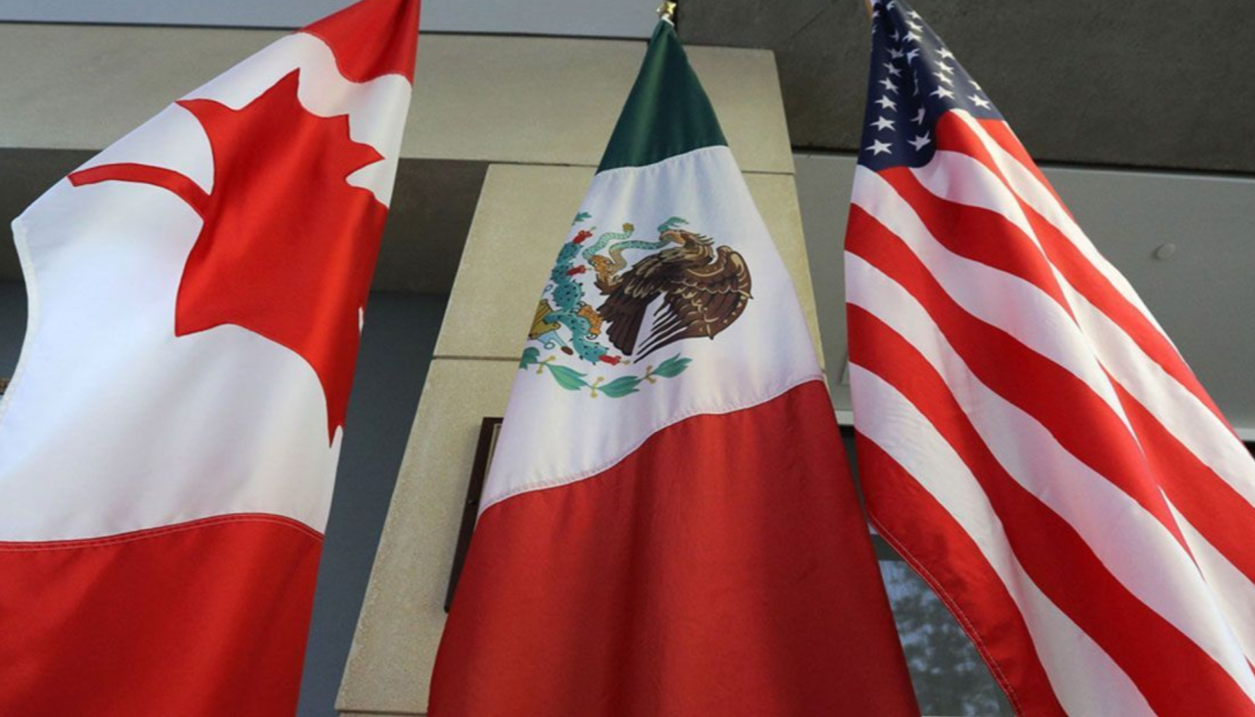

Foreign trade experts expressed concern about the reform to Campeche’s expropriation law, approved a few days ago, arguing that it deviates from the commitments Mexico made in the United States-Mexico-Canada Agreement (USMCA).
Furthermore, they warn that it could serve as a precedent for other states to implement similar reforms to carry out expropriations without following national judicial standards and respecting international trade commitments.
On September 4, the Campeche Congress approved an initiative submitted by Governor Layda Elena Sansores San Román to reform the state’s Expropriation and Other Limitations on Property Rights Law. This law establishes the public utility causes, as well as the procedures, modalities, and execution of expropriations, temporary occupations, administrative easements, and limitations on ownership of private property within the state’s territory.
The business community’s concern is that, in their opinion, the reform allows the state government to immediately seize private property without a final resolution or prior payment of compensation.
Furthermore, compensation, by decree, can be paid over a period of up to ten years, in annual installments and at market interest.
They emphasize the criteria established as legitimate causes of public interest, and that it is the governor in office who determines the expropriation.
They draw attention to ambiguities in determining the grounds for expropriation, such as “the equitable distribution of wealth hoarded or monopolized to the exclusive benefit of one or more persons or to the detriment of the community in general of a particular class.”
The amended law stipulates that once the declaration of public interest is made, the affected party is given a period of five business days to defend themselves, with no right to administrative appeals, except for the right to file an amparo lawsuit.
The protesters state that these expropriation criteria deviate from federal parameters and the criteria established by the Supreme Court of Justice of the Nation, which require fair, prior, and proportional compensation, effective notification, and robust guarantees of the right to a hearing.
They recall that Annex 14-B of the USMCA provides a detailed interpretation and shared understanding of what constitutes expropriation, whether direct or indirect, delineating its scope and various protections for investors.
Among the protections for investors against potential expropriations, it is established that they must be based on a public purpose, fair and equitable treatment, in circumstances of non-discrimination, and through the payment of compensation or indemnity, which must be settled promptly at fair market value. In this regard, they emphasize that Campeche’s expropriation legislation certainly does not comply with these international standards.
They emphasize that the state of Campeche is obligated to respect the letter and commitments that the Mexican government made when signing the USMCA.
Source: eleconomista