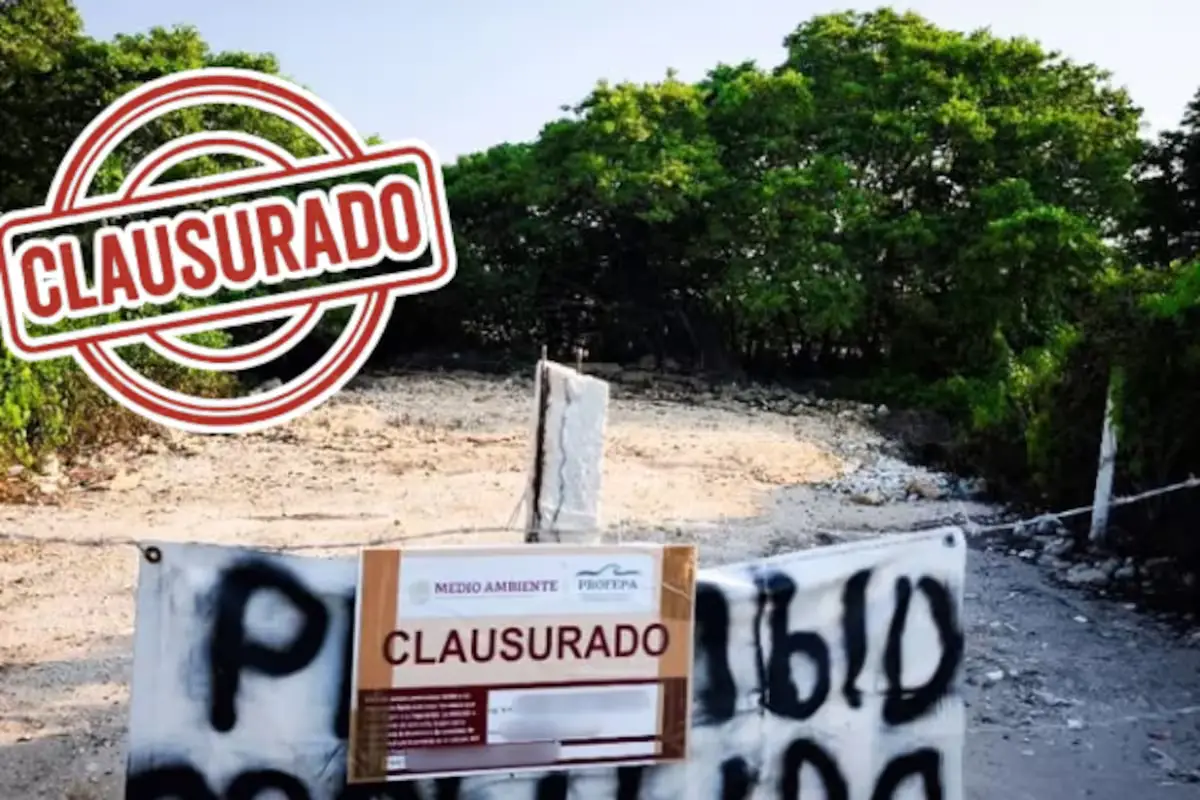

On September 30, 2025, during inspections conducted in the town of Chicxulub Puerto, municipality of Progreso, Yucatán, the Federal Attorney for Environmental Protection (Profepa) imposed a temporary total closure on two properties where landfilling and mangrove vegetation removal work was detected, without the corresponding environmental impact authorization. The measure was officially confirmed on October 6 through an institutional statement.
The affected areas were 301 square meters and 136 square meters, respectively. In both cases, it was found that mangrove vegetation had been removed and the areas filled with rock material, which constitutes a direct violation of current environmental legislation. In response to this situation, closure seals were placed and an immediate cessation of all activity on the intervened properties was ordered.
Mangroves are considered key ecosystems for the coastal zone, as they act as natural barriers against storms and hurricanes, in addition to providing refuge and breeding grounds for multiple species of flora and fauna. Their filling, desiccation, or destruction causes serious ecological imbalances, affecting not only biodiversity but also the safety of the human communities living in nearby areas.
The removal of mangroves in Chicxulub Puerto not only represents an environmental loss but also jeopardizes coastal resilience to extreme weather events. These illegal actions, carried out without permits from the Ministry of Environment and Natural Resources (Semarnat), violate the legal framework that protects wetlands and conservation areas.
A Recurring Problem and Pressure on Natural Resources
Irregular settlements and illegal construction projects in the wetlands and mangroves of Chicxulub Puerto have been a constant for more than two decades, generating conflicts over land tenure and increasing pressure on natural resources. In recent years, Profepa (National Prosecutor’s Office) and other environmental agencies have applied sanctions, closures, and corrective measures in the area, responding to citizen complaints and technical reports that warn of the environmental and social damage these practices cause.
The destruction of mangroves not only affects local fauna but also disrupts essential ecological processes, such as water filtration, carbon sequestration, and protection against coastal erosion. Uncontrolled urban expansion and real estate speculation have been factors exacerbating this problem.
Institutional Commitment to Environmental Oversight
Profepa (National Prosecutor’s Office) reaffirmed its commitment to monitoring and enforcing environmental legislation to protect Yucatán’s coastal ecosystems. The agency will continue to conduct inspections, follow up on complaints, and implement safety measures, with the goal of ensuring orderly and sustainable development for the benefit of the population and the environment.
Citizens are urged to avoid carrying out construction work in protected areas without the proper permits and to report any irregular activities that put coastal ecosystems at risk. Mangrove protection is a shared responsibility between authorities, communities, and developers.
Source: elimparcial