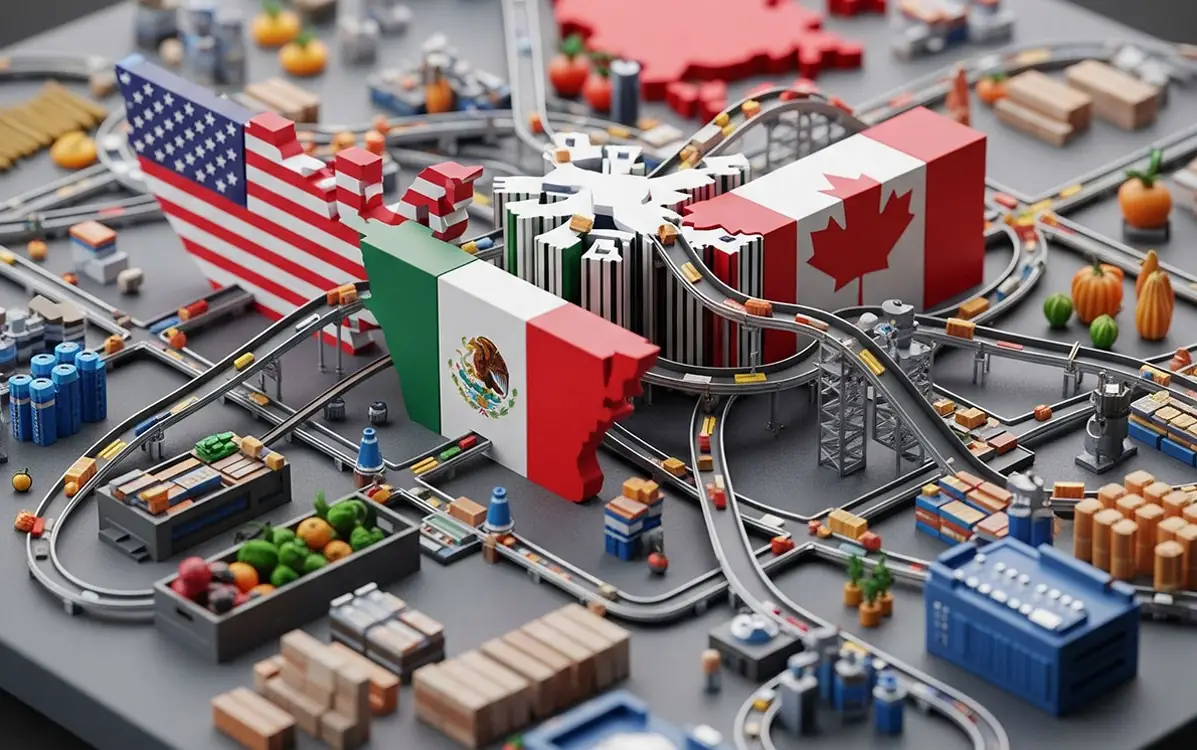

Leaders of major U.S. companies have asked President Donald Trump’s administration to renew the USMCA trade agreement in 2026 and to protect businesses from the risk of a politicized judiciary, following judicial reforms that resulted in a significant portion of judges and magistrates being elected by popular vote.
In a document addressed to the Office of the United States Trade Representative (USTR), the executives, members of the Business Roundtable (BRT)—which brings together some 200 CEOs, including Tim Cook (Apple), Jamie Dimon (JPMorgan Chase), Mary Barra (GM), and Raj Subramaniam (FedEx)—stated that certain Mexican policies discriminate against foreign companies in sectors such as energy, telecommunications, aviation, and package delivery services.
The 29-page document was sent to Daniel Watson, U.S. Deputy Trade Representative for the Western Hemisphere, in response to a request from the USTR itself for public commentary on the operation of the USMCA.
The Roundtable believes that during the USMCA negotiations in 2018, President Donald Trump, during his first term, secured “significant commitments” that protect American jobs, strengthen domestic manufacturing, and promote U.S. economic growth. These commitments include: intellectual property, digital trade, financial services, technical and sectoral barriers to trade, telecommunications services, access to agricultural markets, automotive rules of origin, and energy.
It notes that “tariffs on goods that comply with the USMCA are counterproductive to U.S. economic and national security interests, and the Roundtable urges the restoration of preferential trade between the USMCA Parties.”
In this regard, it notes that “all goods that comply with the USMCA rules should be exempt from tariffs not explicitly authorized by the USMCA itself, including tariffs imposed under Section 232 of the Trade Expansion Act of 1962 (Section 232) and the International Emergency Economic Powers Act (IEEPA).”
However, it warned that Mexico has imposed artificial reference prices for certain products, forcing importers to declare higher customs values than the actual ones. Therefore, it urged the U.S. Trade Representative to demand that Mexico reinstate standard valuation methods and address any alleged dumping through appropriate investigations, ensuring due process and transparency in the procedures.
It also pointed out that frequent, opaque changes to Mexico’s public procurement system have created barriers to market access and supply chain problems. According to the BRT, “the system has become confusing and lacks due process, creating disadvantages for U.S. companies.”
The organization urged the USTR to ensure that Mexico maintains a transparent and non-discriminatory government contracting process, without local content, investment, or technology transfer requirements that negatively impact U.S. companies.
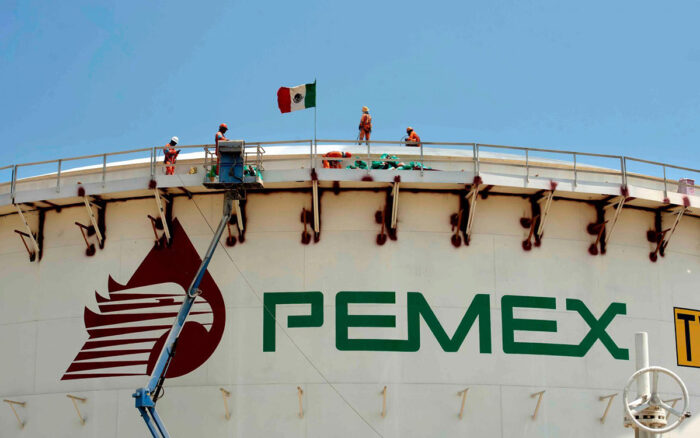
In the energy sector, they criticized the preferential treatment given to Pemex and the Federal Electricity Commission (CFE); in telecommunications, they pointed out the preferential treatment given to Telmex; in aviation, the protection afforded to Mexicana and the limitations placed on cargo transport at Mexico City International Airport; and in parcel delivery, the requirement for foreign companies to obtain postal licenses while the Mexican Postal Service is protected.
They noted that the National Energy Control Center (CENACE) must prioritize CFE’s electricity, and natural gas users must give preference to CFE or Pemex, which limits private sector competition. The BRT asked the USTR to intervene to ensure that U.S. companies receive fair and non-discriminatory treatment, in compliance with the USMCA.
In the case of telecommunications, the BRT pointed out that the reforms favor state-owned companies and hinder competition from U.S. companies. According to the BRT, “this politicization is already evident,” since the elimination of the telecommunications regulator (IFT) and the creation of a new super-agency allow state-owned companies to act as monopolies and receive public subsidies while competing in the market.
Regarding aviation, the BRT asked the USTR that Mexico reinstate slots for U.S. passenger airlines and allow cargo airlines access to the Benito Juárez International Airport (AICM).
The BRT expressed “serious concerns about actions by the Mexican government that jeopardize investments by U.S. companies, contradict obligations under the USMCA, and obstruct cross-border trade in key sectors.”
The group warned that the legislative changes promoted by the government of Andrés Manuel López Obrador and continued during the administration of Mayor Claudia Sheinbaum could negatively impact private investment.
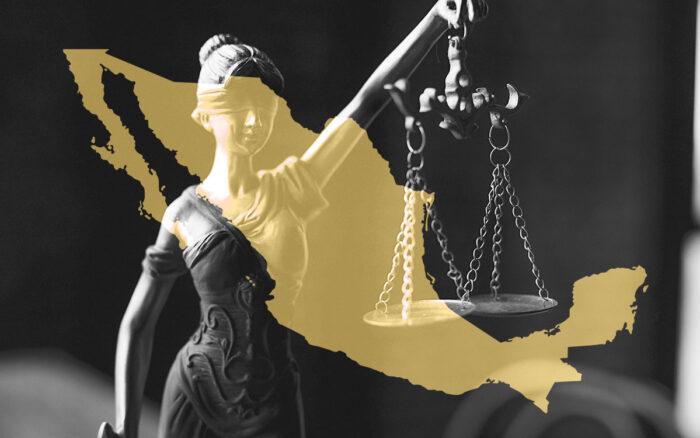
“Mexico’s recent judicial reforms, including efforts to eliminate independent regulators, will negatively impact the country’s investment climate. Under these reforms, Mexico will be the only country in the world where all judges are elected by popular vote, raising concerns that disputes between private investors and the government will be subject to political considerations rather than the rule of law.”
To address this risk, the BRT recommended that the USTR consider restoring the Investor-State Dispute Settlement (ISDS) mechanism with Mexico within the USMCA.
It highlights that, unlike NAFTA, the USMCA reduced the types of claims that U.S. investors could bring against the Mexican government.
“If the ISDS mechanism with Mexico is reinstated (in the USMCA), US investors will have the option of resolving their grievances through independent arbitrators. The mere existence of the ISDS mechanism would likely give pause to those political figures considering expropriation or pressuring the courts to yield to political whims,” the executives stated in the document.
Furthermore, the BRT warned that the recent reform to the Federal Tax Code, which allows for the suspension of digital platforms that fail to comply with their tax obligations, could unfairly affect foreign companies, including US ones. The organization called on the USTR to intervene to ensure that the provisions of the USMCA are respected and that US companies receive the same treatment as Mexican companies.
The Business Roundtable also warned that Mexican regulations on cloud services “impose unjustified barriers to digital trade and discriminate against foreign providers.” The organization asked the USTR to address the issue in the upcoming joint review with Mexico, arguing that the regulation violates the Financial Services Chapter of the USMCA.
Furthermore, the BRT noted that in the last five years, Mexico has taken measures they consider concerning, such as “the expropriation of a quarry owned by a US company and the imposition of retroactive taxes on insurance companies,” and questioned the Federal Commission for Protection against Sanitary Risks (Cofepris) for having “inconsistent” regulatory standards that would affect US medical and biological products.
“In particular, Cofepris should have an expedited approval process for US products that have already received regulatory approval in the United States, such as drugs approved by the Food and Drug Administration (FDA). It is essential that any expedited path to marketing authorization reflect Mexico’s national treatment obligations under the USMCA, which appear to be at risk,” the statement reads.
It notes that Mexico is free to develop regulatory procedures for public health, but “must treat US companies on equal terms.”
Source: aristeguinoticias