
The U.S. Border Patrol is monitoring millions of American drivers across the country in a secret program to identify and detain people whose travel patterns it deems suspicious, the Associated Press has discovered.
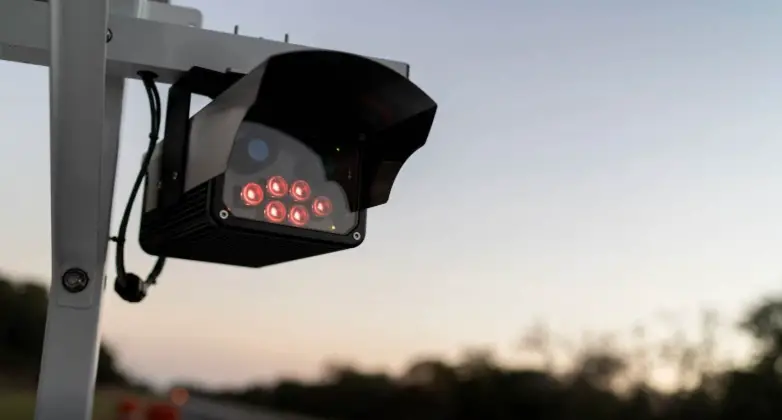
The predictive intelligence program has led to stops, searches, and, in some cases, arrests. A network of cameras scans and records vehicle license plate information, and an algorithm identifies vehicles considered suspicious based on their origin, destination, and route. Federal agents, in turn, can alert local law enforcement.
Suddenly, drivers find themselves pulled over—often for reasons such as speeding, failure to use turn signals, improperly tinted windows, or even a dangling air freshener obstructing their view. They are then aggressively questioned and searched, unaware that the roads they traveled put them on the police radar.
The Border Patrol, which initially focused solely on monitoring the country’s borders, has developed a surveillance system that extends into the interior of the nation. This system allows it to monitor the daily activities and relationships of U.S. citizens for anomalies, rather than focusing solely on searching for suspects. Created approximately a decade ago to combat illegal border activities and drug and human trafficking, it has expanded considerably in the last five years.
Recently, the Border Patrol has gained even more power through collaboration with other agencies, obtaining information from license plate readers nationwide operated by the Drug Enforcement Administration (DEA), private companies, and, increasingly, local police programs funded with federal money. Documents show that law enforcement agencies in Texas have requested the Border Patrol’s use of facial recognition technology to identify drivers.
This active role beyond borders is part of the quiet transformation of its parent agency, U.S. Customs and Border Protection (CBP), into something more akin to a national intelligence operation. Under the Trump administration’s efforts to intensify immigration enforcement, CBP is now set to receive more than $2.7 billion to develop border surveillance systems, such as the license plate reader program, by integrating artificial intelligence and other emerging technologies.
The result is a massive surveillance network with a distinctly American focus: cars.
This investigation, the first to reveal details about how the program operates on U.S. highways, is based on interviews with eight former government officials with direct knowledge of the program, who spoke on condition of anonymity because they were not authorized to speak to the media, as well as with dozens of federal, state, and local officials, lawyers, and privacy experts. The Associated Press also reviewed thousands of pages of court and government documents, data on state and law enforcement grants, and arrest reports.
For years, the Border Patrol concealed details of its license plate reader program, attempting to avoid any mention of it in court documents and police reports, according to former officials. They even went so far as to propose dropping charges rather than risk revealing details about the location and use of their covert license plate readers. These readers are often disguised as roadside safety features such as jerrycans and barrels along highways.
The Border Patrol has defined its own criteria for determining which driver behaviors should be considered suspicious or linked to drug or human trafficking, stopping people for any reason, from driving on rural roads to being in a rental car or taking short trips to the border region. The agency’s camera network now stretches along the southern border in Texas, Arizona, and California, and also monitors drivers traveling near the U.S.-Canada border.
And its reach extends inland, affecting residents of large metropolitan areas and those traveling to and from major cities like Chicago and Detroit, as well as those traveling from Los Angeles, San Antonio, and Houston to and from the border region with Mexico. For example, the Associated Press found that it has installed at least four cameras in the Phoenix metropolitan area over the years; one of them was located more than 120 miles (193 kilometers) from the Mexican border, beyond the agency’s usual jurisdiction of 100 miles (161 kilometers) from a land or sea border. The AP also identified several camera locations in the Detroit metropolitan area, as well as one near the Michigan-Indiana border to capture traffic heading toward Chicago or Gary, Indiana, or other nearby destinations.

Source: diario