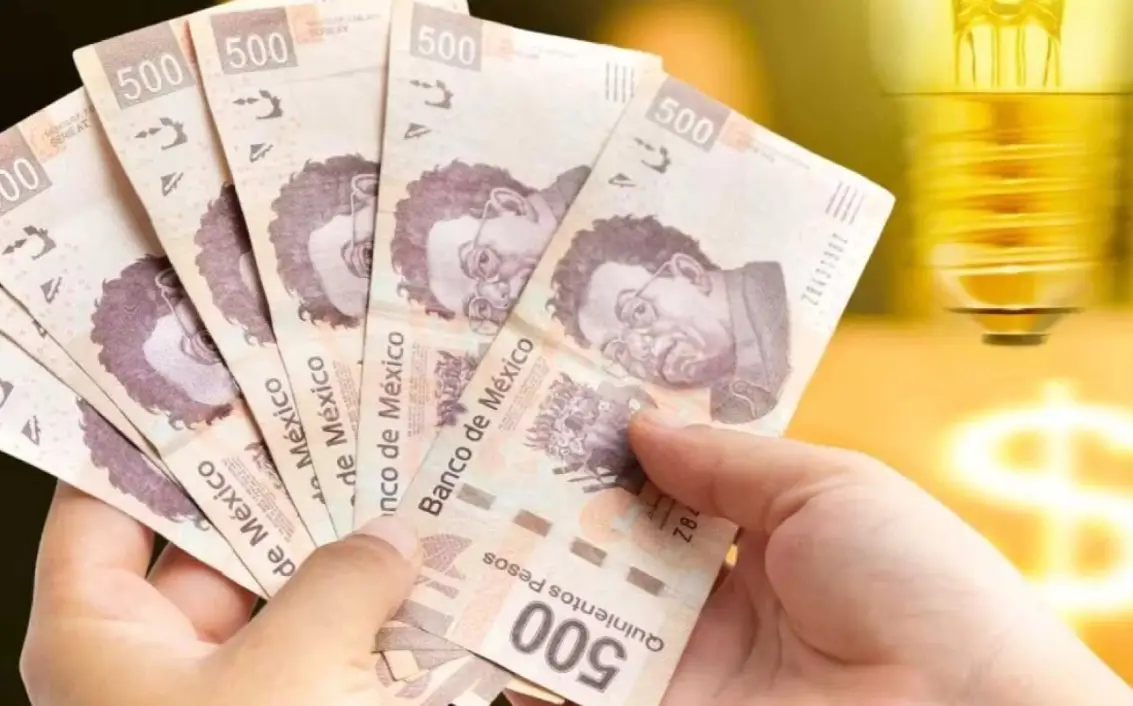

The setting of the minimum wage in Mexico is the result of negotiation, yes, but with rules established in the Federal Labor Law (LFT), which mandates compliance with the constitutional right of individuals to satisfy their needs.
The minimum wage is the minimum amount that a worker must receive for a workday, according to Article 90 of the Federal Labor Law.
“It must be sufficient to satisfy the normal needs of a head of household in material, social, and cultural terms, and to provide for the compulsory education of their children,” the law states.
In 2021, the LFT was amended to stipulate that the minimum wage must never fall below the inflation rate. In other words, it aims to prevent it from being outpaced by the general rise in prices, thus preserving purchasing power.
With this, the minimum wage seeks to facilitate access for “every working person to the means of obtaining necessities.”
In Mexico, significant increases to the minimum wage were implemented during the previous presidential term. During Andrés Manuel López Obrador’s administration, the general minimum wage rose from 88 pesos per day to 248.93 pesos; that is, a cumulative increase of 182.8 percent in nominal terms. In real terms, after adjusting for inflation, the increase has been 111 percent. According to the organization México, ¿Cómo Vamos?, from 1994 to 2018 the minimum wage experienced a real decrease of 19 percent.
Now, Mayor Claudia Sheinbaum’s goal is for the minimum wage to be sufficient by 2030 to purchase 2.5 basic food baskets, which is currently equivalent to 11,410 pesos per month or 380.30 pesos per day. To achieve this, increases are projected to be in the double digits for the general minimum wage and in the border region, in the single digits. The increase for both minimum wages in 2025 was 12 percent.
Sheinbaum’s goal is outlined in her National Development Plan, and in recent weeks she has insisted that the 2026 increase is aimed at achieving that objective.
Who participates in setting the minimum wage in Mexico? Setting the minimum wage is a tripartite negotiation involving the labor sector, the business sector, and the federal government through the National Minimum Wage Commission (Conasami), in accordance with Articles 94 and 95 of the Federal Labor Law (LFT).
The Council of Representatives to Conasami is composed of both employers and employees. This Council consists of 11 primary representatives and 11 alternates, from both sectors. The federal government is represented by the president of Conasami, who also serves as president of the Council of Representatives. Currently, the representative is Luis Felipe Munguía Corella. According to a source familiar with the process, the Secretary of Labor, Marath Baruch Bolaños López, has attended the last two negotiations, although he is not legally obligated to do so.
The atmosphere surrounding the negotiations begins to build in November, when the stakeholders, organizations, and analysts prepare their proposals.
During this period, expectations about the percentage increase, based on estimates, begin to circulate. In this process, only the workers’ sector has indicated that it will propose a 30.6 percent increase to employers and the National Minimum Wage Commission (Conasami).
The employers’ sector has so far declined to comment on its proposal. Meanwhile, Conasami has already issued its second call to begin negotiations. The decentralized agency of the Ministry of Labor and Social Welfare (STPS) stated last week that it will present its annual report on the state of the economy “at the end of the month.”
Source: eleconomista