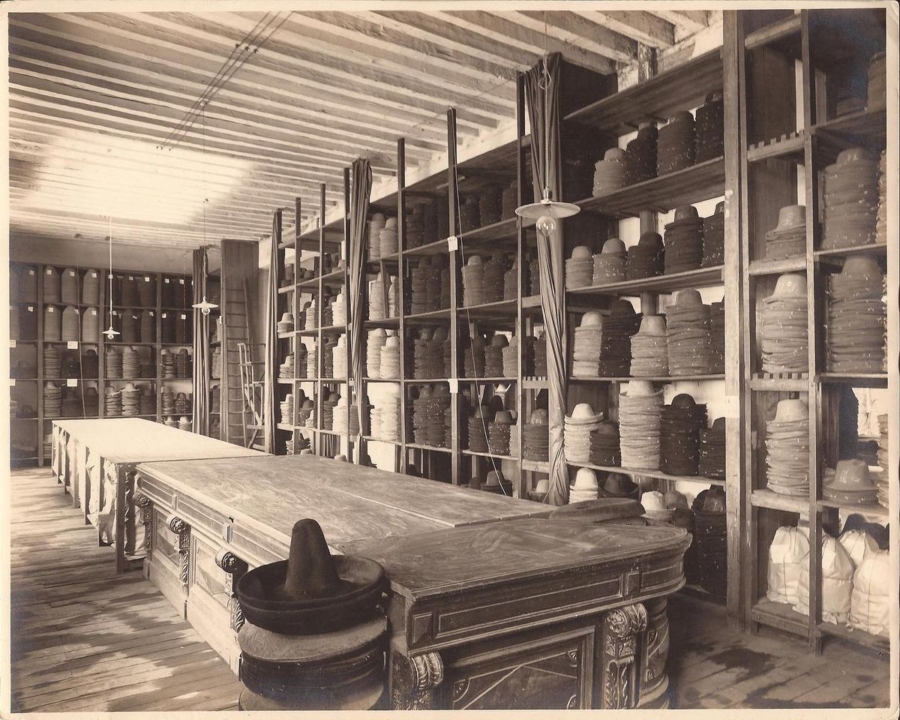
The Historic Center of Mexico City is one of the areas richest in cultural treasures, some of which go unnoticed. This is the case of the hat shop Tardan, whose history dates back to the 19th century. It was a favorite tailor shop of important historical figures, undoubtedly influencing the creation of its imposing character. However, what is most surprising is its continuous service, which has not diminished despite the ravages of time.
Legendary and sometimes antagonistic figures such as Porfirio Díaz, Emiliano Zapata, Francisco I. Madero, Francisco Villa, José Luis Cuevas, and even contemporary former presidents have frequented Tardan. Their objective was always the same: to acquire a quality hat, made with traditional and artisanal techniques, resulting in a unique touch, suited to each person’s character.
Tardan’s origins lie in the El Castor shop, which opened in 1847 at Portal de Mercaderes No. 5, in the area that now encompasses the Zócalo. The historical context was the American occupation of Mexico. At that time, the store focused on importing the finest hats made in the United States and Europe.
In 1870, Francisco Dallet, a businessman of French origin, acquired El Castor and Theodore Pellotier’s El Sombrero Colorado store and merged them. Shortly after, Dallet partnered with the entrepreneur Charles Tardan, also French, who would eventually buy the entire business along with his brothers and decide to rename it after himself.
With the Porfiriato, a period in which European-style hats reached their peak, Tardan became popular as a leading hat company and a benchmark. By 1904, hats were being sold throughout Mexico, and the trademark registration has been renewed ever since.
“From Sonora to Yucatán, Tardan hats are worn,” Salvador Novo.
However, the company wasn’t solely focused on imports, as in 1914 it also invested in domestic production by opening its own workshops in Plaza San Salvador El Verde in Puebla. This new phase was led by Carlos, the founder’s nephew, who decided to retire due to his advanced age. Although these workshops are no longer in operation, the sale of their products continues and extends beyond the main store.
Source: mexicodesconocido