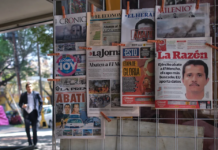

Russia’s disinformation efforts in Latin America have intensified over the past two years, in part to sow discord between the United States and its allies in the region, according to a U.S. diplomatic cable and a new report by a watchdog group.
The campaign is spearheaded by Kremlin-owned media outlets such as Sputnik and RT, officials say, describing an effort to stoke anti-American sentiment, particularly in Mexico, the nation with the largest Spanish-speaking population and Washington’s largest trading partner.
In April 2024, U.S. diplomats in Mexico City sounded the alarm about RT’s “sudden and dramatic expansion” in the country, according to an internal diplomatic cable titled “Mexico: RT’s Invasion” that was reviewed by The New York Times.
“RT’s aggressive investment in Mexico and its strategy to build its credibility and undermine the United States pose a threat to current public perception,” the message reads, adding, “The mission in Mexico needs more resources to counter RT’s well-funded efforts.”
The Russian embassy in Mexico City denied that Moscow spreads disinformation and described Sputnik and RT, formerly known as Russia Today, as impartial alternatives to U.S. media outlets.
The U.S. embassy cable states that RT en Español’s online audience skyrocketed, jumping from 191,000 views in 2022 to 715 million a year later. With RT largely blocked in Europe and the United States, the network expanded its presence in Latin America, a potential audience of some 670 million people.
The embassy cable partly blamed “alleged accomplices sympathetic to President López Obrador’s government” for the expansion of Kremlin-owned media in Mexico.
Andrés Manuel López Obrador’s term as president of Mexico ended last October. The party he founded, Morena, still governs Mexico and includes officials sympathetic to Russia, according to former and current U.S. officials.
López Obrador and Morena officials did not respond to requests for comment.
British and French officials expressed concern to Mexico’s Foreign Ministry about Russia’s activities, according to three people familiar with the discussions. The ministry declined to comment.
The findings in the cable were supported by a 2024 Justice Department investigation that uncovered an influence campaign called Doppelgänger, sponsored by the Russian government and targeting U.S. citizens and Washington’s allies.
“The campaign was intended to foster ‘anti-American sentiment’ and exacerbate confrontation between the United States and Mexico,” according to a Justice Department affidavit.
While it’s unclear whether the operation is still actively trying to sow division between Washington and Mexico, Kremlin-sponsored media outlets continue to publish Spanish-language content that discredits the United States.
This year, former President Dmitry Medvedev accused Ukraine and the United States of recruiting Mexican and Colombian cartels to fight against Russia, an accusation that was picked up by Spanish-language media in the region. This followed a similar accusation disseminated by the Russian embassy in Mexico City, which was echoed by several politicians from the Morena party.
Those claims appeared to be based on the stories of Colombian veterans who, largely driven by economic motives, volunteered to fight for Ukraine.
One official who has regularly shared content from Russian state media on social media is Jenaro Villamil, director of the Mexican State Public Broadcasting System, which controls hundreds of television channels and radio stations across the country.

Source: nytimes