
With the 2026 World Cup fast approaching, the Guadalajara government is already working to strengthen its public safety program.
Through the Jalisco State Security Secretariat, officers from the Public Safety Department are participating in a specialized training program that aims to raise the standards of police action in the face of mass events, international visitors, and high-risk situations.
The courses, taught by international instructors, are part of what municipal authorities highlight as a comprehensive strategy that combines theory, practice, and response protocols specifically designed for the World Cup context.
The first course taken by the officers was “Democratic Crowd Management during Demonstrations and Major Sporting Events,” taught by the French National Police over two weeks at the State Police Academy and Akron Stadium, one of the World Cup venues. Sixty-five officers from Guadalajara, Zapopan, the Metropolitan Police, state agencies, and personnel from the Emergency Medical Services System (SAMU) participated in this training.
The training included theoretical and practical tools focused on mediation, dialogue, and tactical control in high-risk situations, culminating in a riot drill that allowed for the evaluation of the teams’ reaction and coordination.
Similarly, officers from Guadalajara, along with 31 members of the Zapopan State Police, the Mexican Navy, and the National Defense Secretariat, will continue their training with the “Phantom Menace” program, delivered by the FBI’s Criminal Intelligence Division.
This training covers evidence handling, the detection of complex weapons, including booby traps and unmanned aerial systems, and the identification of technological threats. The ultimate goal is to equip law enforcement agencies with the knowledge to neutralize risks and protect attendees and visitors during the 2026 FIFA World Cup.
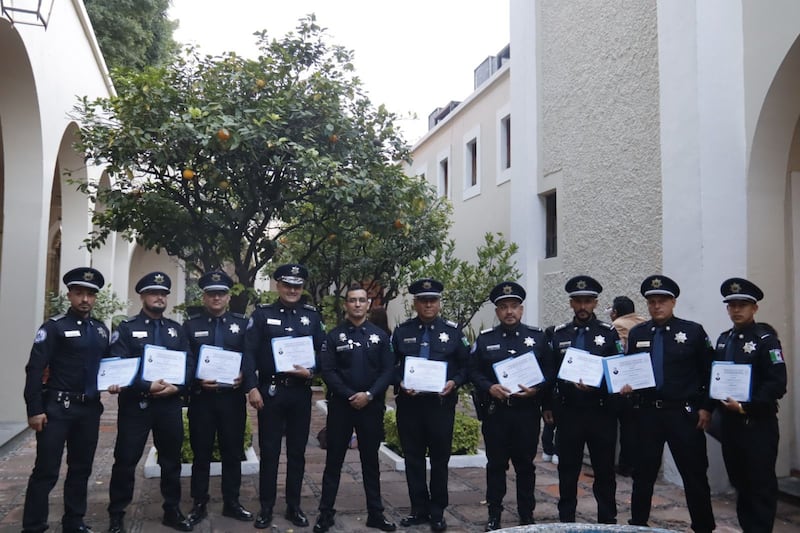
In parallel, through the General Strategic Security Coordination, the Jalisco Institute of Forensic Sciences offered the diploma course “Criminalistics and Traffic Accident Investigation.”
Ten Guadalajara police officers and 46 civilians participated in the program, which lasted seven months and included modules such as Chain of Custody, Forensic Photography and Genetics, Identification of Persons, and Accidents and Explosives, among others. This program strengthened investigative skills that will be crucial both before and during the World Cup operation.
Source: publimetro