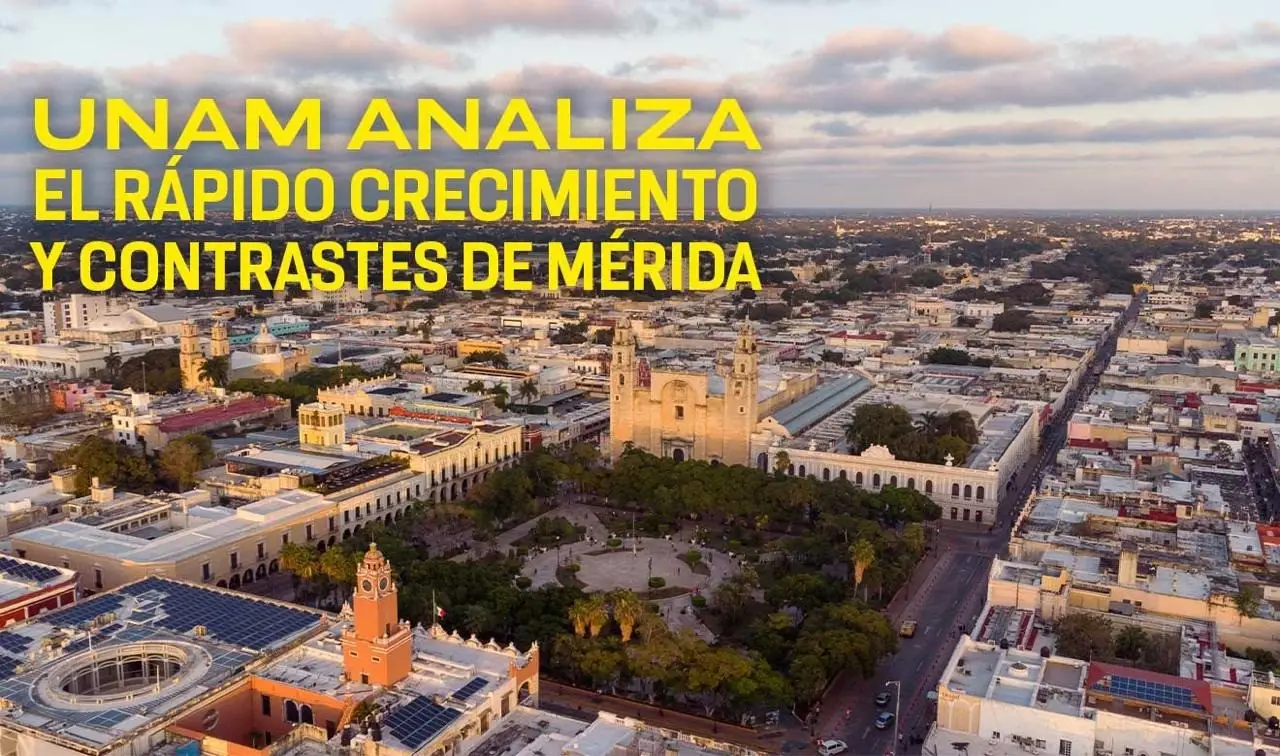

In Mérida, Yucatán, a phenomenon of metropolitanization is occurring, meaning expansion towards the peripheries where new territories are increasingly being incorporated, including other municipalities, and, at the same time, fragmentation, with dispersed growth and a discontinuous presence of residential developments, industrial parks, and shopping centers.
The coordinator of the Academic Unit of Territorial Studies Yucatán, at the Institute of Geography (IGg) of the National Autonomous University of Mexico (UNAM), Adrián Guillermo Aguilar Martínez, explained the above and elaborated: From 2000 to 2020, the built-up area in the metropolitan zone practically doubled (from 21,103 hectares to 42,186); in addition, more than 300 real estate developments were located, especially in the northern part of the city.
The specialist and his team of experts from the National University have verified that this expansion is dispersed and discontinuous: in the last two decades, the so-called “white city” has grown at a rate of approximately 2.3 percent, while the population has grown at two percent. In other words, it is expanding faster than its population is increasing; in 2000, the metropolitan area had 800,000 inhabitants, and by 2020, 1.3 million.

Source: unamglobal.unam