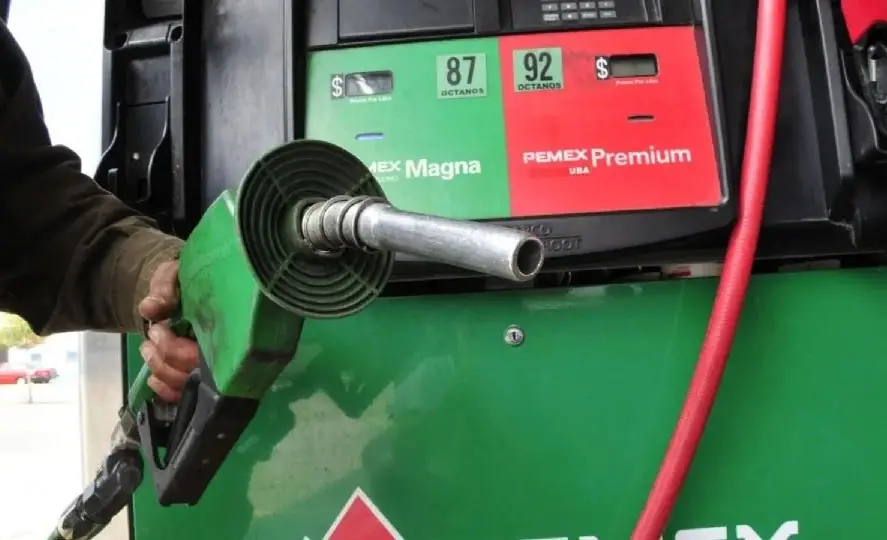

The multimillion-dollar shipments of subsidized fuel that the Mexican government has been sending to Cuba have experienced a drastic drop in recent months. According to records on foreign trade platforms, Pemex made only three shipments of hydrocarbons between September and October, valued at approximately $70 million, as reported by Mexicans Against Corruption and Impunity (MCCI).
Prior to the reduction, the Sheinbaum administration had significantly increased shipments, registering 39 consignments with cargo valued at more than $850 million between May and June alone.
The decrease in shipments comes after the controversy generated in the United States by information revealed by MCCI on October 13 regarding millions of dollars in aid. The report documented shipments to Cuba of “Gasolina Bienestar,” a Pemex subsidiary, totaling $3 billion between May and August 2025, while shipments during the entire previous six-year presidential term totaled $1 billion. The oil tanker Sandino, which appears on the OFAC blacklist, has participated in these operations.
Republican Congressman Carlos Giménez has been one of the main critics, condemning the Sheinbaum administration’s support for “providing oxygen” to the Cuban dictatorship and warning that this policy could affect the renegotiation of the United States-Mexico-Canada Agreement (USMCA). Other representatives, such as Mario Díaz-Balart, pointed out that supporting dictatorships is not the behavior of an ally.
On October 30, Giménez filed a formal complaint against the Mexican government with the heads of the U.S. State Department and the Treasury Department, urging them to demand that Mexico halt fuel shipments as part of the renegotiation of the USMCA trade agreement. Giménez’s counterpart, María Elvira Salazar, described the shipments as a “political subsidy” and requested a diplomatic review of the operations between Pemex and Cuba.
Regarding the accusations, Mayor Sheinbaum has limited herself to defending the hydrocarbon shipments to the island as “humanitarian aid.” The Mexican Ambassador to the United States, Esteban Moctezuma, has responded to Giménez’s public statements via social media.
In contrast, Christopher Landau, Under Secretary of State and former U.S. Ambassador to Mexico, has stated that these fuel shipments prove that there is no trade embargo against Cuba. Landau argued that the Cuban regime uses the narrative of the “blockade” to blame others for its “appalling economic management, which has led that great nation to hunger and misery.”
This Thursday, President Claudia Sheinbaum stated that Mexico’s position remains unchanged and is sovereign. During her morning press conference, the Mexican president emphasized that the stance toward Cuba has always been a point of contention between Mexico and the United States, and therefore this should not influence the bilateral relationship.
“This relationship has always been a point of contention between the United States government and the Mexican government, so it shouldn’t influence Mexico-United States relations. Our position is sovereign, it’s a sovereign decision, and it has much to do with the humanism we represent,” Sheinbaum Pardo stated.
She also stressed that people should not have to suffer, as a blockade is a very complex action, and it is always the people who suffer. Meanwhile, he mentioned that Mexico’s position on Cuba will remain “as it has been since López Mateos.”
He added that the relationship between Mexico and Cuba has been maintained under PRI governments and even under PAN governments. He explained that this has been a constant issue since the Cuban Revolution, since 1959 with the United States, and in the Mexico-United States relationship with former Mexican presidents. He recalled that during Fox’s administration, Fidel Castro came to Mexico “with the ‘eat and leave’ policy.”
“Mexico was the only country that voted against the embargo against Cuba in the OAS; now, many countries are voting to lift it at the United Nations,” he added.
On December 17, 2025, officials from President Donald Trump’s administration asked the government of President Claudia Sheinbaum to review its support for the governments of Cuba and Venezuela. The proposal highlighted differences between Mexico’s foreign policy in Latin America and the principles that the United States claims to share with its partner. The request was made at a legislative hearing in Washington, D.C.

Source: lasillarota