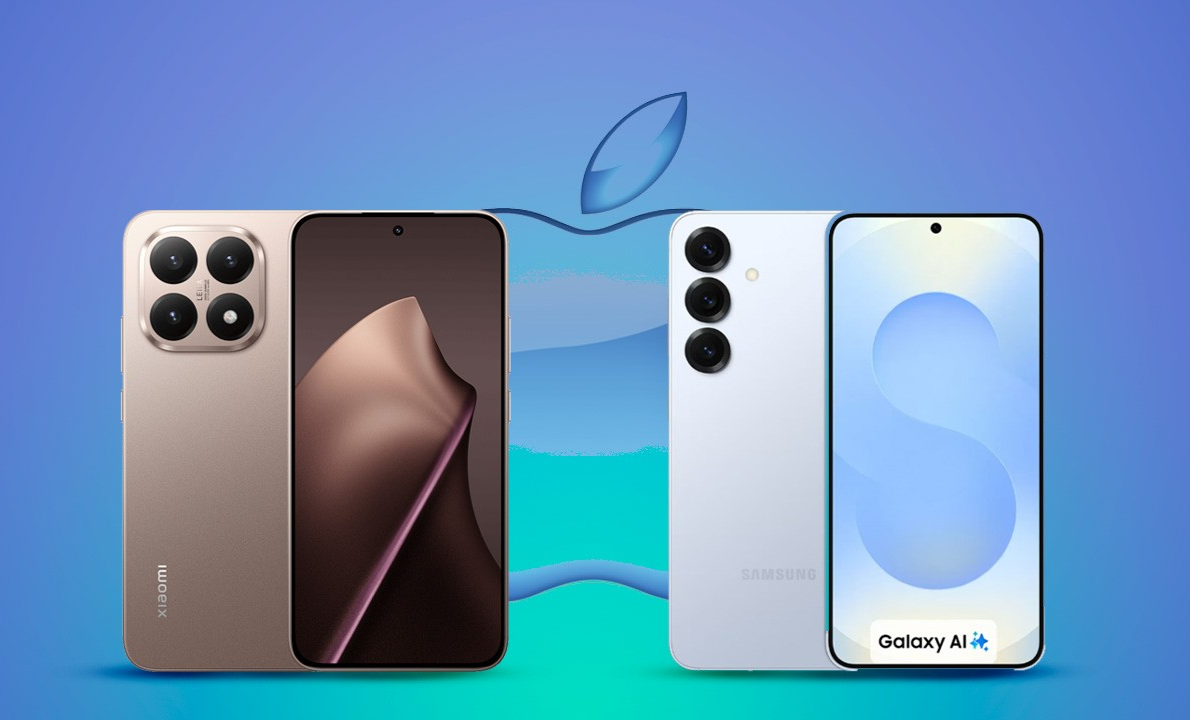

Samsung and Xiaomi’s dominance in the Mexican smartphone market remains considerable. Both companies accounted for 42% of device shipments during the first quarter of 2026, although Apple is beginning to gain ground in the country.
According to a study by Omdia, smartphone shipments to Mexico grew after the country was considered the only market in the region showing signs of a slowdown. The biggest boost came from Apple, whose market share increased from 9% in 2025 to 17% so far in 2026.
The arrival of the new iPhone 17 Pro and the Air model boosted Apple’s presence in the Mexican market, where consumers show a greater preference for mid-range and high-end devices. In contrast, brands like Motorola and Honor together accounted for 22% of shipments to the country.
Across Latin America, the smartphone market grew 3% annually, increasing from 33.7 million to 34.8 million devices sold.
Omdia anticipates that inventory levels will normalize by the second quarter of 2026; however, it warned that rising memory prices could slow smartphone sales in Latin America.
In particular, Mexico, Brazil, and Chile are expected to perform better, albeit unevenly, especially in the mid-range and premium segments.
“While the increased costs of RAM and storage were not yet reflected in average retail prices (RRPs) in the first quarter, the pressure is real and will be felt more clearly in the second half of the year,” stated Miguel Ángel Pérez, senior analyst at Omdia.
Advance deliveries helped maintain sales, but as retail prices begin to reflect the increased memory costs starting in the end of the second quarter, demand is likely to decline, especially in the entry-level and low-end segments, which represent approximately 70% of the Latin American market, he added.
The specialist added that the increase in component costs, combined with macroeconomic uncertainty and potential inflationary pressures stemming from the global context, could slow smartphone demand in the region.
Samsung maintained its regional leadership by selling 12.9 million units during the quarter, representing nearly 9% year-over-year growth. This boosted its market share to 37%, its highest quarterly level since 2023.
Omdia explained that these results were driven by the performance of the Galaxy A series, which focuses on the low-end and upper-mid-range segments.
Meanwhile, Xiaomi maintained its second-place position with its sixth consecutive quarter of growth. The company recorded sales of 6 million units and achieved a 17% market share, supported by strong performance in Central America and Peru, as well as robust demand for the Redmi Note 15 series.
Finally, Apple rounded out the top five with year-over-year growth of 31%, driven primarily by its performance in Mexico and the positive reception of the iPhone 17 series.
Source: elceo