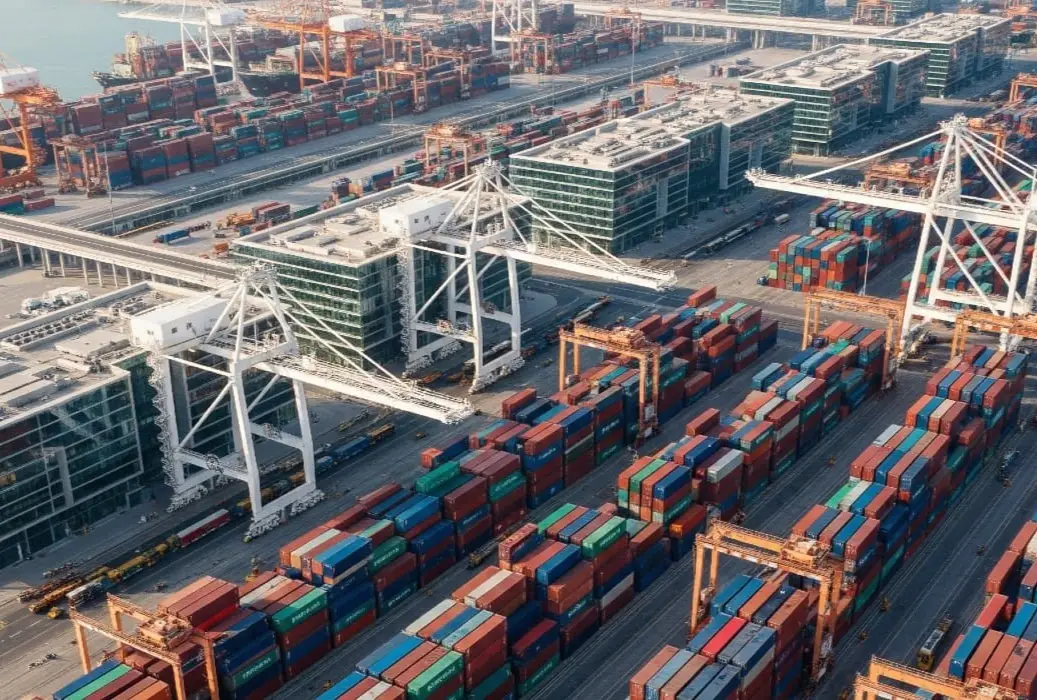

We’ve entered a new year, and with it come expectations for the future in various areas for 2026. One of the most anticipated topics is the international trade landscape, as several key issues are beginning to emerge.
In a summarized and schematic way, I will address the following elements: 1. Renegotiation of the United States-Mexico-Canada Agreement (USMCA), 2. Modernization of the Free Trade Agreement between Mexico and the European Union (EU-Mexico FTA), and 3. Pending issues regarding nearshoring or the relocation of companies.
Around 80% of Mexican exports are destined for the United States. In terms of trade balance, our country maintains a surplus with its North American neighbor. Many high-quality Mexican products are successfully placed in that market: auto parts, components, tools, machinery, and, of course, fresh produce from Mexican farms.
In addition to the trade balance, another strategic point of the USMCA is Foreign Direct Investment (FDI). Since the signing and entry into force of the first treaty in 1994, US FDI has almost quadrupled. In the period from January to December 2024 alone, investment reached US$16.513 billion, according to the DataMéxico portal of the Ministry of Economy, with the United States being our main investment partner globally.
The main strategy should focus on preserving the tariff benefits already acquired in the first treaty, and this will require extensive lobbying by the public and private sectors in the United States. Specifically, I want to refer to the work that Mexican business and industrial chambers must do with their counterparts in the United States to promote all the advantages and benefits of the treaty.
It will also be beneficial to attend binational forums, whether with industry or universities, to maintain communication channels and establish a commercial dialogue regarding the USMCA.
Another important trade front is with the European market, given the potential modernization/update of the treaty between Mexico and the 27 countries that make up the European Union.
In terms of business and investment, Europe is a key player for our country. For example, German FDI in Mexico, during the period from January to December 2024, was around US$3.778 billion, according to DataMéxico, making Germany the leading European partner in terms of industrial FDI in Mexico. It is also worth highlighting countries like Spain, Italy, France, and Belgium; their exports and imports represent the trade diversification so necessary for Mexico.
Reaffirming trade alliances with European countries is a priority, especially in a context of reconfiguration of global value chains and the growing prominence of new economic blocs. To cite a recent example, the Mercosur trade bloc (Argentina, Uruguay, Paraguay, and Brazil) announced a mega-agreement with the European Union. Therefore, the update to the EU-Mexico Free Trade Agreement (FTA) comes at an opportune time.
The phenomenon of nearshoring, also known as the relocation of companies to their final market, still has work to do to demonstrate its full potential. One lesson learned from this first stage of nearshoring is that each region of the country is different, and the relocation of new companies or industries to areas with the right characteristics to attract them must be studied.
In other words, each region and each locality has its competitive advantages. Attracting a particular company will be more feasible when certain conditions are already in place, such as an industrial corridor specializing in a specific product or commodity, or geographical and logistical conditions—seaports, airports, or border crossings—that make sense for the final destination of that manufactured product.
Mexico continues to have great advantages for attracting nearshoring, and for this second stage of business relocation, it is highly recommended to focus on the benefits and virtues of each region; the productive sectors are various: agribusiness, automotive, energy, logistics-port, construction, just to mention a few.

Source: t21