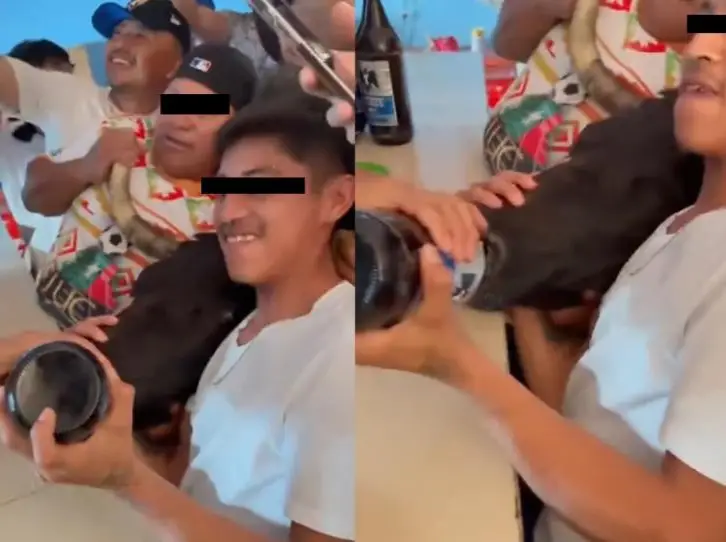

In the municipality of Temax, Yucatán, a bull was forcibly taken into a bar and made to drink beer during the patron saint festival known as the “Temaxeada.” The incident was captured on video and shared on social media, showing the animal surrounded by people as a bottle is placed in its mouth. This sparked outrage and accusations of animal abuse.
The “Temaxeada” involves releasing bulls into the streets to create dangerous and adrenaline-pumping situations for the residents, a practice that has been previously criticized for the stress and potential injuries it causes to both the animals and the participants.
Harry Rodríguez Botello, a congressman from the Green Party of Mexico, expressed his disapproval and condemned the mistreatment of cattle during these celebrations. He also called for the eradication of these traditional festivals, which, he stated, are detrimental to animal welfare. So far, municipal authorities have not reported any sanctions against those responsible for the incident, which has garnered national attention.
The celebrations in Temax bear a resemblance to the Spanish Running of the Bulls in Pamplona, held in honor of Saint Fermín, where dozens of bulls are released into the streets while hundreds of people run to avoid being gored. Year after year, this practice attracts tourists from all over the world, many of them intoxicated. In Mexico, similar events are held in places like Huamantla, Tlaxcala, where they have also generated criticism due to the risk and suffering inflicted on animals.
The Penal Code of the State of Yucatán criminalizes animal abuse in articles 407 to 410, with penalties ranging from six months to six and a half years in prison, in addition to fines ranging from 200 to 600 days. The legislation considers animal abuse to include deprivation of air, light, food, water, space, and shelter, as well as mutilations and acts of bestiality.
The state also has the Law for the Protection of Wildlife of the State of Yucatán, which empowers the Ministry of Sustainable Development, the Ministry of Health, and the municipalities to intervene in cases of animal cruelty and guarantee the protection of sentient beings.
In Mexico, the fight by activists to ban bullfighting has gained momentum in the last five years: in 2025, Mexico City approved a ban on violent bullfighting events, becoming the sixth entity to regulate bullfighting, while groups are already working in states like Hidalgo and Michoacán to promote similar measures.
In March 2025, the Mexico City Congress approved, with 61 votes in favor and only one against, the initiative that prohibits bullfights in which the animal is killed or sharp objects are used. With this decision, the capital became the sixth entity in the country to regulate bullfighting, joining states like Michoacán, which also passed legislation in 2025 to prohibit bullfights and animal fights.
Citizen groups and animal protection organizations have led demonstrations in front of local congresses with slogans such as “Bulls yes, torture no” and “Don’t find entertainment in animal pain.” These mobilizations have sought to highlight that bullfighting is considered by activists to be a form of animal violence incompatible with the values of a modern society.
Meanwhile, public figures such as actress Kate del Castillo have joined the cause, publicly calling for the cancellation of bullfights in Guadalajara and stating that “it’s not culture, it’s torture.” Their participation has given greater media visibility to the anti-bullfighting movement.
Following the success in Mexico City, activists have announced that they are working in Hidalgo and other states to replicate the legislative path that led to the ban in the capital. The goal is to get more local congresses to approve similar initiatives, until a national ban is achieved.

Source: excelsior