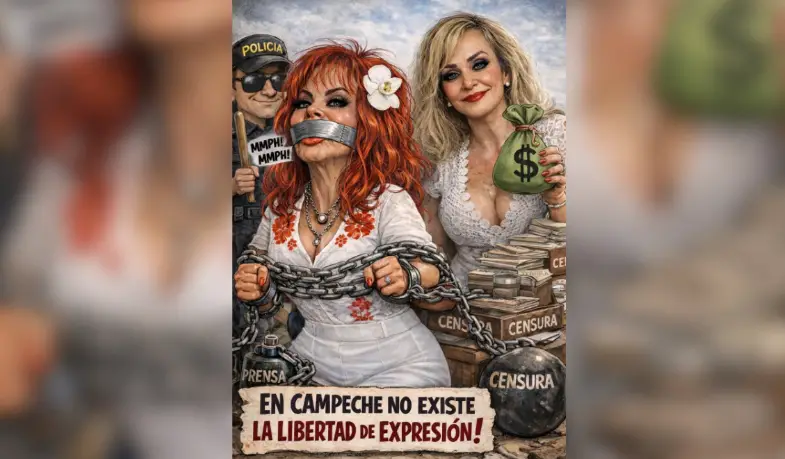

In Campeche, freedom of expression isn’t in crisis: it’s been kidnapped. Layda Sansores’s government has transformed the state into an instrument of persecution, where reporting, expressing opinions, or criticizing those in power can cost you your freedom, your property, or even exile you from public debate.
Here, governance isn’t based on laws, but on punishment. Imprisoned journalists, media outlets subjected to legal harassment, smear campaigns launched from the official microphone, and selective asset seizures against the opposition are all part of a clear strategy: to silence through fear. This isn’t justice, it’s a warning. This isn’t legality, it’s political vengeance.
While the governor acts as judge, prosecutor, and executioner from the podium, the rhetoric of austerity and the fight against corruption crumbles in the face of accusations surrounding Marcela Muñoz, the Secretary of Public Security, who is accused of enriching herself while administering repression with public funds. In Campeche, money flows to those in power, and censorship falls upon society.
What is happening is not an excess, it is a model of control: silencing the press, crushing the opposition, and governing without accountability. When a government imprisons journalists and confiscates property to prevent criticism, it ceases to be a democratic government and transforms into an authoritarian regime with an institutional veneer.
Campeche today serves as a national warning. Because when silence is imposed from a position of power, democracy does not weaken: it is extinguished.
Source: tribunacampeche