
UNESCO presented a feasibility study and conducted a workshop for federal and state authorities in Tabasco on the revegetation and restoration of coastal dunes in the Barra de Santa Ana area. This initiative is part of UNESCO’s efforts to strengthen resilience, adapt to climate challenges, and reduce disaster risks through scientific and participatory processes.
Coastal dunes are among the main natural defenses against natural phenomena such as hurricanes and storm surges, mitigating the force of waves and erosion, and protecting beaches, mangroves, communities, and infrastructure. However, climate change has intensified extreme weather events and weakened these sand formations.
In Mexico, erosion affects the northern Pacific coast, the Yucatán Peninsula, and the Gulf coast, the latter shared by Tabasco and with a very high Erosion Vulnerability Index (included in the third stage of Tabasco’s Comprehensive Water Plan). This primarily affects the Sánchez Magallanes region in the municipality of Cárdenas and the Mecoacán estuary in the municipality of Paraíso, areas located between the sea and lagoons.
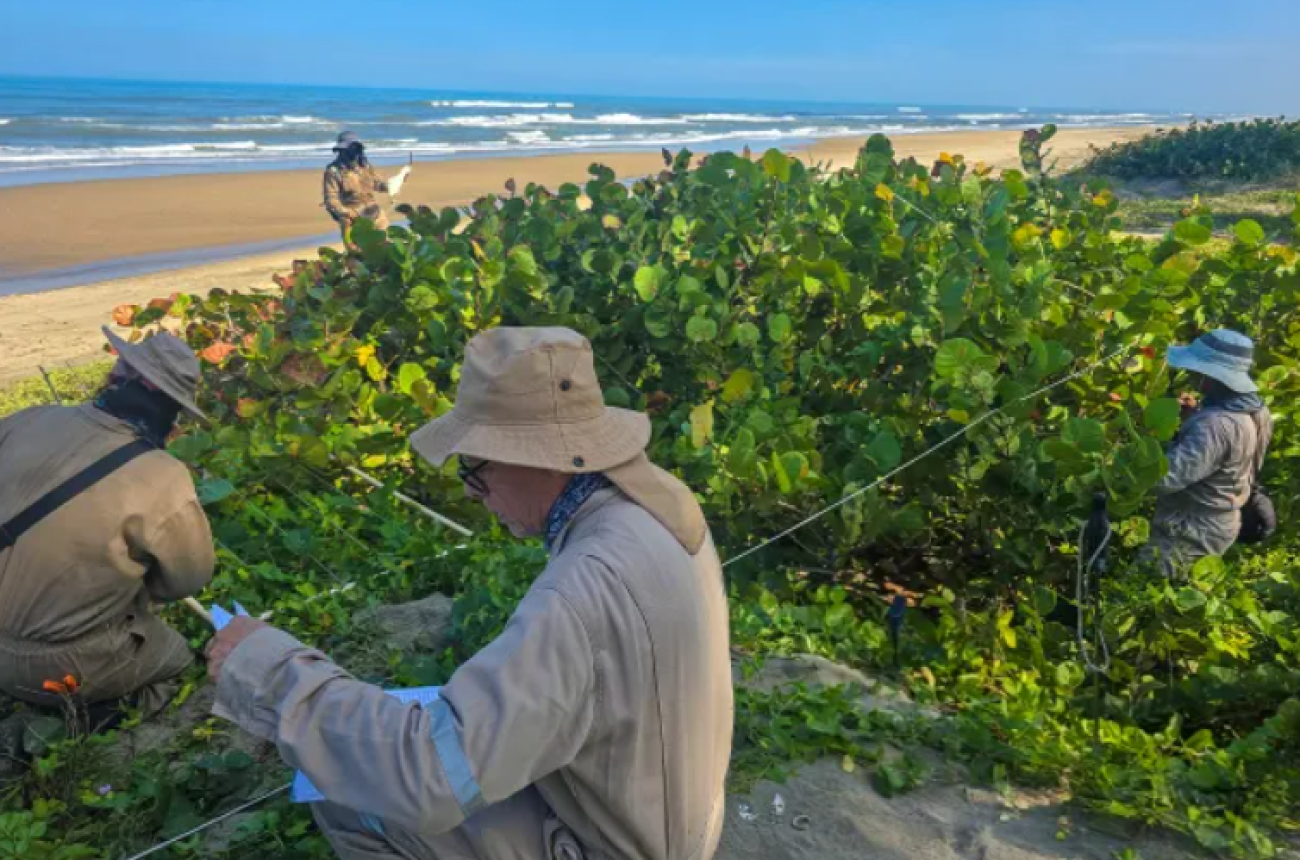
Given this situation, UNESCO in Mexico is implementing the Living Dunes initiative, in conjunction with the Juárez Autonomous University of Tabasco (UJAT) and the Autonomous University of Carmen (UNACAR), to restore natural buffer zones. To this end, a feasibility study was conducted, prioritizing ecological criteria and encompassing social and logistical factors.
At the meeting with officials and local stakeholders at UJAT, the areas most urgently needing restoration, as determined by the diagnostic scientific study, were identified. These areas, designated for intervention with the greatest positive impact, were: San Rafael, Sinaloa (Arjona), Sinaloa (2nd and 1st sections), and El Alacrán (Manatinero).
Regarding ideal native plants for revegetating coastal dunes, Amaranthus greggii (Gregg’s Amaranth or Yucatecan Amaranth), Canavalia rosea (Sea Bean or Little Bean), and Commelina erecta (Spurweed, Chickenweed, or Mataliste), among other species, were identified. These plants have the ability to anchor and stabilize the sand with their roots, improving the resistance of sand dunes to wind and waves. Furthermore, they can impede the passage of air and water, promoting sediment accumulation and the formation of new dunes.
To continue rebuilding the vegetation barrier, seeds and cuttings of the most viable native species are being collected for later propagation in a community nursery. The next steps will be their strategic planting and the installation of sand traps constructed from organic materials to facilitate dune formation.
Community participation is key for communities to lead the restoration processes, ensuring their ownership and long-term continuity. Therefore, UNESCO will convene the coastal population of Tabasco to form local brigades, participate in training workshops, and engage in a community monitoring system.
Living Dunes is part of a series of interconnected actions, previously formulated through participatory processes, to reduce disaster risks in Tabasco. With this, UNESCO formulated and is implementing a comprehensive program made possible with the support of ENI Mexico, which includes: technical assistance to build the Water Security Plan for the Mezcalapa-Samaria Sub-basin, strengthening the Early Warning System of Tabasco, which includes the collaboration of local media and journalists, and revitalizing Sánchez Magallanes by managing its cultural and natural heritage in the hands of its inhabitants.

Source: mexico.un