
Through ecological restoration efforts and community participation, the Government of Tamaulipas is making progress in the recovery of strategic ecosystems that strengthen environmental resilience and social well-being along the state’s coast. One such project is the Mangrove Ecosystem Recovery Project on the Tamaulipas Coast, a comprehensive strategy being developed by the Ministry of Urban Development and the Environment in the municipalities of Soto la Marina and Aldama.
Wetlands and mangroves are natural allies of coastal communities. They act as barriers against hurricanes and storms, reduce erosion, capture carbon, and provide refuge for marine species and birds that support local productive activities. Protecting them also means protecting the economy, security, and environment of thousands of families.
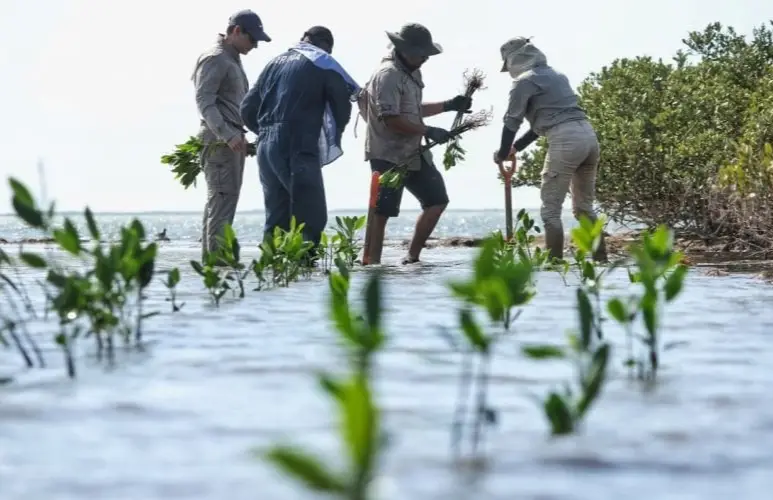
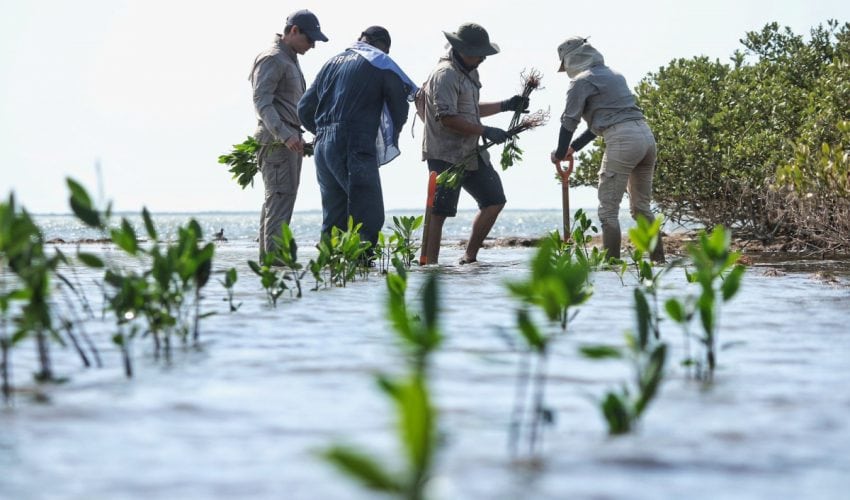
On World Wetlands Day, Karina Lizeth Saldívar Lartigue, head of the Secretariat of Urban Development and the Environment, explained that the project’s objective is to restore and conserve these ecosystems through reforestation, cleanup, environmental monitoring, and active community participation, guided by the humanist vision promoted by Governor Américo Villarreal Anaya. She specified that the restoration efforts primarily focus on black mangrove (Avicennia germinans) and red mangrove (Rhizophora mangle), key species for protecting the coastline and coastal biodiversity.
In 2025 alone, 14.89 hectares of mangrove forest were reforested, and more than 29,000 seedlings were produced. These results exceeded projections thanks to favorable environmental conditions, an efficient direct seeding methodology, inter-institutional coordination, and collaborative work with local communities.
Furthermore, beach and wetland cleanups have been carried out, removing solid waste and plastics that pose a risk to wildlife and environmental quality. In parallel, monitoring efforts are underway to assess the conservation status of the mangrove forest, and progress is being made in formalizing an Environmental Management Unit (UMA), reinforcing the sustainable management of the ecosystem.
In legal and administrative matters, the Secretariat of Urban Development and the Environment is working to obtain environmental permits, ensuring that every action is carried out with transparency, adherence to regulations, and institutional responsibility.
“When we take care of the mangrove, we take care of people. Involving communities not only allows us to recover ecosystems, but also builds awareness, identity, and commitment to the territory we share,” said Saldívar Lartigue.
The impact of this project goes beyond environmental recovery. In Aldama and Soto la Marina, community participation has become a pillar of conservation, strengthening civic co-responsibility and cultivating a culture of stewardship that guarantees a healthier, more resilient coastline with a future for Tamaulipas.
Source: tamaulipas.gob