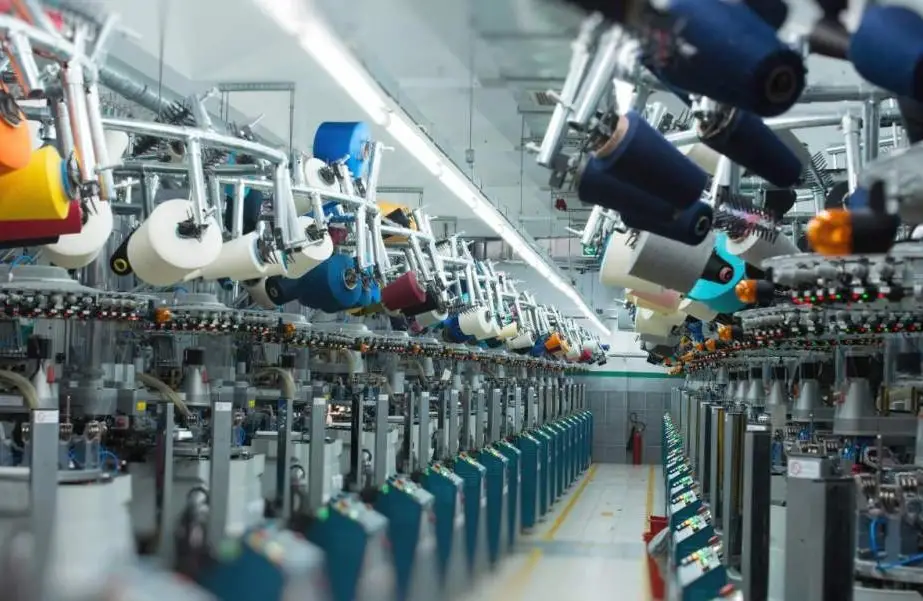

The textile and apparel industry in Puebla and Tlaxcala is operating at only 60 percent of its capacity and has lost more than 100,000 formal jobs in the last four years, a decline that business leaders attribute to the smuggling of Asian goods and the expansion of online commerce with undervalued products.
The president of the Puebla and Tlaxcala Textile Industry Chamber (Citex), Gustavo Lezama González, warned in an interview that at least 10 companies in the region have closed in the last two years and that a significant portion of the jobs lost were in garment workshops where women were the primary workers.
The business leader said that the job losses not only reflect a drop in production but also a weakening of the manufacturing sector that supports small and medium-sized companies in the region.
According to their figures, between 300,000 and 400,000 jobs have been lost nationwide in the textile and apparel supply chain during the same period, with approximately a third of those losses concentrated in Puebla and Tlaxcala.
Lezama González emphasized that, in the garment industry, most positions are held by women and offer formal benefits, so job losses directly impact the income of thousands of households.
“There are fabric manufacturers, there are finishers, there are denim makers, and there are many garment makers who have had to reduce their production and close down,” she explained, stressing that the phenomenon is dramatic and that, if not stopped, the textile industry could become an example of what will happen to the rest of the country’s manufacturing sector.
She contrasted the conditions faced by Mexican companies with those of Asian companies, pointing out that they are not competing against other companies, but against countries that subsidize labor, electricity, raw materials, exchange rates, and financial interest rates.
Under this system, he stated, imported products reach store shelves and digital platforms at prices that Mexican industry cannot match, without any guarantee of compliance with environmental or labor standards. He noted that in China, there are international reports of child labor exploitation in cotton farming.
Describing the impact on daily consumption, he pointed out that imported clothing predominates in department stores, supermarkets, informal markets, and street markets.
He encouraged consumers to check clothing labels in chains affiliated with the National Association of Supermarkets and Department Stores and asserted that more than 90 percent of the clothing sold is made in China. According to the leader, this massive presence reflects the lack of a robust domestic market that prioritizes national production.
In his analysis, digital commerce has deepened the crisis in the sector. He pointed out that platforms like Shein, Temu, and Amazon itself imported large volumes of textiles under the de minimis import regime, thereby evading VAT and income tax, and declaring undervalued prices.
He added that these schemes multiplied the influx of cheap clothing into Mexico, which put downward pressure on prices and reduced the competitiveness of local businesses.

Source: lajornadadeoriente