In the capital of the state of Yucatán, the first Bio-Green Corridor is under construction, connecting areas of high environmental value, as well as parks and community spaces, to reduce heat, mitigate flooding, and protect biodiversity.
This landmark project marks a new direction in urban planning with an environmental, social, and community focus, as part of the city’s green infrastructure efforts, explained Mayor Cecilia Patrón Laviada.
At the inauguration, it was explained that the project was a joint effort between the Mérida City Council, the German Development Cooperation (GIZ), REVIVE, and Colectivo Tomate, in collaboration with COMEX, CEMEX, and UNAM.
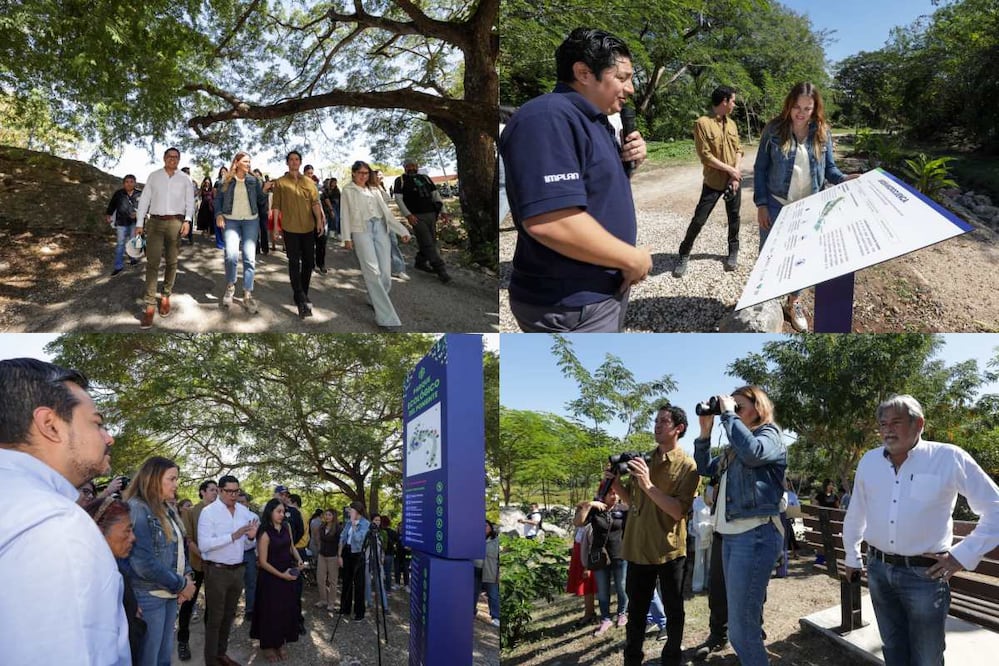
It also includes murals and pavement improvements, a sports and community area, a pollinator garden, a reforestation zone, habitat and heritage trees, a micro-watershed garden, a biofilter, a wetland monitoring system, and signage and informational plaques.
Read also: Young woman from Yucatán participates in NASA program; Sharing Scientific Experience in His Community
When delivering his message, Patrón Laviada stated that “through this project, we are beautifying Mérida with nature-based solutions that reduce temperatures in surrounding neighborhoods, improve water infiltration, and protect biodiversity, demonstrating that urban development and environmental stewardship can go hand in hand.”
He also affirmed that the Western Bio-Corridor is part of a comprehensive city vision that prioritizes green infrastructure as a tool to improve the quality of life for Mérida families.
This will connect areas of high ecological value, sunken parks, and community spaces, creating a living system that protects biodiversity, regulates temperature, and reduces risks associated with heavy rains and flooding, particularly in the western neighborhoods of the city.
The Western Bio-Corridor is a network of public spaces stretching from the Western Archaeological and Ecological Park to the Western Ecological Park. Along this 1.2-kilometer route are Yucalpetén Park and Los Cantaritos Park, which together cover approximately 75 hectares.
The project will be integrated into the network of green corridors promoted by the Mérida City Council to strengthen urban tree cover and ecosystem services. Its strategic location will help reduce temperatures in nearby areas by several degrees, improve stormwater management, and strengthen the city’s resilience to climate change.
In addition to its environmental impact, the project is being established as an urban innovation laboratory focused on environmental education, citizen science, and community participation, integrating residents, youth, and civil organizations in the care and ownership of public space.
Mayor Patrón Laviada acknowledged that climate change presents significant challenges, but also opportunities to transform the city through concrete actions such as caring parks, educational spaces, and projects that strengthen social cohesion and a sense of community.
Therefore, the Mérida City Council is committed to a long-term urban and environmental regeneration model, mitigating extreme heat and rainfall, and building a more humane, sustainable city, prepared for the future.
Source: eluniversal