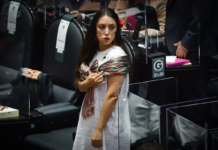
A visit by a U.S. congressional delegation to Mexico City was marred by controversy after U.S. lawmakers accused Mayor Claudia Sheinbaum of canceling previously scheduled meetings.
The accusation was made public by Republican Congressman Carlos A. Giménez, who claimed the meetings were suspended upon their arrival in the country, a version later denied by the Mexican Embassy in the United States.
Through his official social media account, Carlos A. Giménez asserted that Mayor Claudia Sheinbaum canceled the meetings the U.S. delegation had planned during their visit to Mexico.
The congressman noted that, despite this, the diplomatic agenda continued with other high-level meetings.
In his message, Giménez emphasized that he did manage to meet with the U.S. Ambassador to Mexico, as well as with U.S. Marines assigned to security duties at the embassy.
The publication included photographs taken inside diplomatic facilities, which gave greater visibility to the congressman’s complaint.
To date, the Mexican Presidency has not issued a direct statement on the allegation, which has fueled the debate in the political and media spheres.
Who are the legislators involved?
Carlos A. Giménez: Republican Congressman from Florida, former mayor of Miami-Dade County, and former firefighter. He has maintained a critical stance on foreign policy and security issues.
Republican Congressman Carlos A.
Michael McCaul: Representative from Texas and former chairman of the House Homeland Security Committee. He currently chairs the U.S.-Mexico Interparliamentary Group.
Michael McCaul, Representative from Texas
Michael McCaul, Representative from Texas and chairman of the U.S.-Mexico Interparliamentary Group, led meetings with Mexican legislators during the U.S. delegation’s visit. REUTERS/Kevin Lamarque/File Photo
Mexican Embassy Responds and Denies Cancellation
Following the version disseminated by Giménez, the Mexican Embassy in the United States clarified that no meeting was canceled.
In an official statement, it explained that diplomatic engagements are only confirmed when the schedules are formally agreed upon by both parties through official channels.
According to the diplomatic mission, this process was not completed in this case, therefore there were no confirmed meetings that could be considered canceled.
This response sparked a series of conflicting accounts that highlighted differences in the interpretation of diplomatic protocol.
The delegation included members of the United States Congress, among them Michael McCaul, who also documented part of the visit on social media.
McCaul reported that the group’s first stop was the United States Embassy in Mexico, where they received a detailed briefing on the state of the bilateral relationship.
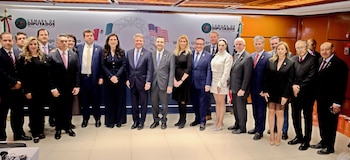
In addition, McCaul chaired a meeting of the Mexico-United States Interparliamentary Group, which included U.S. legislators and Mexican representatives, including the Speaker of the Chamber of Deputies.
According to the congressman, the meeting included bipartisan representation from the United States and members of six Mexican political parties.
Among the topics discussed were security, trade, regional cooperation, and health issues, which, according to McCaul, reflects that the strengthening of the bilateral relationship transcends partisan politics.
The controversy comes at a crucial moment for the relationship between the two countries, where political and diplomatic coordination is essential to addressing shared strategic issues.
Source: infobae