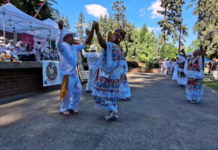
The fact that education is designed for Spanish, even when taught bilingually, and the economic situation of families, which doesn’t always allow them to support their children’s education, are among the challenges faced in Mayan-speaking communities on the Yucatán Peninsula, explain two educators interviewed on the topic.
“Education is designed monolingually. So it’s difficult to change the approach when all the materials, the system, and the strategies are designed for only one language, so they end up teaching in Spanish when they should be teaching in Mayan,” says María Lourdes Pinto Loría, PhD in Psychology.
The researcher from UADY adds that this results in slow teaching and learning processes: “Children in Mayan communities practically only begin to read and write around the fourth grade… And this is precisely because of a problem with bilingualism,” she states.
“And even though books in Maya are available, they aren’t being read. No effective teaching and learning strategies have been found that would allow children, starting in preschool, to begin reading and writing both Maya and Spanish.”
The specialist in mental health projects in Maya communities points out that various studies show that “children in elementary school are speaking Maya, but by the time they reach middle school, they no longer speak it.” In her opinion, “they aren’t learning either Maya or Spanish properly.”
Regarding what to do, the professor from the Faculty of Psychology at UADY (Autonomous University of Yucatán) affirms that many positive initiatives are emerging with the use of technology: Maya emoticons, Wikipedia and Google in Maya, podcasts, and content for social media.
“It’s a very positive movement among Maya youth; they have managed to raise awareness that they need to do something to maintain their culture and language.”
For her part, Yareni Canul Rodríguez, a graduate in Teacher Training for Bilingual Basic Education, adds that “one of the most serious barriers is the economic situation of the communities.”
“Now, with the New Mexican School model, the responsibility for children acquiring all the knowledge is not being placed solely on the teacher; it is also important for parents to get involved and support their children with homework, identifying any other needs the students may have.”
However, due to the long working hours that parents must cover to earn a living, they cannot always be present for their children’s education. “Students need a lot more support, but as I mentioned, it is their economic situation, and it is the only way they can find to earn a living.”
Regarding the challenges with Maya-speaking students, she believes it is very important for the teacher to have knowledge of the language, not necessarily to speak it fluently like a native Maya speaker, but to be able to communicate with and understand the student.
“It’s a barrier when students prefer to listen to explanations, stories, or songs in Maya, because it’s important that they feel their language is valuable, not the opposite. We know it’s being lost because many people feel ashamed or consider Spanish better,” the teacher adds.
“From my experience, to revitalize the Maya language, we need more cultural activities where people can feel it’s part of their identity. It would also be important to take advantage of technology. For example, apps for learning Maya.”

Source: yucatan