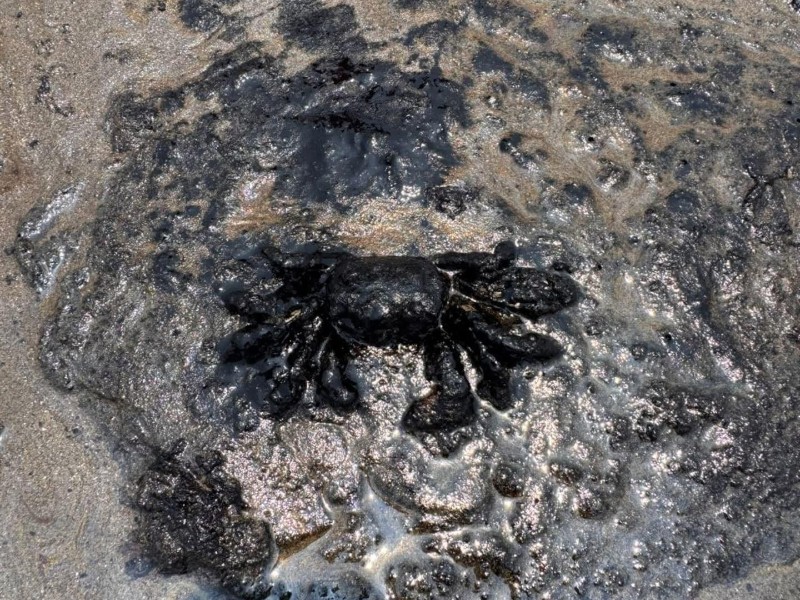
The oil spill on the Veracruz coast has extended for 170 kilometers (km), also affecting areas of Tabasco, with direct impacts on fishing communities and marine ecosystems. The presence of tar has caused fish kills and the migration of species, affecting fishing activity during the Lenten season.
Communities affected by the oil spill in Veracruz and Tabasco
To date, impacts have been reported in at least 16 coastal locations, from Pajapan, Veracruz, to Paraíso, Tabasco. Among the areas with tar present are:
Punta San Juan
Playa Linda
Zapotitlán
Tecuanapan
Jicacal
La Bocana
Paquital
Punta Huazuntlán
Bocana Río Temoloapan in Laguna del Ostión.
Damage has also been reported in:
Los Arrecifes
El Salado in Mecayapan
Peña Hermosa
Mirador Pilapa in Tatahuicapan
Barrillas in Coatzacoalcos, Veracruz
Barra Panteones in Paraíso
Sánchez Magallanes, Tabasco.
Environmental and economic impact on fishing communities
In Laguna del Ostión, the crude oil spill is affecting the production of oysters, clams, apacta (a type of clam), shrimp, and snook, as well as damaging mangroves and species such as blue and hairy crabs. Around 14,000 people depend on fishing and tourism in Pajapan, Mecayapan, and Tatahuicapan, Veracruz. Fishermen have reported damage to nets and boats, as well as health risks from attempting to remove the oil themselves.
To date, authorities have not reported the source of the oil spill. Pemex denied responsibility after inspections of its facilities, while researchers detected, using satellite images from February 20, a 37-km-long oil slick off the coast of Campeche.
Fishing and Indigenous communities have led the cleanup of the oil and the protection of the affected flora and fauna, although they lack sufficient materials and support. Immediate support, coordination between authorities, companies, and communities, and independent studies are requested to clarify the source of the oil spill and strengthen prevention and response protocols.
This situation adds to a history of spills in the Gulf of Mexico, such as the one recorded on October 16, 2015, in the Pantepec River, in Álamo Temapache, Veracruz, which demonstrates the recurring impact of oil spills on ecosystems and fishing communities.
Source: unotv