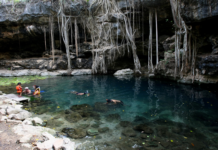
Did you know that approximately 407 underground river systems have been explored in the Yucatán Peninsula? That’s roughly 1,650 kilometers, and these could represent only 20% of the underground river systems in the region. On International Day of Action for Rivers, let’s focus on the underground waters that sustain, nourish, and support life… even though we can’t see them.
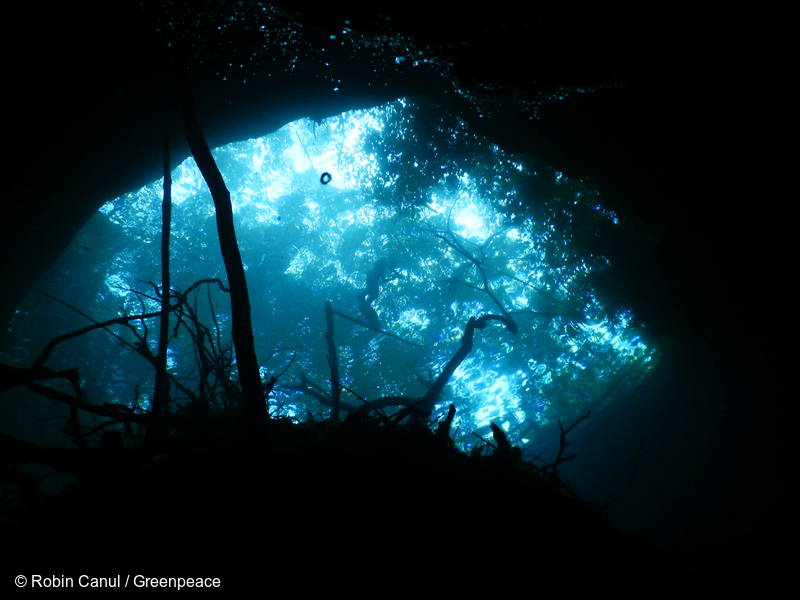
Freshwater flows through the channels of the Peninsula’s underground rivers, many of which empty into the Mesoamerican Reef System (MAR). All these waterways are replenished by rainwater that seeps through the soil and play a vital role in the lives of the people who live in this area: they are the freshwater (potable) reserve for the communities.
There, the rocky soil acts like a sponge, absorbing both the beneficial and harmful elements present in the ground. This water supplies the underground rivers and cenotes; in other words, it is part of the area’s karst system*.
Royal Caribbean’s Perfect Day Mahahual megaproject, a massive cruise ship resort expected to receive up to 21,000 visitors a day in a town of just 3,000 inhabitants, is part of an extractive, intensive, and exclusionary cruise tourism model. The massive and concentrated influx of visitors to the area would place extreme pressure on basic services, local infrastructure, and the lives of local people and on biodiversity.
Allowing the opening of a park like Perfect Day endangers these aquifer systems, which are so valuable for the biodiversity and communities of the region. The cruise line intends to build pools, water slides, and artificial rivers on the surface of Mahahual—facilities that could obstruct or significantly reduce groundwater infiltration due to the cement, paint, metal, plastic, and other materials used.
Furthermore, their plan includes drilling two wells: one 15 meters deep for water extraction and another 45 meters deep to inject wastewater into the subsoil. However, they fail to identify the ecological risks of drilling and injecting water into the aquifer. What enters the subsoil eventually reaches the sea and also contaminates the drinking water supply.
To make matters worse, Royal Caribbean stated in its own environmental impact study that the soil in the area would be sealed. In other words, they are aware that infiltration into the subsoil would be obstructed. Moreover, they do not establish any strategy to prevent or compensate for this loss of infiltration.
If the project is approved, the region’s underground rivers will be at risk.
Source: greenpeace