The Maya Train Museum, located in the Ateneo Peninsular in Mérida, Yucatán, has yet to fully open, despite the fact that its first anniversary is approaching next month. It was on April 26, 2025, that Mayor Claudia Sheinbaum attended the reopening of this venue, which, before being administered by the National Institute of Anthropology and History (INAH), was the Museum of Contemporary Art of Yucatán (MACAY). The project, which cost 210 million pesos, was announced as a space to exhibit the archaeological findings uncovered during the construction of these railway lines, as well as a place “with spaces for temporary exhibitions, conventions, conferences, and various cultural activities.”
However, today visitors will find restricted access and signs stating, “We do not have restroom facilities.”
Upon entering this viceregal-era building, a series of metal benches are arranged to delineate the areas visitors can access, including the central courtyard. “It’s currently restricted due to restoration work,” explains a worker.
To enter, you simply need to register in a notebook because admission is free “for now,” says another museum employee.
After passing through the door and seeing the sign indicating there are no restrooms, the problems are immediately apparent: the first screen, which is supposed to project educational materials, is not working. When asked about it, the employee replies, “Yes, they’ve been malfunctioning.”
“In an effort to promote inclusion and ensure an experience that integrates all audiences, special stations were developed that include tactile reproductions of the exhibited pieces, relief illustrations of Mayan codices or building elevations, Braille descriptions, and audiovisual and sight-related displays,” stated the press release for last year’s inauguration. However, during a visit by EL UNIVERSAL last week, at least four screens were found to be out of order, and while Braille resources were available, some reliefs were broken, and one was even missing.
Rosario Guillermo, an artist who, along with colleagues, protested the closure of the MACAY, recalls that when it was an art museum, the entire building was used; there were more than seven galleries and spaces dedicated to various activities.
Now, the first three galleries house the exhibition “Ateneo Peninsular.” Overlapping Thought, where the history of the building designed by Yucatecan architect Manuel Amabilis and Italian Giacomo Piccone is recounted, and which was inaugurated in 1918.
Along the paths of salvage, which, without an introductory text, displays archaeological pieces found from Section 1 to Section 7 of the Maya Train and explains the archaeological salvage work carried out by the government through videos. Among the pieces, those used in domestic contexts predominate, such as plates, vessels, and hunting tools; others are from funerary contexts, and there are sculptures with human forms, such as a human torso—whose date is unknown—a Chen Mul-type sculpture, among other clay pieces.
The tour of the 102 objects is brief and solitary, although the staff notes that they do receive many visitors; on that Sunday morning of a long weekend, attendance was low. Also noteworthy was the lack of security; there were no staff—even the chairs where they would sit were empty during the visit—nor were there any security cameras on the ceiling of the rooms.
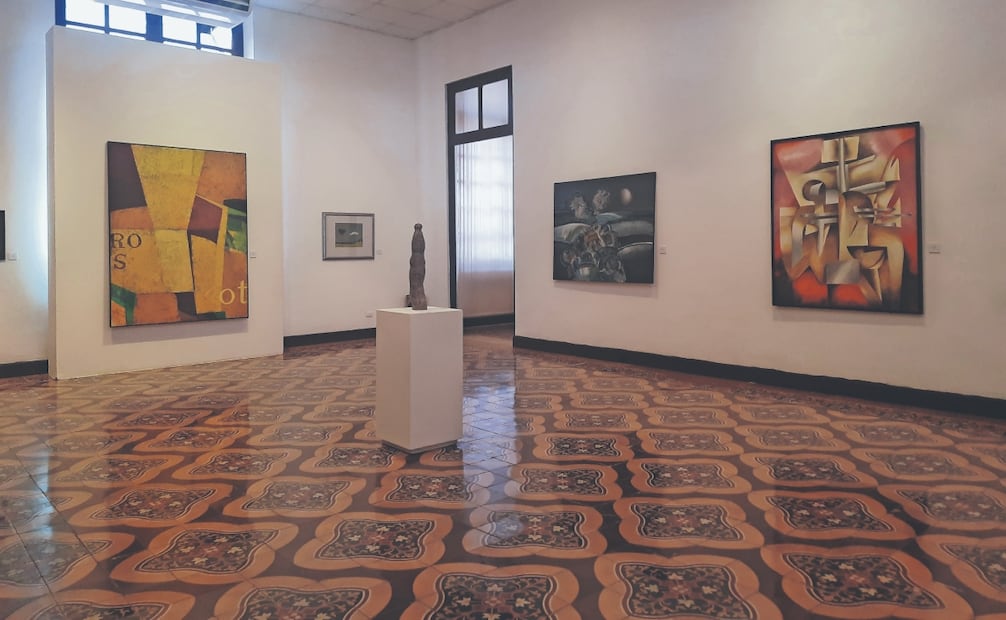
When staff are told how empty the museum is, one of the workers responds that “it’s all going to be a museum, but they’re doing restoration work.” When asked when the venue will fully reopen, he says, “We don’t have a date yet. The museum has been open for almost a year now, and it’s not progressing, to be honest, it’s just sitting there.” He adds that once it’s fully operational, there will be an entrance fee.
The National Institute of Anthropology and History (INAH) was contacted to discuss the Ateneo project, but there was no response by press time. Days after this newspaper’s visit, the Fonart store at the Ateneo opened, but the cafeteria-restaurant and the one-stop service window that INAH had announced are still pending.
“The Museum of Contemporary Art closed permanently,” says the Ateneo employee. As late as April 2024, the Ministry of Culture and the National Institute of Anthropology and History (INAH) issued a statement saying that “at no time have they considered the closure of the MACAY,” and at one point it was announced that there would be talks with the MACAY Foundation to continue its involvement with the building. That didn’t happen; the museum closed, and its collection was divided among three institutions that received it as a donation: the Museum of the City of Mérida—which currently presents the MACAY Collection exhibition—, the Architecture, Habitat, Art, and Design Campus (CAHAD) of the Autonomous University of Yucatán (UADY), and the University of the Arts of Yucatán.
For Guillermo, the elimination of the MACAY, a museum “with 30 years of prestige,” is “an irreparable loss for the peninsula,” since he pointed out that there is no museum in the region that focuses on contemporary art, while Yucatán has three archaeological museums, not counting those located at archaeological sites. Guillermo believes that the eviction of the MACAY, described as “cultural genocide,” occurred due to contempt for contemporary art and because Diego Prieto, then director of the INAH (National Institute of Anthropology and History) and now head of the Strategic Unit for Living Cultures, “wanted to give López Obrador a gift. He had a servile attitude.”
The sculptor, who has a piece in the collection, acknowledges that dividing the collection among three venues was “an excellent solution,” however, she says that the artistic community “continues to fight for a museum.”
Read also: INAH discovers Toltec altar with human skeletal remains in Tula, Hidalgo; it was found during construction of the Mexico-Querétaro Train
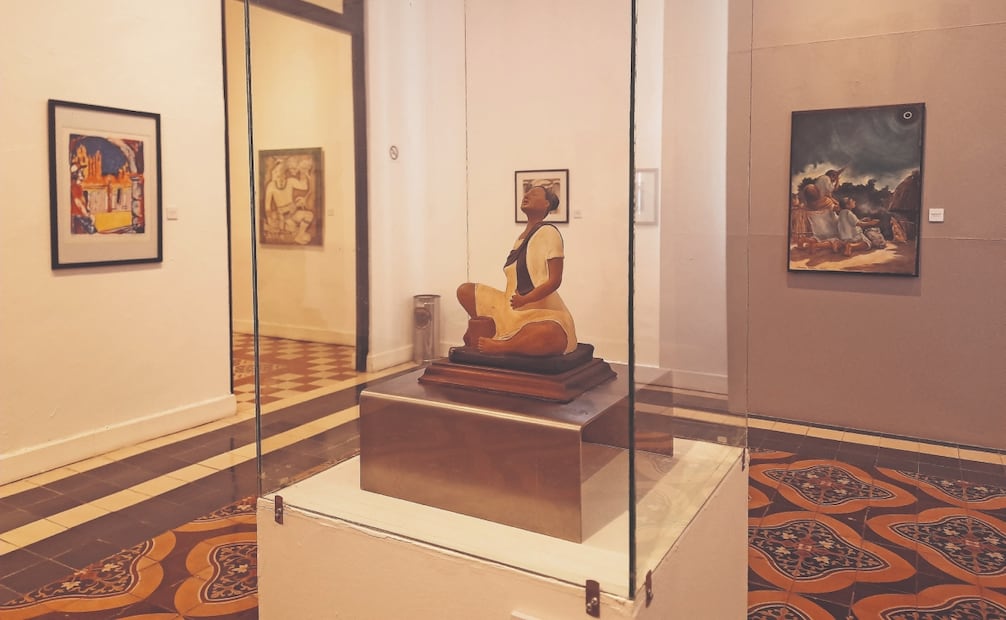
For the Museum of the City of Mérida, this donation from the MACAY Foundation, finalized in January, represents an “enrichment” of its collection, which already included 455 works of art and now adds 282, among them pieces by Roger von Gunten and Gabriel Ramírez. “For us, it is very important to preserve the work of the region’s artists,” says José Civeira, director of the venue.
In the case of UADY, Javier Barrera, cultural coordinator at CAHAD, explains that this donation of more than 200 pieces represents an opportunity to “structure a more substantial collection,” one that was previously “nascent.” This campus received the works last May and is currently cataloging, storing, and digitizing them. They will work on assembling “coherent and narrative-driven collections” to continue their exhibition and dissemination.
Source: eluniversal