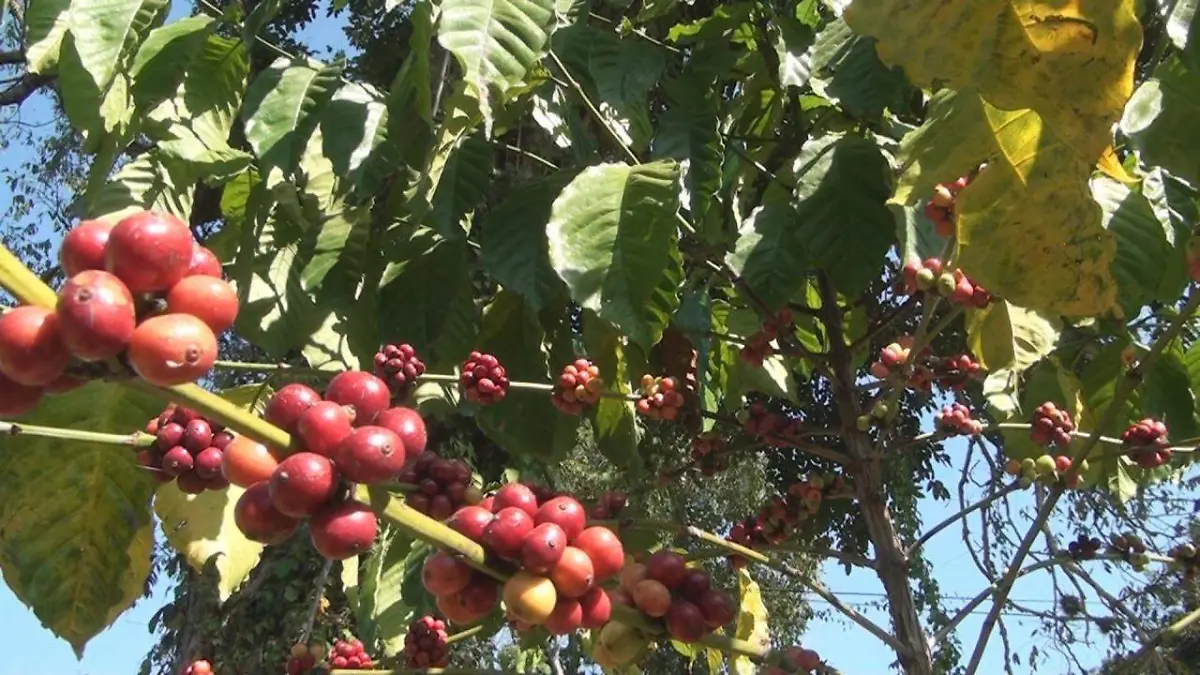
Coffee producers in the Soconusco region concluded the October 2025–March 2026 harvest cycle successfully, boosted by abundant rainfall associated with the La Niña climate phenomenon.
According to coffee growers and traders, the early rains favored the flowering and development of the aromatic beans, resulting in a higher yield than in recent years.
Martín Mendoza, originally from Tuzantán, who has been involved in buying and selling coffee and seasonal products for over two decades, explained that the weather conditions allowed for an abundant harvest, although prices were not very favorable.
“The coffee plants were laden with fruit thanks to the rains. When there is a drought, the beans don’t develop sufficiently, and we all lose. This year was different,” he noted.
The La Niña phenomenon, characterized by increased rainfall in various regions, can generate benefits or negative impacts depending on the crop and the intensity of the precipitation.
In municipalities like Huixtla, Tuzantán, Escuintla, and Mapastepec, the early rains recorded in March also foreshadow a good start to the next growing season, as they promote flowering.
Sergio Ramírez, a coffee grower in the region, highlighted that these weather conditions help mitigate the effects of the midsummer drought, a 40-day period of drought between July and August, allowing for better crop development. However, he points out that excessive humidity also poses risks.
Producers warn that heavy rains can damage ripe coffee beans, while phenomena such as hail or low temperatures cause the beans to fall.
Unlike coffee, other agricultural sectors reported losses. Mango producers indicated that the winds associated with cold front number 39, recorded in February, caused the blossoms to fall, directly affecting the harvest. “With the wind, the blossoms fall and the production is lost,” Mendoza and Ramírez agreed.
In the case of sugarcane, the rains have created muddy soils that make harvesting difficult, just over a month before the end of the harvest season.
Despite the good production, the price of coffee continues to be a concern for producers. During the previous cycle, a kilogram of coffee sold for 50 pesos; while this cycle it barely reached 51 pesos. A 60-kilo sack is paid around 3,000 pesos, with variations depending on its actual weight.
He said there are forecasts of a possible price drop for the next cycle, which could offset the benefits obtained from the weather conditions.
Coffee growers recalled that in the 2024-2025 cycle they faced significant losses due to the El Niño phenomenon, characterized by prolonged droughts, which reduced production by up to 60%.
In contrast, the current period under the influence of La Niña allowed for a recovery to normal production levels, although with persistent challenges in the market.
Source: oem