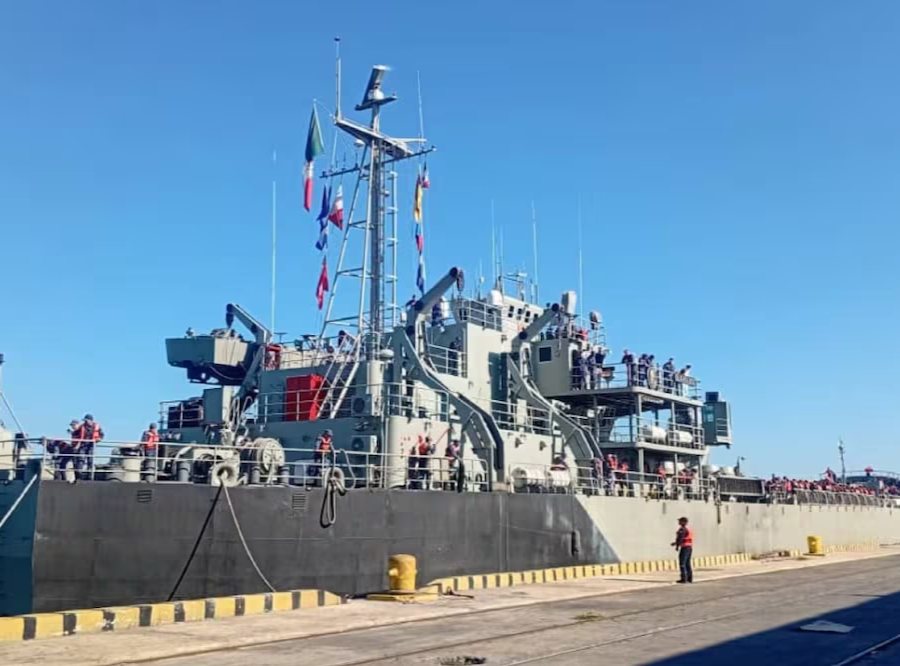

After the Mexican government sent four shipments of humanitarian aid to Cuba aboard various Navy vessels, Cuban authorities requested that Mexico withhold all details of the shipment to avoid compromising its delivery, particularly of food and medicine.
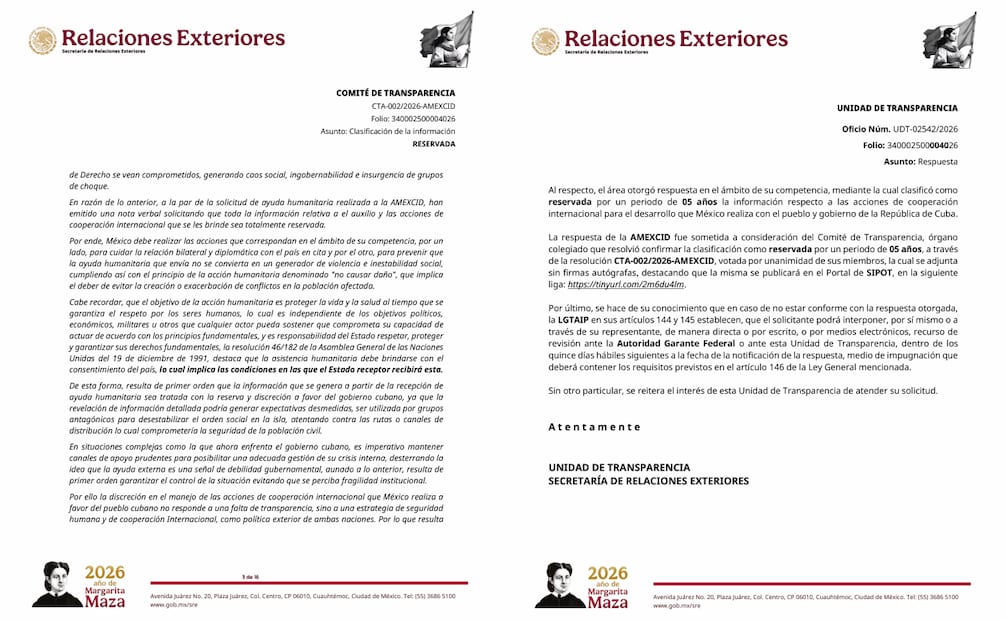
The Cuban government, through a diplomatic note, requested that the administration of President Claudia Sheinbaum Pardo classify the shipment as confidential, and Mexico agreed for a period of five years.
In a request for information sent to the Mexican Agency for International Development Cooperation (AMEXCID), the Ministry of Foreign Affairs (SRE) responded to EL UNIVERSAL that Cuban authorities have identified the receipt of humanitarian aid as having led to the emergence of “dissidents” and “groups antagonistic” to the government of Miguel Díaz-Canel. These groups, taking advantage of the situation, are spreading false information to the population in order to incite them to organize and boycott the distribution of donations, even attempting to misappropriate them.
“They have identified as a latent risk the possibility that governance, public peace, and the rule of law could be compromised, generating social chaos, ungovernability, and the rise of shock troops,” the Ministry told this newspaper.
“If the aforementioned information were to be disclosed, there is a real risk that not only the Republic of Cuba, but also the other recipient countries in the region, could develop a negative image of Mexico. This would damage the conduct of bilateral diplomatic relations, undermine credibility, and erode the regional leadership that has been built over decades of diplomatic history, further affecting dialogue and understanding with these countries,” the response added.
The diplomatic note sent by Cuba justified the discretion shown in the handling of international cooperation actions that Mexico carries out on behalf of the Cuban people, stating that it is not due to a lack of transparency, “but rather to a human security and international cooperation strategy, as part of the foreign policy of both nations.”
“Mexico must take the appropriate actions within its sphere of competence, on the one hand, to safeguard the bilateral and diplomatic relationship with the aforementioned country, and on the other hand, to prevent the humanitarian aid it sends from becoming a source of violence and social instability, thus complying with the principle of humanitarian action known as ‘do no harm,’ which implies the duty to avoid the creation or exacerbation of conflicts among the affected population.”
It should be noted that after the United States threatened to impose tariffs on nations that supply oil to the island, the government of President Sheinbaum Pardo sent a first shipment of humanitarian aid on February 8, containing more than 814 tons of food supplies.
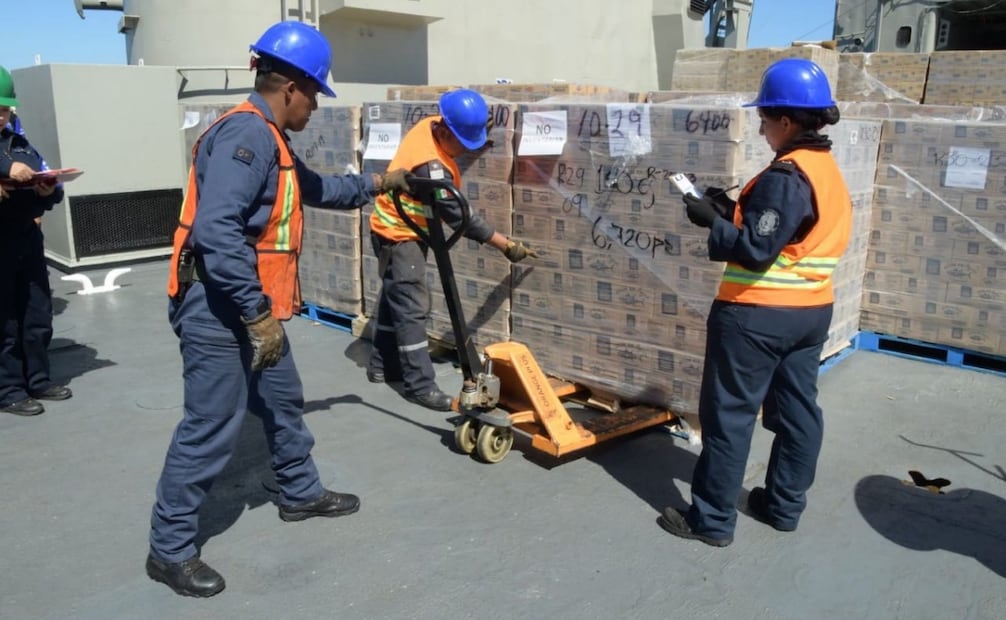
Another shipment of humanitarian aid, consisting of 1,193 tons of food supplies, was sent on February 24, and the fourth shipment arrived on the island on March 27, with more than 96 tons. In total, 3,125 tons of humanitarian aid destined for the civilian population have been delivered.
Also read: Roberto Velasco appears before Senate committee; supports “cooperation without subordination” with the US
In the response to El Gran Diario de México, it was emphasized that humanitarian assistance must be provided with Cuba’s consent, “which implies the conditions under which the recipient state will receive it.”
It was also indicated that in “complex situations, such as the one the Cuban government is currently facing,” it is imperative to maintain “prudent channels of support” to enable the proper management of its internal crisis, “dispelling the notion that external aid is a sign of governmental weakness.”
The Díaz-Canel government added that, in a balancing exercise, “it is evident that simply disclosing the information requested to be kept confidential would cause proportionally greater harm than the public interest in its dissemination, since, given the highly sensitive nature of the information and the current geopolitical context in the Latin American and Caribbean region, it is imperative to take precautions to avoid severe damage that could compromise the social, economic, and political stability of the region.”
“Handling the information in question is a highly complex matter that demands caution and prudence, given the current geopolitical context. Publicizing this information could negatively impact the confidence of strategic partners worldwide in cooperating internationally with Mexico, undermining their confidence in establishing international cooperation mechanisms for development and maintaining diplomatic dialogues on the matter, and even leading, in the worst-case scenario, to violations of international law.”
He indicated that the risks and damages that could occur internationally and nationally “are potentially high if we do not act with caution, promptness, and consistency.”
AMEXCID, under the direction of former PRI member Alejandra del Moral, requested that the information be classified as confidential for a period of five years, given that the understandings and dialogue processes with Cuba are ongoing and continuous.
Source: eluniversal