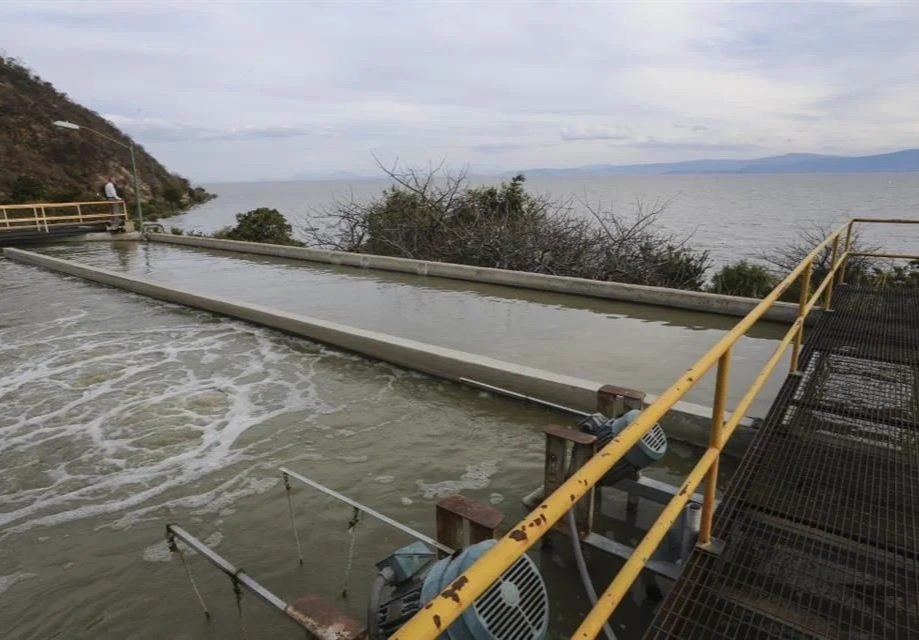

Because municipalities lack sufficient budgets for their maintenance, a total of 84 wastewater treatment plants in Jalisco—out of a total of 235—are not operating, representing 36 percent.
According to Carlos Ornelas Orozco, coordinator of the Center for Research on Hydroadaptive Cities at the Pan-American University (UP), the main resources required to keep them running are labor, electricity, and chemicals.
The researcher explained that the largest treatment plants that are not operational are those in Encarnación de Díaz (with a treatment capacity of 100 liters per second), Teocaltiche (80 liters per second), and Zapotlanejo (75 liters per second). However, he assured that there is a government commitment to begin their rehabilitation, given their operational importance.
“They are located in the Río Verde basin, making them strategically important, since their waters eventually flow into the El Zapotillo dam and are then pumped to El Salto and subsequently to the Calderón dam. This water ultimately reaches the Guadalajara Metropolitan Area (ZMG),” the researcher explained.
The inability of municipalities to keep their wastewater treatment plants operational has been acknowledged by federal authorities. Gustavo Ernesto Figueroa Cuevas, director general of the Lerma-Santiago-Pacific Basin Authority of the National Water Commission (Conagua), admitted that this problem is replicated nationwide.
“Fifty percent of the treatment plants in the country are not being used. Municipal governments’ finances are insufficient to operate them,” the official stated.
Faced with this situation, Conagua has promoted the conversion of treatment plants to operate using renewable energy. In 2025, according to Figueroa Cuevas, six facilities in Jalisco were upgraded for this purpose.
Out of Operation
Of the 84 wastewater treatment plants that are currently out of service in Jalisco, the largest are:
- Encarnación de Díaz
Capacity to treat 100 liters per second. - Teocaltiche
Capacity to treat 80 liters per second. - Zapotlanejo
Capacity to treat 75 liters per second.

Source: mural