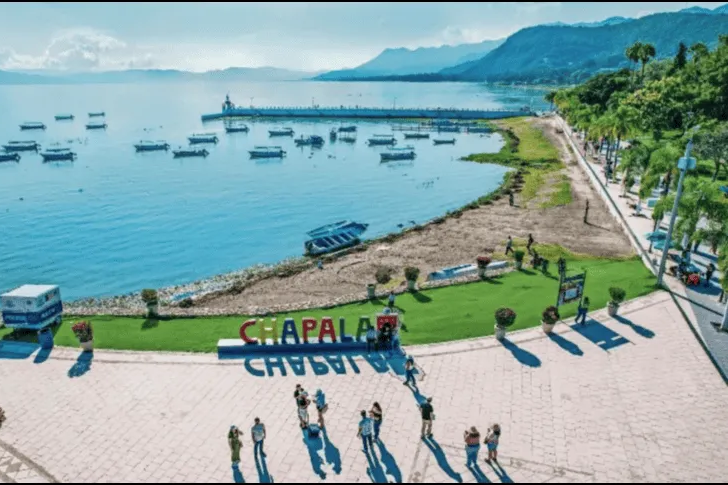

Lake Chapala and most of Jalisco’s major dams maintained favorable storage levels at the start of the dry season, a result of the accumulated rainfall during the last rainy season. However, they have lost a significant amount of storage capacity during the current dry season.
At the end of the rainy season in October, the lake reached over 77% of its capacity, the highest level for what was once known as the “Chapala Sea” since 2018 and the fourth highest level recorded so far this century, recovering just over two meters.
However, currently, the lake, which is the main source of water for the Guadalajara Metropolitan Area, is at 67.92% of its capacity, meaning it has lost approximately 10% of its capacity in recent months, even though several weeks of the dry season remain.
According to SIAPA data, Lake Chapala supplies approximately 60% of the water consumed by the Guadalajara Metropolitan Area, making its level a key indicator for the region’s water security.
The Calderón Dam has also lost a significant amount of water since the end of the rainy season: it is currently at 65.63% of its capacity, even though it reached over 100% of its storage capacity in October.
This reservoir continues to be an important source of supply for areas in the north and west of the metropolitan area, providing about 15% of the city’s water.
The El Salto Dam is at 84.65% of its capacity, although it is not supplying water to the Guadalajara Metropolitan Area, as is the case with the El Zapotillo Dam. Both dams were also above 100% of their capacity at that time.
Both reservoirs were interconnected so that, together with the Calderón dam, they provide the ZMG with 3 cubic meters per second.
Source: informador