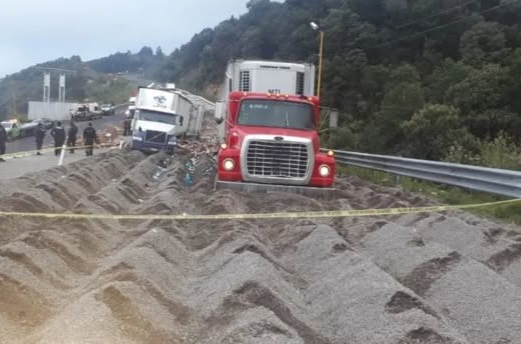

Until 2023, using emergency ramps on highways was expensive, so drivers of both cars and trucks preferred to continue straight ahead rather than stop on one of these ramps, causing severe and tragic damage.
Given this situation, starting in 2023, the Ministry of Infrastructure, Communications and Transportation eliminated the fee for using emergency braking ramps on all federal highways, provided that certain driving conditions are met.
If your car is insured and you need to use these braking ramps, your insurance company will cover the costs.
Otherwise, if you don’t have car insurance and your car weighs less than 3.5 tons, you will have to pay a deductible of 7,000 pesos.
If the vehicle weighs more than 3.5 tons, the price may vary considerably. For example, some cargo vehicles have had to pay up to 170,000 pesos to use the runaway truck ramp.
In addition, there is a cost for using the tow truck to remove the vehicle from the runaway truck ramp. The fee for auxiliary towing and salvage services must adhere to the off-road maneuvering rates established in Chapter Five of the Regulations for Auxiliary Services to Federal Motor Carriers for Towing, Towing and Salvage, and Vehicle Impound.
Keep in mind that, since 2019, the law stipulates that all vehicles traveling on federal highways, roads, and bridges must have valid liability insurance. This is not a recommendation; it is a legal obligation in Mexico.
Article 63 Bis of the Federal Roads, Bridges, and Motor Carrier Law establishes that vehicles traveling on federal highways must have insurance that covers damages to third parties, both property and persons. This means that auto insurance for federal highways is not optional. If you drive on federal highways or roads managed by federal authorities, you must have at least a valid third-party liability insurance policy. Mandatory auto insurance in Mexico requires this minimum third-party liability coverage; however, it’s important to understand that this coverage does not cover damages to your own vehicle. It only protects third parties. Therefore, it’s considered the minimum protection necessary, as it prevents you from having to personally cover the costs of damages you may cause in an accident.

Source: cristianmoreno