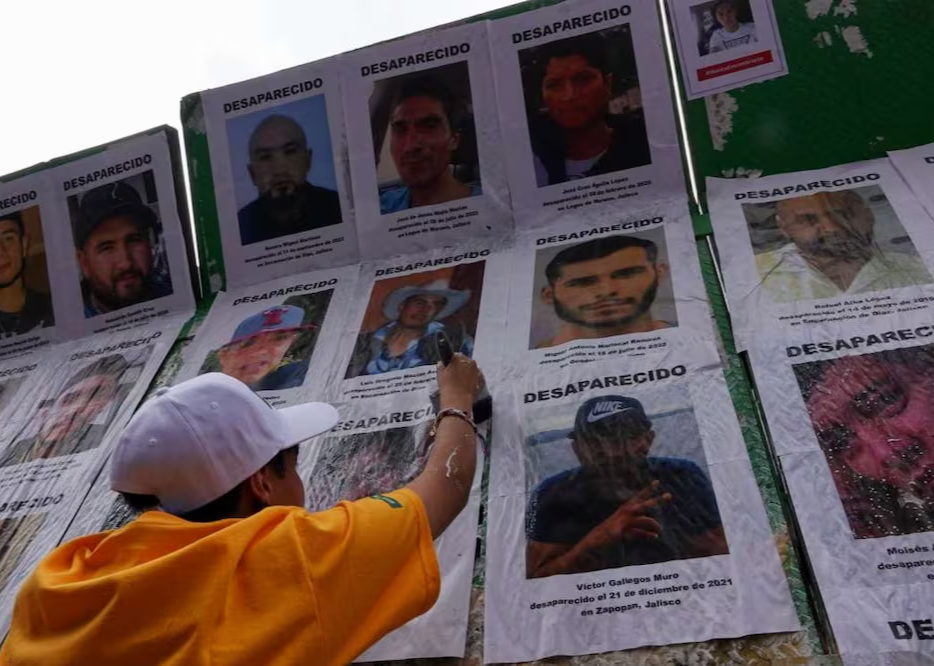

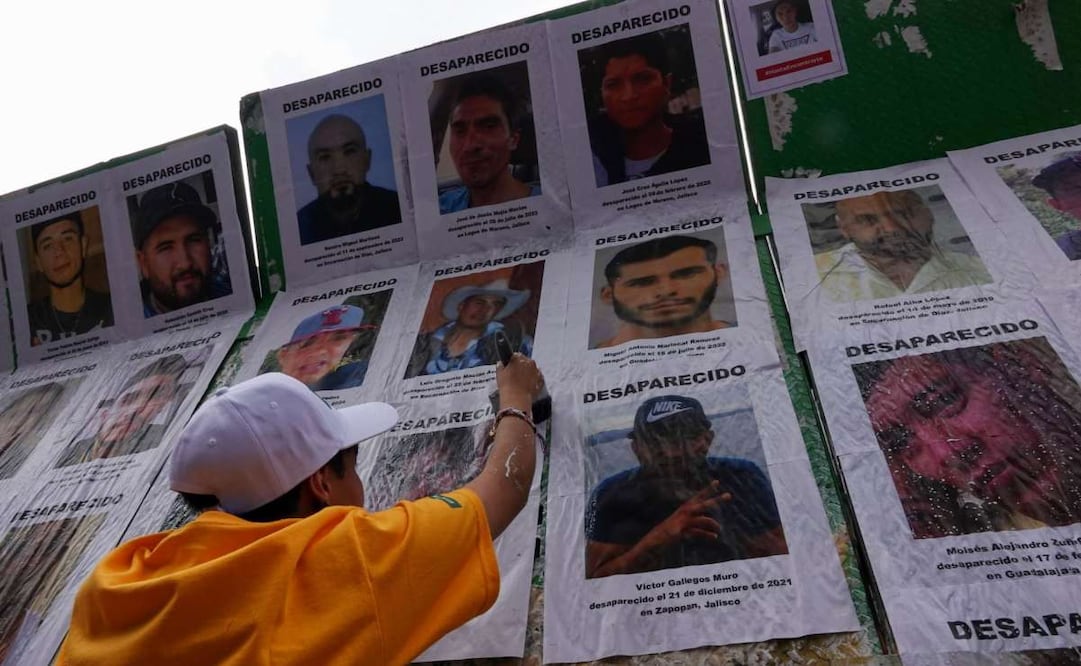
The upcoming visit of the United Nations High Commissioner for Human Rights, Volker Türk, places the Mexican state under international pressure to acknowledge the magnitude of the enforced disappearance crisis, marked by a sustained increase in cases, more than 70,000 unidentified bodies, and virtually absolute impunity, warned legal expert Santiago Corcuera.
During the conference “Disappeared Persons in Mexico: Memory, Truth, and the Demand for Justice,” organized by the Ibero-American University, the former member of the UN Committee against Enforced Disappearances maintained that the visit by this international official opens a “key window” for the Mexican government to stop minimizing the problem and engage with the international mechanisms that have offered assistance.
The expert emphasized that the challenge is not only to assess the scale of the crisis, but also to accept the Committee’s “outstretched hand” to address it progressively, in a context where disappearances continue to rise and institutions have failed to produce effective results in search and identification efforts.
Corcuera warned that the forensic crisis has worsened significantly. While the Committee documented around 50,000 unidentified bodies in recent years, current estimates point to more than 70,000 and even 80,000, highlighting the institutional shortcomings. This is compounded by almost total impunity in these cases, a situation that has led international bodies to escalate the issue within the United Nations system.
“The situation is not improving, and disappearances continue to rise,” she emphasized.
At the same forum, relatives of victims spoke about the human cost of the crisis. Javier Piña and María Tránsito Barajas, parents of Guadalupe Barajas Piña—who disappeared in 2020 and was found dead a year later—denounced the extreme risks involved in searching for their loved ones in Mexico.
“Searching for our missing loved ones shouldn’t lead to our deaths,” Piña asserted, recalling that her son, Javier Barajas, was murdered after becoming involved in the search for his sister.
The families accused ministerial authorities of negligence and omissions. “My daughter was alive for eight days, and they didn’t even come to rescue her,” lamented Piña, while Barajas maintained that progress in achieving justice has been the result of pressure from the families and not the actions of the State: “We feel that the State owes us this justice… we have been wresting it from them by force.”
From civil society, Humberto Guerrero, a member of Fundar, Center for Analysis and Research, criticized the federal government’s response to international condemnation, arguing that it has chosen to downplay the severity of the phenomenon.
He indicated that, even using official figures, Mexico faces at least tens of thousands of missing persons, which he described as a large-scale tragedy. “It is regrettable that the message is to try to minimize the problem,” he stated.
Read also: Search collectives organize a friendly soccer game to denounce the disappearance crisis; “Mexico cannot be a sports host,” they accuse.
For her part, Andrea Horcasitas, coordinator of the Human Rights Program at IBERO University, warned that the families’ distrust of institutions is the result of years of omissions, lack of results, and absence of clear information.
She also warned about the lack of sufficient official data to assess associated phenomena, such as forced displacement and the forensic crisis itself, which limits the State’s capacity to respond.
“To say that Mexico can resolve this without international support is simply untrue,” she stated.
In this context, specialists agreed that the growth of search collectives reflects the worsening of the problem. More and more families are organizing themselves in the face of the lack of institutional responses, which demonstrates both the scale of the crisis and the absence of an effective State policy.
“There are more and more collectives because there are more and more missing persons,” Corcuera concluded.
Source: eluniversal