
The current reality of Korean descendants in Yucatán is marked by the characteristics of that first migration in 1905, which brought their ancestors to work on Yucatán’s haciendas under false pretenses. This event impacted the rapid mixing of races and the difficulty in preserving their language and traditions, as well as in overcoming the poverty in which they lived, primarily in the interior of the state.
These characteristics explain the marked differences between this community and other communities also descended from migrants, explains Claudia Dávila Valdés, author of the book “Lebanese and Koreans in Yucatán: A Comparative History of Two Migrations.”
One of the main characteristics of that migration, details the researcher from the Autonomous University of Yucatán (UADY), is that it was a single group that arrived in Mexico by boat. They arrived in Salina Cruz, Oaxaca, on May 4th, a date now commemorated as Korean Day in Mérida. They then traveled by train to Veracruz and from there, by boat to Progreso.
It was a ship that set sail from Asia with 1,033 Koreans, of whom 1,014 eventually arrived alive in Yucatán. “They didn’t know each other… It was a very heterogeneous group: those fleeing economic hardship and those fleeing political hardship. There were adventurers looking for their fortune.
“The arrival of the Koreans. They are robust and appear to be in good health,” published the Revista de Yucatán in May 1905.
“They were mostly men, but there were also women; most of them wives of the travelers,” explains the professor at the “Hideyo Noguchi” Regional Research Center.

They all came with a four-year contract: “They were obligated to work and arrived with a debt (the expenses of their journey).” “Obviously, they had no idea what Yucatán was, the climate, or the characteristics of the plant.”
And although the contract stipulated what they were going to do and even how much they would be paid, they didn’t know what that meant, explains the migration specialist. Upon arrival, they were distributed among 32 haciendas: “The number of Koreans assigned to each hacienda depended on the amount of money each landowner contributed.”
Thus, they worked like any other laborer of the time, without any freedoms. “They were tied to the haciendas, and whenever one of them left, they were caught and sent back to their own hacienda.”
The doctor compares this migration to that of the Lebanese in Yucatán, “who arrived in more or less the same socioeconomic situation, seeking their fortune.” But the difference is that these Koreans arrived on a single ship, and it’s not a community that’s being sustained by new arrivals of Koreans, as was the case with the Lebanese.
On the other hand, she explains, there’s the issue of dispersal. “It wasn’t a communal migration. They came from different cities and different social classes, united on a ship and embarking on an adventure, but when they arrived in Yucatán, they dispersed again across 32 haciendas, making it very difficult for a community to form.”
Furthermore, she explains, “the single men began to rebuild and reconfigure their lives in Yucatán. There weren’t any women arriving to nurture and consolidate a Korean community in Yucatán.”
This dispersal, coupled with the obligation to work in the Yucatecan countryside alongside other people, especially those of Mayan origin, led to their integration in a very rapid and abrupt way. “They also didn’t speak the language,” Dr. Dávila points out.

“For them, it wasn’t a gradual settlement process with support and solidarity. They arrived and were told, ‘figure it out yourself, make it work, and try to make yourself understood.’ And that led to rapid racial mixing, starting with the first generation.”
Another factor was that the Koreans could no longer return to their country. “When their contracts ended, Korea had become a Japanese protectorate, and they didn’t want to return under those circumstances. Besides, they didn’t have enough money.”
After their contracts ended, the Koreans continued to disperse. Some migrated to Mérida, others to Campeche or Quintana Roo. One group went to Cuba to work in the sugar cane fields, and others to Mexico City and Tijuana.
Others grouped together to continue working on the haciendas, on shorter contracts, moving from one to another. “There’s too much geographic mobility, and that makes it difficult for a consolidated community to form. There were efforts to organize, but they didn’t take root.”
“In terms of their economic standing, they remained within the poor, rural working classes, especially those who stayed in the interior of Yucatán. There was some upward mobility in the city of Mérida, but it took generations. It wasn’t as rapid as with the Lebanese, who had already risen in the second generation… It was very difficult for the Koreans,” explains the social sciences professor.
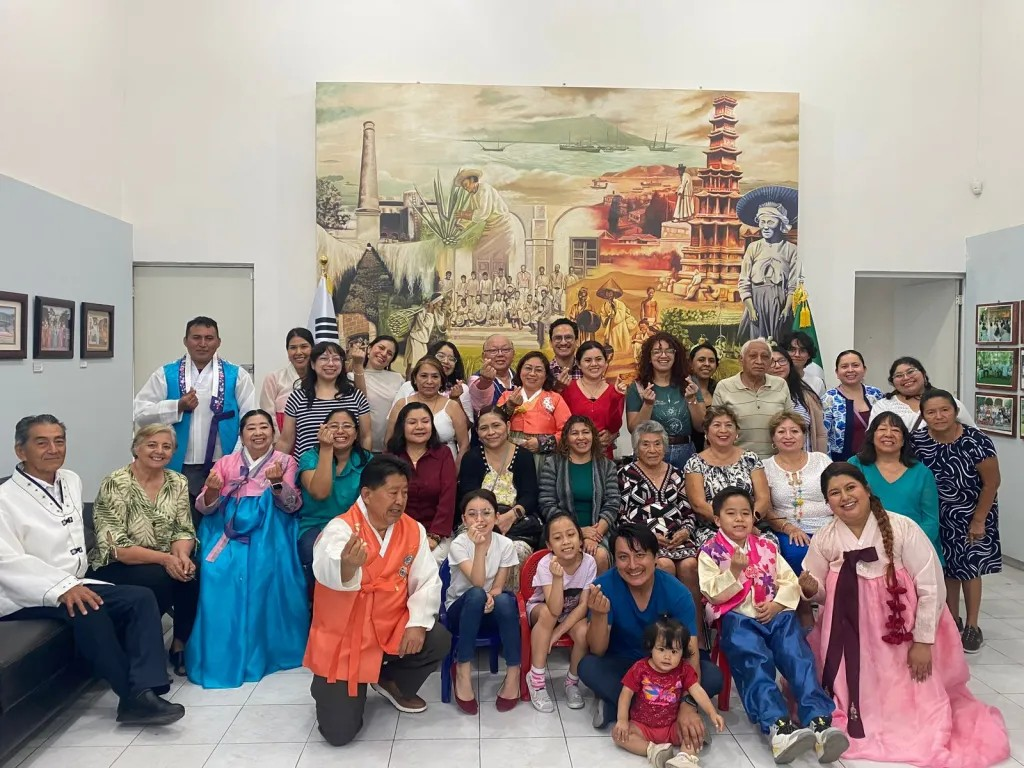
According to the academic, the community of Korean descendants did not preserve the language or customs of their ancestors. Some of these have been reintroduced by religious migrants who arrived more recently.
“It seems to me that what they know of Korea has been reintroduced in a very recent way and was not inherited from those who came from that country. There has been an effort on the part of the Korean government to reactivate and encourage the association and community of Korean descendants in Yucatán. They have invested a lot of money to incorporate them.”
“It seems to me that the South Korean government intends to make Korean culture fashionable. This also helps those of Korean descent to begin reclaiming their ancestry,” the researcher opines.
According to the interviewee, thanks to this support from the South Korean government and the work of “about 10 families of descendants, divided into group A and group B,” activities to recover the memory of this community have gained momentum; although she acknowledges that this is mainly limited to those residing in Mérida, due to the travel difficulties faced by those living in other parts of the state.
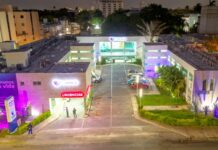
The Korean Educational and Cultural Center in Yucatán and the Memorial Museum of Korean Immigration to Yucatán are products of these efforts. The Korea-Mexico Friendship Hospital was also established through the efforts of descendants and with resources from the South Korean government.
As we reported, today, the Association of Korean Descendants in Yucatán will have its parade for Korea Day, which will depart at 5:30 in the afternoon from the corner of “El Chemulpo” (name of the port from which the migrant ship departed), at 57th and 72nd, to the Municipal Palace of Mérida.

Source: yucatan