
Land defense in Michoacán, western Mexico, is under threat from organized crime and the expansion of avocado monoculture. Within a week, Roberto Chávez Bedoya and Lázaro Mendoza Ramírez, land defenders, were murdered in separate incidents in a region where violence is escalating against those who protect nature.
Read more | Forest for “green gold”: alternatives to avocados to curb deforestation and violence in Mexico
Environmentalists and defenders consulted by Mongabay Latam point not only to the defenders’ socio-environmental work as the motive for their murders, but also to the patterns of violence associated with deforestation, water grabbing for avocado orchards, and the role of armed groups that have extended their control to new regions of the state.
The murders, they agree, are not isolated or surprising events, as there is a history that explains how violence has escalated in this region of Michoacán, the heart of Mexico’s national avocado production.
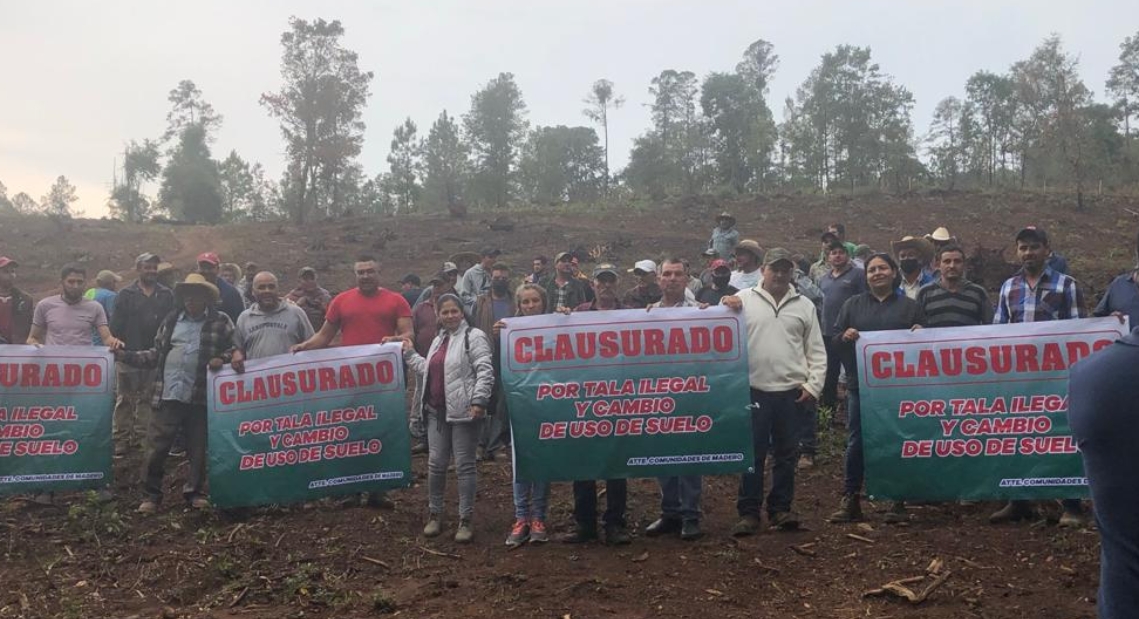
Like other residents of the municipality of Madero, Michoacán, Roberto Chávez was part of the Zangarro Environmental Defense Committee, a community organization formed to protect the pine and oak forests of this area, which has the ideal altitude and water for avocado cultivation.
The region is also characterized by two tributaries that form the Curucupatzeo and Carácuaro rivers, which are the main source of water for the communities and whose courses have been altered for monocultures over the last 10 years, says Julio Santoyo Guerrero, an environmental activist and Chávez’s former colleague.
“He was very clear about the need to respect water for everyone; that the forests, which are essential, should not be cut down; that there should be no changes in land use; and that deer hunting should stop,” says the defender.
Santoyo recounts that the avocado expansion reached the municipality of Villa Madero in 2015, when its residents began to experience water scarcity in the streams and runoff that sustain the mountain communities. It was in the midst of this water conflict that the defense committees emerged, increasingly confronting the interests of armed groups vying for control of avocado and strawberry crops.
“Since 2016, it was common knowledge in Madero that organized crime was behind the changes in land use, the legal logging, and even the starting of fires,” the defender tells Mongabay Latam, adding that since then, criminal groups have pressured avocado growers to form alliances.
“They offered themselves to the avocado growers to protect them and to contain the presence of both state and federal institutions that identified them as loggers or as generators of land use change,” he explains.

Santoyo recounts that members of the region’s environmental defense committees have refused to collaborate with organized crime and facilitate their exploitation of the forest, a stance that had already led to violent incidents prior to Chávez’s murder.
“In May 2025, organized crime approached members of the environmental defense committees and told them that we could work together, that they too agreed on the importance of environmental protection. They even offered to donate 20 million pesos for the purchase of trees and reforestation,” the defender explains.
The spread of violence and the murder as a message
The committee defenders’ refusal, Santoyo recounts, provoked a violent reaction on November 6, 2025, when a group of armed men attacked the home of one of the committee members, where several others were present.
Although no one died in the attack, no one expected the next attack to target Chávez. In the early hours of April 13, his body was found on the highway connecting the communities of El Terrenate and Etúcuaro.
“Nobody believed they would go after Roberto [Chávez] because he was a very kind person who didn’t like confrontation. We feared for the safety of other colleagues who are leaders. The same people who murdered him spoke to him. One understands that it wasn’t about who he was, but about the message they were going to send with the murder,” Santoyo laments.
Organizations and citizen groups have also detected an increase in violence in this part of Michoacán linked to the expansion of avocado farming. The Human Security Observatory of the Apatzingán Region has even pointed to the forced displacement of people associated with illegal logging and the interests of this industry, which requires large quantities of water.
“Michoacán is one of the states in this region with the greatest biodiversity, boasting a significant presence of freshwater bodies. Some of the largest lakes in the country are located here. It’s a biocultural heritage to which Indigenous and peasant communities are deeply connected,” explains a member of the observatory who asked not to be identified.
At least during 2024, Michoacán was the third state with the highest number of displaced persons, with 1,555 cases in 11 separate incidents, according to a report by the Human Rights Program of the Ibero-American University.
“Unfortunately, in 2025, that number was very likely surpassed. This leaves the territory vulnerable to indiscriminate exploitation by criminal groups, paramilitary groups, or economic interests with the capacity to invest, but for whom the presence of these populations is an obstacle,” the observatory member maintains.
So far, the Michoacán Attorney General’s Office has only reported that Chávez’s involvement in forest protection is part of “the ongoing lines of investigation.” The state governor, Alfredo Ramírez Bedolla, has only stated that “operations are already underway in Villa Madero to find those responsible.”
Meanwhile, Santoyo asserts that members of the environmental defense committees have located and identified the alleged perpetrators of Chávez’s murder.
“They are all perfectly identified as the perpetrators, some as the perpetrators of the November 6 attacks and others as the ones who carried out the murder of our colleague Roberto Chávez Bedoya. We have met with the prosecutors handling the case, and they say they haven’t been able to arrest them,” the activist explains.
For Santoyo, who also has protective measures in place due to threats he has received because of his environmental work, the members of the environmental defense committees are experiencing a critical moment, and they have requested protection for at least nine of their members who are at risk.

A day after Chávez’s murder, authorities reported the disappearance of human rights defender Lázaro Mendoza Ramírez. Just days later, his body was found inside a burned-out vehicle in the town of Cungo, in the municipality of Salvador Escalante, Michoacán.
In 2014, Mendoza participated in the self-defense groups that emerged in Michoacán in response to the violence generated by organized crime in the state. However, according to various news reports, the defender dedicated himself to socio-environmental work in the community of Paramuen.
For human rights defender Julio Santoyo, Mendoza’s case coincides with the same patterns of violence that occurred in Chávez’s case, as he notes that the expansion of avocado farming also reached the municipality of Salvador Escalante.
“Environmentalists in this area have denounced the risk that Lake Zirahuén already faces due to water theft. When I learned a few days later that our comrade Lázaro [Mendoza] had been murdered, I think it’s the same pattern,” Santoyo told Mongabay Latam.
Mendoza was also a contributor to the community radio station Fragua Radio, where he was considered a social activist and defender of the town of Paramuen.
Although state authorities do not consider Mendoza a defender of the land, but rather someone dedicated to avocado orchards, local activists and officials have highlighted his socio-environmental work.
“He was in the self-defense groups 13 years ago, but that had to do with a land issue. If anyone is likely to clash with organized crime, it’s environmentalists,” Santoyo believes.
“This is a crime. It’s a brutal blow against a social activist, a man who gave everything for his people and for the most just causes in Salvador Escalante. Lázaro [Mendoza] wasn’t seeking fame; he was seeking justice, dignity, and a better future for his community,” posted local councilman Diego Martínez after the defender’s murder.
Governor Ramírez Bedolla stated that there is an arrest warrant out for one of the alleged perpetrators, but so far there has been no information on any arrests.
Risks for Environmental Defenders Persist in Mexico
During 2025, at least 10 land defenders were murdered in Mexico, according to a recent report by the Mexican Center for Environmental Law (CEMDA). Although this was the second least deadly year in a decade, Itzel Arteaga, a lawyer with the organization, warns that the risks for defenders persist in the country.
“Structurally, the situation hasn’t changed. The Escazú Agreement [an international treaty that urges states to protect environmental defenders] is still not being implemented as it should be; there are no information or participation mechanisms for the projects, which are one of the causes of social conflict,” the defender told Mongabay Latam.
Artega also questions the protection model for human rights defenders and journalists, which she believes only reacts in some cases but lacks preventative measures.
“We say the same thing every year. The protection mechanism for defenders and journalists is overwhelmed in terms of funding and personnel; even the measures they have and propose to protect people are no longer sufficient at all,” the defender points out.

Although the state of Michoacán was not a hotspot in the CEMDA report for 2025, groups like the Apatzingán Security Observatory point out that there are no measures in place to address the humanitarian crisis of forced displacement in the state due to the control of natural resources.
“Every environmentalist in Michoacán is running a high risk to their life,” says Santoyo, recalling the case of Chávez and the ongoing risks faced by defenders after his murder.
“‘Do you think the authorities will listen to us?’ That’s a question Roberto asked me. The answer is right there in reality: little has been done. The destruction continues in Madero, in Tacámbaro, throughout the avocado-growing region,” he warns.

Source: es.mongabay