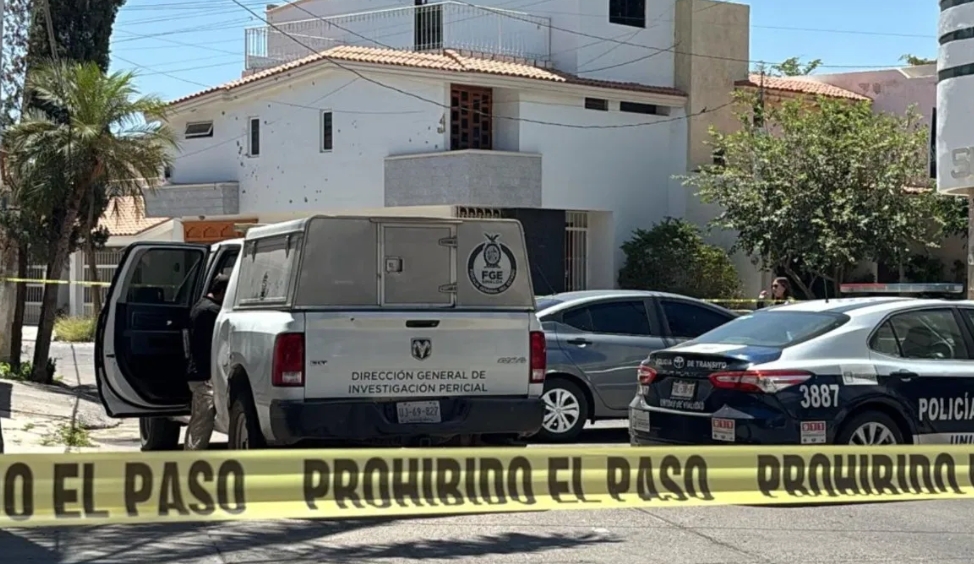

This morning, May 9, 2026, a house in the Las Quintas neighborhood of Culiacán was shot at. The house, which was formerly owned by Governor Rubén Rocha Moya, is still registered in his name.
According to reports from neighbors and sources consulted by Debate at the scene, the property, a three-story white house located on the corner of Lago de Cuitzeo Street, across from a park, had been unoccupied since Rocha Moya won the 2021 elections.
Information gathered at the scene indicates that one of his sons lived there until that date. Witnesses stated that an armed group arrived and fired high-powered rifles at the property, causing material damage. No injuries have been reported so far.
Rubén Rocha Moya stepped down as governor and has been on temporary leave since May 2, 2026, after the United States accused him of alleged ties to the Sinaloa Cartel, drug trafficking, and weapons possession.
Since then, his whereabouts have been unknown, generating significant media and political interest in the state. The attack occurred amidst high tension in Culiacán, where several violent incidents have been reported in recent weeks.
The case has triggered a major political crisis within the Morena party and in Sinaloa, leading to the appointment of Yeraldine Bonilla Valverde as interim governor.
Furthermore, reports have intensified regarding alleged favors, such as the granting of control over water resources and irrigation districts to criminal groups.
This morning’s incident occurred within a context of high tension and violence in Culiacán, where multiple attacks on homes have been reported in recent weeks.
The attack on Rocha Moya’s property occurred during a period of statistical instability in the region. According to data from the Executive Secretariat of the National Public Security System (SESNSP), Sinaloa has registered an upward trend in property crimes and attacks with firearms restricted to the military during the first four months of 2026.
Culiacán, specifically, accounts for 60% of the incidents of political violence and attacks on properties linked to current or former officials, reflecting a breakdown in governance agreements and an intensification of territorial disputes between organized crime factions.
According to the United States Department of Justice, the situation of Governor Rubén Rocha Moya, currently on leave, falls within a ‘zero tolerance’ policy by U.S. authorities toward narco-politics in Mexico.
U.S. Attorney General Merrick Garland has previously stated that the Sinaloa Cartel could not operate with such impunity without a corruption network reaching the highest levels of local government. These statements take on added significance following the direct accusations that forced Rocha Moya’s resignation, suggesting that intelligence agencies like the DEA have intensified their efforts to trace assets and political connections in order to dismantle the cartel’s command structures, extending beyond its operational arms.
Source: debate